If you’ve ever finished a meal and felt like your body was working against you — bloating that won’t quit, brain fog that rolls in out of nowhere, or skin that seems to flare up for no obvious reason — you’re not imagining things. I’ve heard from so many people who spend months (sometimes years) feeling off without any clear explanation. When I first started digging into gut health research, one of the first things that kept coming up was intestinal permeability, or what most of us know as leaky gut. And right alongside it, almost every time, was one simple amino acid: L-glutamine. If you’re just starting to explore L-glutamine for leaky gut, you’re in the right place — because the research behind this nutrient is genuinely worth your attention.
This post contains affiliate links. As an Amazon Associate, I earn from qualifying purchases. This helps keep the site running at no extra cost to you, and I only recommend products I’d feel good about sharing with a friend.
What Is Leaky Gut and Why Does It Matter?
Your gut lining is remarkable. It’s essentially a single layer of cells — called enterocytes — that lines your entire small intestine and acts as a highly selective barrier. It lets nutrients pass through into your bloodstream while keeping out bacteria, undigested food particles, and toxins. When that barrier is working well, you barely think about it. When it’s compromised, things can get complicated fast.
Leaky gut, or increased intestinal permeability, happens when the tight junctions between those gut lining cells start to loosen up. Think of those junctions like the grout between tiles — when they’re solid, everything stays where it belongs. When they crack, unwanted particles can sneak through into places they shouldn’t be. Research published in journals like Frontiers in Immunology and Gut has connected increased intestinal permeability to a range of conditions, including irritable bowel syndrome, inflammatory bowel disease, autoimmune issues, and even mood disorders. While scientists are still working out the full picture, the gut lining’s integrity clearly matters — a lot.
Common factors that may contribute to a compromised gut lining include chronic stress, a diet high in processed foods, antibiotic use, alcohol, and certain medications like NSAIDs. If any of those sound familiar, that context matters when you’re thinking about how to support your gut.
L-Glutamine for Leaky Gut: What the Research Actually Says
Glutamine is the most abundant amino acid in the human body, and your gut absolutely loves it. The enterocytes that line your intestines actually use glutamine as their primary fuel source — not glucose, like most other cells. When your body is under stress (physical, emotional, or dietary), glutamine levels can drop, and your gut lining may suffer for it.
Here’s what the research suggests:
- A study in the journal Clinical Nutrition found that glutamine supplementation may help preserve the integrity of the intestinal barrier under conditions of physiological stress.
- Research in critically ill patients — a population where intestinal permeability is a serious concern — has repeatedly shown that glutamine may support gut barrier function.
- Animal studies and some early human trials suggest glutamine may help regulate the tight junction proteins that keep the gut lining sealed properly.
- A 2019 randomized controlled trial published in Gut found that L-glutamine supplementation reduced intestinal permeability in people with irritable bowel syndrome following food poisoning.
Now, I want to be clear: glutamine is not a magic fix, and no supplement is going to undo a diet full of ultra-processed foods or chronic sleep deprivation on its own. But for many people, it appears to be a genuinely useful piece of the puzzle — and it’s one of the more affordable, well-tolerated options out there.
How to Use L-Glutamine for Gut Support
Most people doing gut-focused protocols use somewhere between 5 and 15 grams of L-glutamine per day, often split between morning (on an empty stomach) and before bed. Starting on the lower end and working up slowly is generally a good approach so your body can adjust. Powder forms tend to be popular because they’re easy to stir into water, a smoothie, or even warm broth — and they typically don’t have a strong flavor.
It’s always worth having a conversation with your healthcare provider before starting any new supplement, especially if you have a health condition or take medications. That said, L-glutamine is generally considered well-tolerated when used at standard doses.
Many people find it most helpful when combined with other gut-supportive habits — like reducing sugar and alcohol, managing stress, sleeping enough, and eating plenty of fiber-rich whole foods. L-glutamine tends to work best as part of a broader gut-healing strategy, not a standalone shortcut.
Products Worth Trying
I’ve spent time looking into what’s actually available so you don’t have to wade through a sea of options on your own. Here are five products I think are genuinely worth considering, depending on your needs and budget.
Essential Stacks Gut L-Glutamine Powder
This one is specifically formulated with gut health in mind, and it’s made exclusively in the USA — something I appreciate when it comes to quality control. It’s unflavored and mixes cleanly, with 60 servings per container. If you want a straightforward, dedicated gut-health glutamine product, this is a solid starting point. Check it out on Amazon here.
Nutricost L-Glutamine Powder (500 Grams)
If you’re looking for a budget-friendly, no-frills option, Nutricost delivers. It’s gluten-free, non-GMO, and gives you 100 servings in a 500g tub. Great for those who want to try L-glutamine without a big financial commitment upfront. See it on Amazon here.
Sports Research L-Glutamine Powder
Sports Research is a well-regarded brand that prioritizes quality, and this large 17.64 oz container gives you plenty to work with. It’s marketed for workout recovery too, so if you’re also active and looking for muscle support alongside gut health benefits, this one covers both bases nicely. Find it on Amazon here.
Intestinal Fortitude GLR-6 — Gut Lining Repair Supplement
This one takes a broader approach. GLR-6 combines L-glutamine with several other gut-supportive herbs — including slippery elm, DGL licorice root, marshmallow root, and fenu
Related Posts
Zinc, Quercetin, and Slippery Elm: The Gut Lining Repair Stack That’s Getting Attention
Have you ever finished a meal and felt that familiar…
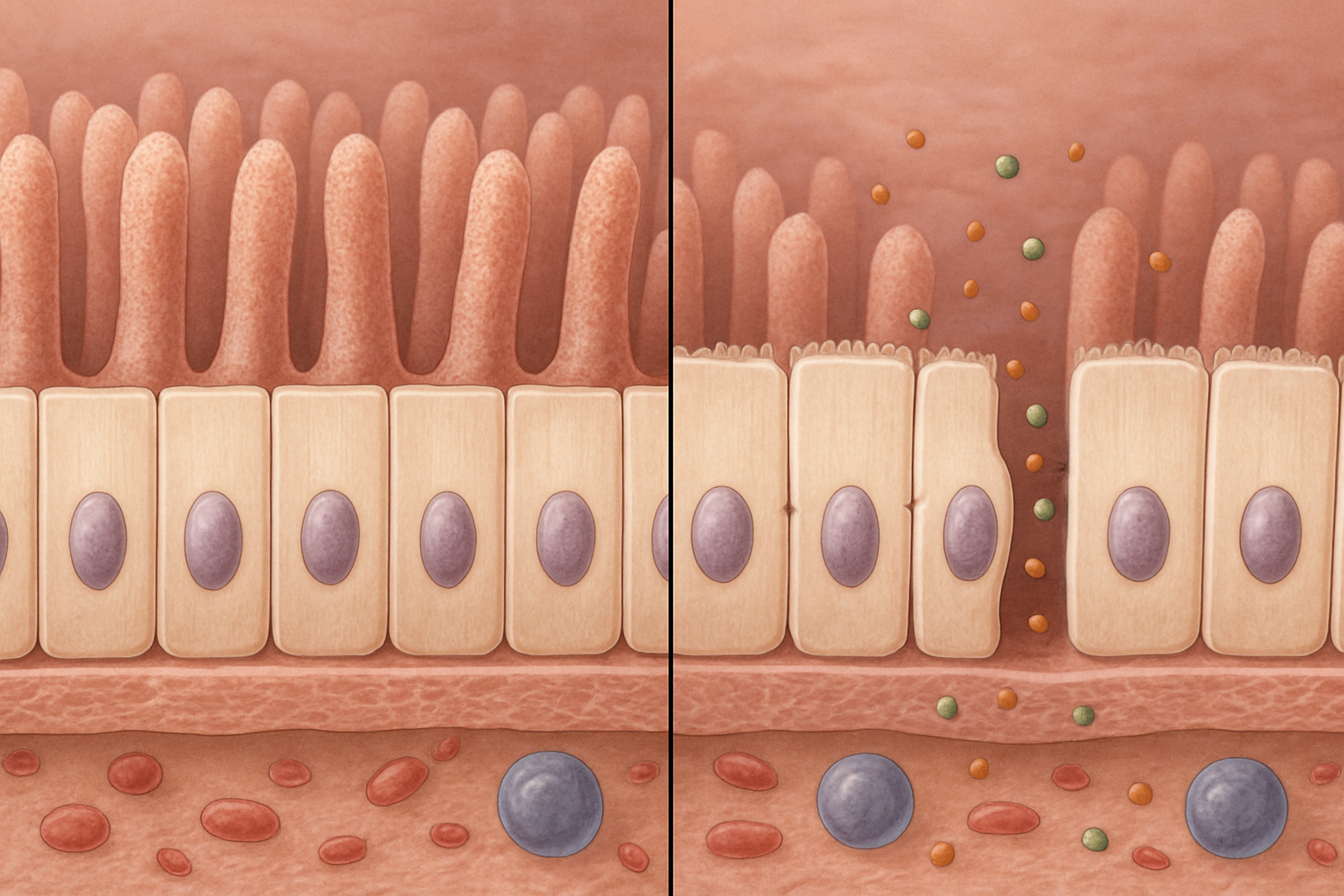
What Is Leaky Gut Syndrome and Is It Actually Real (The Science Says Yes)
Have you ever finished a meal and felt absolutely fine,…

Collagen for Gut Health: Does It Really Help Seal a Leaky Gut
If you've ever finished a meal and immediately felt that…