
The ketogenic diet can be a powerful tool for brain health — but it has one nutritional blind spot that’s easy to miss: B vitamins.
Many of the richest dietary sources of B vitamins — fortified cereals, legumes, whole grains — are restricted or eliminated on keto. If you’re not actively paying attention to your B vitamin intake, you may be inadvertently running low on nutrients that your brain genuinely cannot function without.
And when it comes to B vitamins and the brain, not all forms are created equal.
Why B Vitamins Matter on Keto
B vitamins are central to:
- Neurotransmitter synthesis (serotonin, dopamine, GABA all require B vitamins as cofactors)
- Myelin sheath maintenance (the protective coating on nerve fibres)
- The methylation cycle — a critical biochemical pathway that affects DNA repair, mood regulation, detoxification, and gene expression
- Energy production within mitochondria
- Homocysteine regulation (elevated homocysteine is independently associated with depression, cognitive decline, and cardiovascular disease)
On a standard diet, many people rely on fortified foods to meet their B vitamin needs — particularly B12, B9 (folate), and B6. On keto, these fortified foods largely disappear. Animal products cover B12 reasonably well, but for folate in particular, the loss of legumes and leafy-grain foods can create meaningful gaps.
The Problem with Standard B Vitamins
Here’s where things get more nuanced. Most cheap B vitamin supplements contain the synthetic forms of these nutrients:
- Cyanocobalamin — the most common form of B12, which must be converted to methylcobalamin or adenosylcobalamin before the body can use it
- Folic acid — a synthetic form of folate (B9) that must be converted to the active form, 5-methyltetrahydrofolate (5-MTHF / methylfolate)
For many people, these conversions work fine. But for a significant portion of the population — estimated at 40–60% — they don’t. The culprit is the MTHFR gene variant.
MTHFR, Methylation, and the Brain
The MTHFR enzyme (methylenetetrahydrofolate reductase) is responsible for converting folate into its active, usable form. People with common MTHFR variants (particularly C677T and A1298C) have reduced enzyme activity — meaning they convert folic acid to methylfolate much less efficiently.
The downstream effects of impaired methylation include:
- Elevated homocysteine (which damages blood vessels and is neurotoxic at high levels)
- Reduced production of SAM-e (S-adenosylmethionine) — the primary methyl donor in the brain, critical for serotonin and dopamine synthesis
- Poor DNA repair and epigenetic regulation
- Increased susceptibility to depression, anxiety, and cognitive impairment
This is why, for people following a ketogenic diet for brain health, the choice of B vitamin supplement form genuinely matters.
Methylcobalamin vs Cyanocobalamin
Methylcobalamin is the neurologically active form of B12. Unlike cyanocobalamin, it doesn’t need conversion — it crosses the blood-brain barrier more readily and is directly usable by the nervous system.
Research suggests methylcobalamin:
- Better supports nerve regeneration and myelin synthesis
- Has superior bioavailability for people with MTHFR variants
- Is the preferred form for anyone with neurological symptoms, cognitive concerns, or depression
Methylfolate (5-MTHF) vs Folic Acid
Similarly, methylfolate (5-MTHF) is the active, brain-ready form of folate. Unlike folic acid, it doesn’t require MTHFR enzyme conversion, making it effective for everyone — including those with the MTHFR variant.
Supplementing with methylfolate rather than folic acid is particularly important if you:
- Have a known MTHFR variant
- Struggle with depression, anxiety, or brain fog
- Follow a ketogenic or very low-carb diet
- Have elevated homocysteine levels
What to Look For in a Supplement
When choosing a B complex for keto, look for one that contains:
- Methylcobalamin (not cyanocobalamin) for B12
- Methylfolate / 5-MTHF (not folic acid) for B9
- Pyridoxal-5-phosphate (P5P) — the active form of B6
- Riboflavin-5-phosphate — active B2
Products labelled “activated” or “methylated” B complex will typically tick these boxes. Check ingredient labels carefully — many mainstream products still use the cheap, unconverted synthetic forms.
The Gut Connection
B vitamins are also closely tied to gut health — another reason this matters for a digestion-focused audience. A healthy gut microbiome actually synthesises some B vitamins (particularly B12, folate, and biotin). Dysbiosis — an imbalanced microbiome — can impair this endogenous synthesis, increasing reliance on dietary and supplemental sources.
For keto dieters, the significant shifts in microbiome composition that accompany dietary change make monitoring B vitamin status even more important.
Methylated B12 and Folate: The Forms Your Brain Actually Uses on Keto
When you’re restricting carbs heavily, your brain’s demand for methylation (the biochemical process that keeps your nervous system functioning) actually increases — but your intake of the activated B vitamins that support it often drops. Methylated forms of B12 and folate bypass the conversion step your body would normally have to do, delivering what your brain needs directly.
What works
- Methylcobalamin (methyl-B12) is absorbed sublingually and doesn’t require the intrinsic factor conversion that standard cyanocobalamin does — especially relevant if you have any degree of digestive compromise or reduced stomach acid from prolonged low-carb eating.
- Methylfolate (5-MTHF) crosses the blood-brain barrier more efficiently than folic acid, and research shows it’s better retained in neural tissue — meaningful if you’re tracking cognitive function or mood stability on keto.
- Combined dosing (1,000 mcg of each) in a single supplement removes the guesswork and makes compliance realistic; most clients report clearer thinking and steadier energy within 2–4 weeks of consistent use.
What doesn’t
- This supplement will not fix B12 deficiency caused by pernicious anaemia or intrinsic factor antibodies — if you have diagnosed B12 malabsorption, you need injections, not oral supplementation, and your GP should oversee treatment.
- If you’re taking certain medications (metformin, PPIs, or specific psychiatric drugs), or if you have undiagnosed methylenetetrahydrofolate reductase (MTHFR) mutations, high-dose folate can occasionally trigger sensitivity symptoms; starting at half-dose and titrating up is wise if you’re new to methylated forms.
This supplement supports brain function on keto, but it’s not a replacement for eating enough nutrient-dense whole foods or for investigating persistent neurological symptoms with your doctor. If you’re experiencing brain fog, mood changes, or neuropathy on keto, rule out other causes (electrolytes, thyroid, blood sugar stability) before assuming B vitamins are the answer. Nutricost Methylated Vitamin B12 + Folate Supplement (2,000 mcg) 120 Capsules – 1,000 mcg of Vitamin B12 + 1,000 mcg of Methyl Folate, Gluten-Free, 60 Servings
This post contains affiliate links. As an Amazon Associate, I earn from qualifying purchases at no extra cost to you.
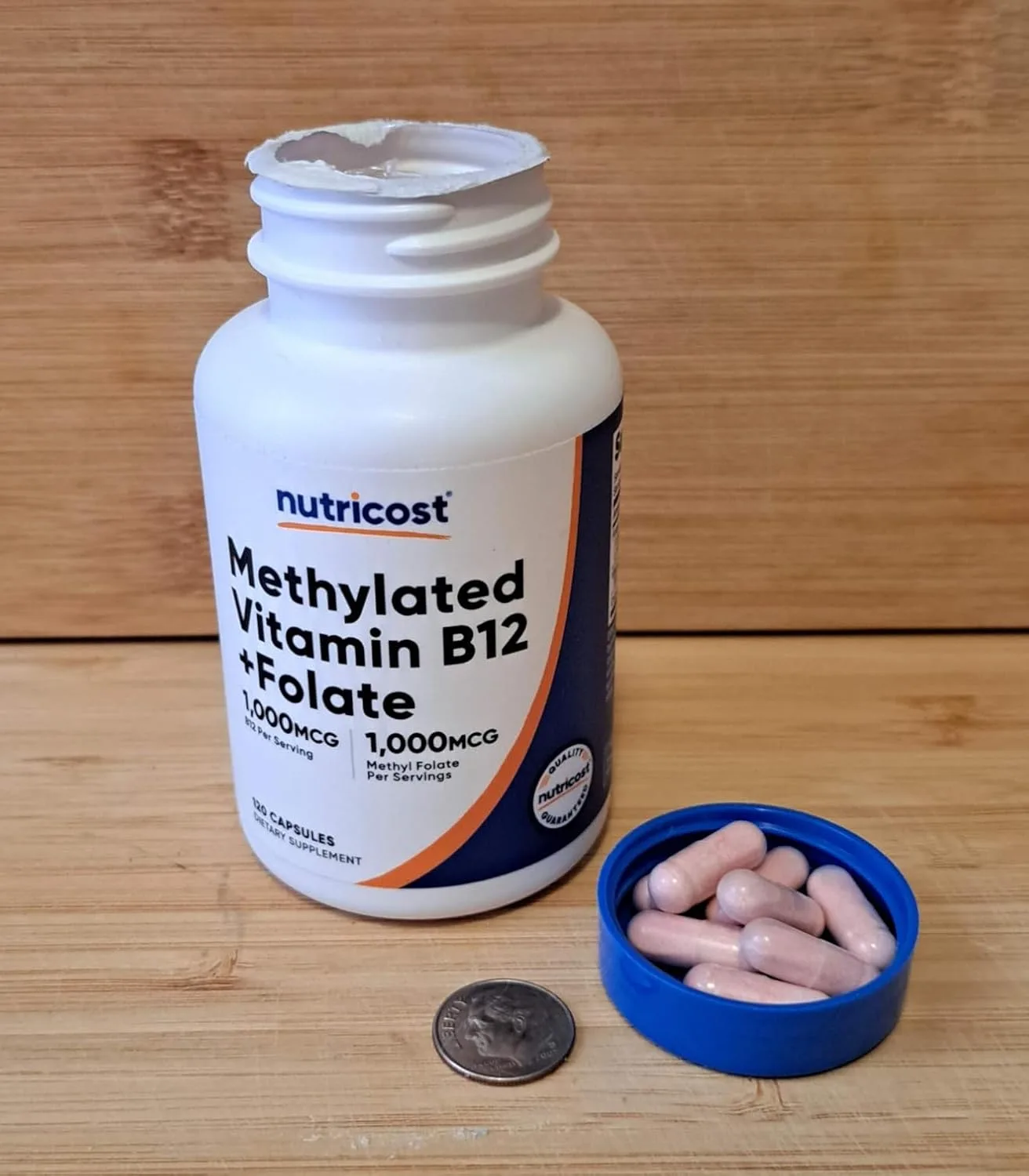

Nutricost Methylated Vitamin B12 + Folate Supplement (2,000
I take this for the methylated forms and reliable dosing; noticed sharper focus within weeks.
Check Price on Amazon →