This post contains affiliate links. As an Amazon Associate I earn from qualifying purchases at no extra cost to you.
In my years of practice as a nutritionist, few situations are as distressing — for both client and practitioner — as a Crohn’s disease flare. The right crohn’s disease flare diet can dramatically reduce symptoms and shorten recovery time. The wrong choices, however, can set someone back for weeks and sometimes land them in hospital. I have seen this play out more times than I care to count, and it is why I have developed a structured, low-residue approach that I return to again and again with clients who are managing active Crohn’s disease.

Why Food Choices During a Flare Matter More Than You Think
When Crohn’s disease flares, the lining of the gastrointestinal tract becomes actively inflamed, ulcerated, and in some cases narrowed. Eating the wrong foods at this stage is essentially adding insult to injury. Fibre — the nutrient we celebrate so enthusiastically the rest of the time — suddenly becomes a liability. High-residue foods like raw vegetables, whole grains, legumes, and skins on fruits require significant mechanical and chemical digestion, and they leave behind bulk that an inflamed gut simply cannot move comfortably.
Research published in journals such as Clinical Gastroenterology and Hepatology consistently supports the use of a low-residue or low-fibre diet during active IBD flares to reduce stool frequency and ease abdominal cramping. This is not about abandoning nutritional quality permanently — it is about giving the gut a temporary reprieve so healing can begin.
I always remind clients that the low-residue phase is a bridge, not a destination. The goal is to nourish the body adequately, reduce the mechanical burden on the bowel, manage pain and urgency, and then gradually reintroduce foods as inflammation settles.
The Low-Residue Foods I Actually Recommend to Clients
When a client presents with an active flare, I begin with a very short approved food list. It feels restrictive, I know — and I acknowledge that openly. But clients consistently report that sticking to this list in the acute phase means they feel better faster.
Safe Staples During a Flare
- White rice, white bread, plain white pasta — refined grains are lower in residue and easier to move through an inflamed bowel
- Well-cooked, peeled, and mashed root vegetables such as potato, sweet potato, and carrot
- Eggs — scrambled or poached in minimal fat, a reliable and easily digested protein source
- Tender, well-cooked chicken or turkey — baked or poached, never fried
- Canned or well-cooked fish such as salmon or tuna in water — also a valuable source of omega-3 fatty acids
- Smooth nut butters in small quantities, if tolerated
- Ripe banana and melon — low-fibre fruits that provide potassium, which is often depleted during a flare
- Plain broth or bone broth — hydrating, warming, and gentle on the gut
- Diluted fruit juice without pulp for gentle electrolyte replenishment
Foods to Avoid Until Remission
- Raw vegetables of any kind, particularly cruciferous ones like broccoli, cauliflower, and cabbage
- Whole grains, bran, and high-fibre cereals
- Legumes including lentils, chickpeas, and beans
- Nuts and seeds (including those hidden in bread and granola)
- Spicy foods, caffeine, and alcohol — all known gut irritants
- Dairy products for clients who show signs of lactose sensitivity, which is common during flares
- Fried or fatty foods that delay gastric emptying
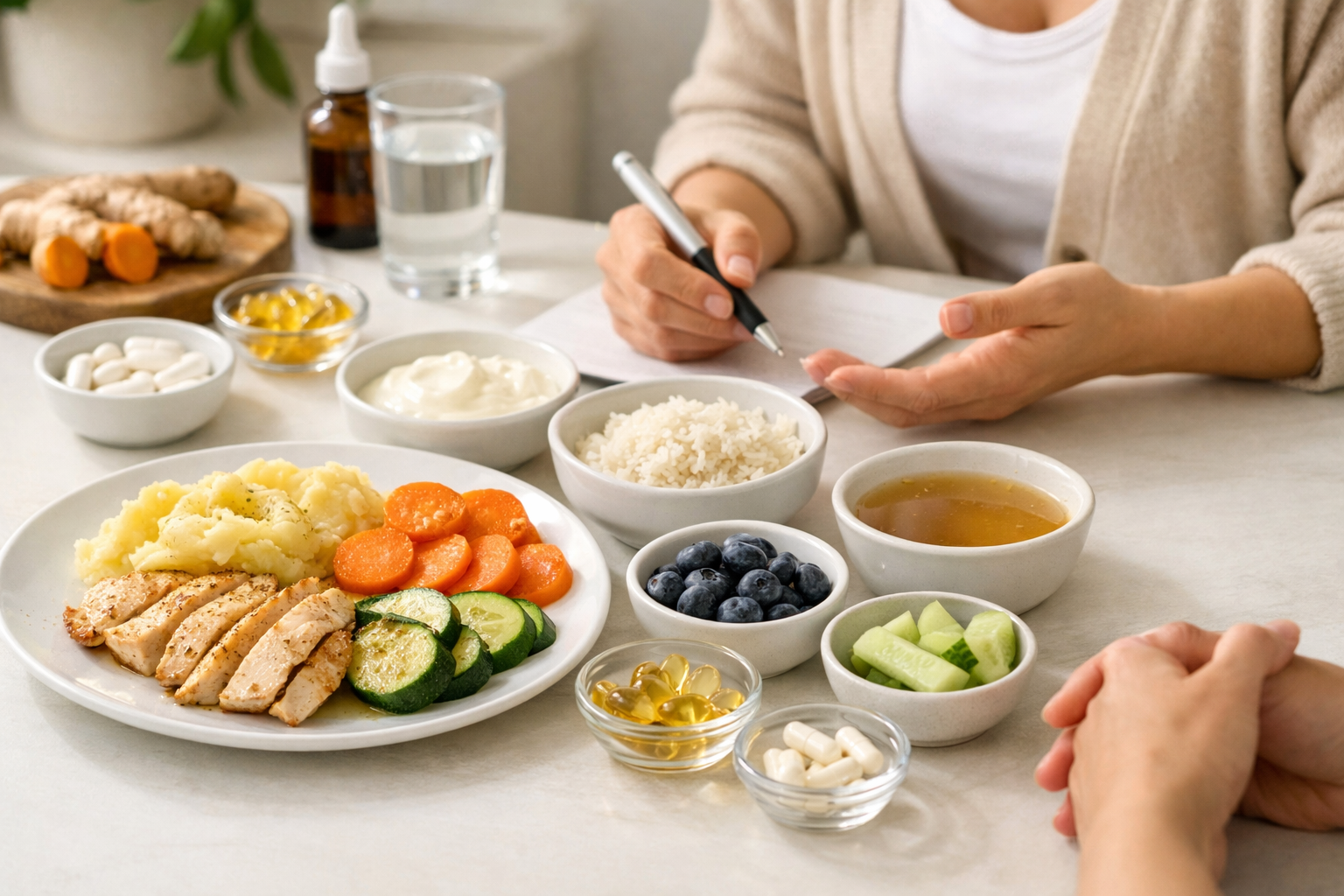
Supplements That Support the Gut During a Crohn’s Flare
Diet is only part of the picture. In my practice, I also work with targeted supplementation during flares — always in coordination with a client’s gastroenterologist. Here are the supplements I most commonly discuss and why.
IBD-Specific Gut Support
One supplement I have been recommending with increasing confidence is the JL-7 Crohn’s and Colitis Supplement, which is specifically formulated to support gut health in conditions involving GI tract inflammation, including Crohn’s disease, ulcerative colitis, and IBS. It uses a patented, all-natural formula, which I appreciate given how sensitive the gut is during a flare. This is not a replacement for prescribed medication, but as a complementary support, it is a well-constructed option worth discussing with your care team.
Probiotics — With Important Caveats
The evidence on probiotics in Crohn’s disease is more nuanced than it is for ulcerative colitis, and I always frame it that way with clients. That said, maintaining some level of gut microbiome support during a flare is something I consider worthwhile for many clients. Two options I recommend regularly are the Digestive Advantage IBS Daily Probiotic Capsules, which include digestive enzymes and have a good tolerance profile, and the GeriCare Acidophilus with Pectin Probiotic Capsules, which combines Lactobacillus acidophilus with pectin to support intestinal flora and immune function. Again — please discuss probiotic use with your gastroenterologist during an active flare before starting.

Omega-3 Fatty Acids for Inflammation
This is one area where I feel genuinely enthusiastic. Omega-3 fatty acids — particularly EPA and DHA — have well-documented anti-inflammatory properties, and several studies have examined their potential role in supporting remission in IBD. During a flare, I encourage clients to maintain their omega-3 intake through food (cooked salmon, canned tuna) and, where appropriate, a quality supplement.
My go-to recommendations include Sports Research Triple Strength Omega-3 Fish Oil from Wild Alaska Pollock — MSC certified, sustainably sourced, and non-GMO, which matters to many of my clients. For those wanting an even higher DHA concentration, the Triple Strength DHA Omega 3 Fish Oil 3600mg offers over 860mg of DHA and 1300mg EPA per serving, making it one of the more potent options available. If you prefer a lighter softgel with added vitamin E, the NatureWise Extra-Strength Omega 3 Fish Oil with 600 EPA and 400 DHA in a pleasant lemon flavour is a good entry point, especially for clients who are new to fish oil supplementation.
Vitamin D — A Critical and Often Overlooked Nutrient
Vitamin D deficiency is extremely common in people with Crohn’s disease, partly because of malabsorption and partly because of reduced sun exposure during periods of illness. Low vitamin D is associated with more frequent flares and poorer immune regulation. I test vitamin D levels in virtually all my IBD clients and supplement accordingly.
For clients with significant deficiency, I typically recommend the NatureWise Vitamin D3 5000iu in Organic Extra Virgin Olive Oil — the oil base supports fat-soluble absorption, and the year-long supply of 360 mini softgels makes compliance easy. For maintenance dosing in clients with milder insufficiency, the NatureWise Vitamin D3 2000iu version is equally well-formulated and appropriate. Always confirm dosing with your doctor, as vitamin D needs vary significantly between individuals.

My Nutritionist Recommendation: Build Your Flare Protocol Before You Need It
One of the most practical pieces of advice I give every client with Crohn’s disease is this: do not wait until you are in the middle of a flare to figure out your crohn’s disease flare diet. The time to build your protocol — your safe food list, your emergency pantry staples, your supplement routine, your hydration plan — is when you are feeling well.
During a flare, pain, fatigue, and urgency make it nearly impossible to think clearly about nutrition. But if you already have white rice in the cupboard, bone broth in the freezer, and your supplements on the shelf, you can move into flare-management mode quickly and confidently. That preparedness genuinely shortens the recovery curve in my experience.
I also want to be clear: everything in this post should be discussed with your gastroenterologist and, ideally, a registered nutritionist or dietitian who specialises in IBD. Supplementation in particular should be reviewed by your care team, as interactions with medications like immunosuppressants and biologics are possible and important to consider.
If you are currently navigating a flare, I hope this gives you a clear, calm starting point. Focus on gentle nourishment, adequate hydration, rest, and working closely with your medical team. And if you are in remission right now, use this time well — build your protocol, stock your kitchen, and know that being prepared is one of the most powerful things you can do for your long-term gut health.
Have questions about your specific situation? Drop them in the comments below, and I will do my best to point you in the right direction.
Related Posts

Nutrient Deficiencies in Crohn’s Disease: Why These Are Always My First Priority at Consultation
This post contains affiliate links. As an Amazon Associate I…

Anti-Inflammatory Eating for IBD: The Dietary Foundations I Build Every Client’s Plan Around
This post contains affiliate links. As an Amazon Associate I…

Crohn’s Disease vs Ulcerative Colitis: Key Nutritional Differences Every Patient Should Understand
This post contains affiliate links. As an Amazon Associate I…