Here is a paradox that trips up a lot of people: low stomach acid can feel almost identical to too much acid. Both cause burning, bloating, and discomfort. But they require completely opposite approaches — so getting this wrong matters more than most people realise. If you have been Googling your symptoms and wondering whether a low stomach acid quiz might give you some answers, you are in the right place.
This post contains affiliate links. As an Amazon Associate I earn from qualifying purchases at no extra cost to you.
In my practice, I see this confusion constantly. Clients arrive having self-treated with antacids for months — sometimes years — only to find their symptoms stubbornly persist or quietly worsen. When we begin to dig deeper, a completely different picture often emerges. The checklist and score guide below will not replace a formal diagnosis, but they will help you start asking the right questions.
The Low Stomach Acid Symptom Checklist
Work through each question honestly and keep a tally as you go. These questions are drawn from the symptom patterns I see most consistently in clinical practice and that are recognised in functional nutrition literature around hypochlorhydria (the clinical term for low stomach acid).
- Do you feel bloated, heavy, or excessively full shortly after eating?
- Do you experience belching or burping within an hour of eating?
- Do you sometimes see undigested food in your stools?
- Do you feel nauseous after taking supplements, especially iron or B vitamins?
- Do you have a history of long-term antacid or PPI use?
- Have you been told you are low in B12, iron, or zinc despite eating a reasonable diet?
- Do you experience a burning sensation in your stomach that actually improves with apple cider vinegar or lemon juice?
- Do you have weak or brittle nails, thinning hair, or chronic fatigue?
- Do you frequently get food poisoning or stomach bugs (low acid is a key antibacterial defence)?
- Are you over 40? (Stomach acid naturally declines with age.)
Give yourself 1 point for every “Yes” answer, then check your score below.
What Your Score Means
0–3: Low stomach acid is unlikely to be your primary issue, though individual symptoms are still worth noting with your GP. It may be worth exploring other digestive factors — gut motility, food intolerances, or stress — with a qualified practitioner.
4–6: A moderate overlap with the low stomach acid pattern. Dietary adjustments and a trial of digestive support may be worth exploring. Something I always explain at this stage is that this band is an invitation to pay closer attention — track your symptoms in relation to meals, food types, and stress levels before making any changes.
7–10: A strong correlation with hypochlorhydria. Worth discussing with a healthcare professional before trying any acid-support protocol — particularly if you are on medication. When a client tells me they have scored in this range, my first priority is always to rule out anything that needs medical attention before we consider nutritional intervention.
Understanding What These Symptoms Mean
Stomach acid — primarily hydrochloric acid (HCl) — does far more than simply break down food. It activates pepsin, the enzyme responsible for protein digestion, and it creates the acidic environment necessary for absorbing key micronutrients including vitamin B12, iron, calcium, magnesium, and zinc. When stomach acid is insufficient, protein molecules arrive in the small intestine only partially broken down, triggering fermentation, gas, and that heavy, bloated feeling so many of my clients describe after meals. This is also why nutrient deficiencies can persist even in people eating a genuinely varied and balanced diet.
The acid paradox I mentioned at the top of this post deserves a little more explanation, because it is something I always explain carefully to clients before they reach for any remedy. When the lower oesophageal sphincter — the valve between your oesophagus and stomach — does not close properly, even a small amount of stomach acid can cause burning and reflux. In many functional health models, low acid is actually thought to be a contributing factor to this poor sphincter tone, because adequate acidity is part of the signalling mechanism that tells that valve to close tightly. So yes, you can have low acid and still experience what feels unmistakably like heartburn.
The immune implications are equally significant and often overlooked. Healthy stomach acid is one of the body’s front-line defences against pathogens — it kills off a large proportion of the bacteria, viruses, and parasites we ingest through food and water every day. When acid levels are chronically low, that barrier weakens. This explains why question nine on the checklist — frequent food poisoning or stomach bugs — carries real diagnostic weight. In my clinical experience, clients who score highly on that question alone often turn out to have a broader pattern of compromised upper digestive function that is worth addressing systematically.
Take a Validated Low Stomach Acid Quiz
The checklist above is a useful starting point, but if you want to go deeper, these two external resources are worth bookmarking. The first will help you build a clearer picture of your digestive type; the second is helpful for distinguishing conventional acid reflux from a potential low-acid pattern before you take any next steps.
- Healthy Gut Company Low Stomach Acid Quiz — a focused 3-minute quiz that identifies your digestive type and maps your symptoms specifically against low stomach acid patterns. A good complement to the checklist above.
- MedicineNet GERD Quiz — an educational quiz that is particularly useful for ruling out conventional GERD before you go further down the low-acid investigation route. Understanding what you are not dealing with is just as valuable as identifying what you are.
What to Do Next
If your score suggests low stomach acid may be a factor, here is how I would suggest approaching it — carefully and in the right order.
First, speak to your GP or a registered nutritionist. Before trialling anything that affects stomach acid, it is important to rule out H. pylori infection, gastritis, ulcers, or medication interactions. This is not me being overly cautious — it is genuinely the responsible first step, especially if you scored 7 or above.
Consider your diet first. Bitter foods — rocket, chicory, dandelion greens, and apple cider vinegar diluted in water before meals — are gentle ways to begin stimulating stomach acid production. Eating slowly, chewing thoroughly, and avoiding large volumes of liquid with meals are small but meaningful changes that can support your digestive environment without any risk.
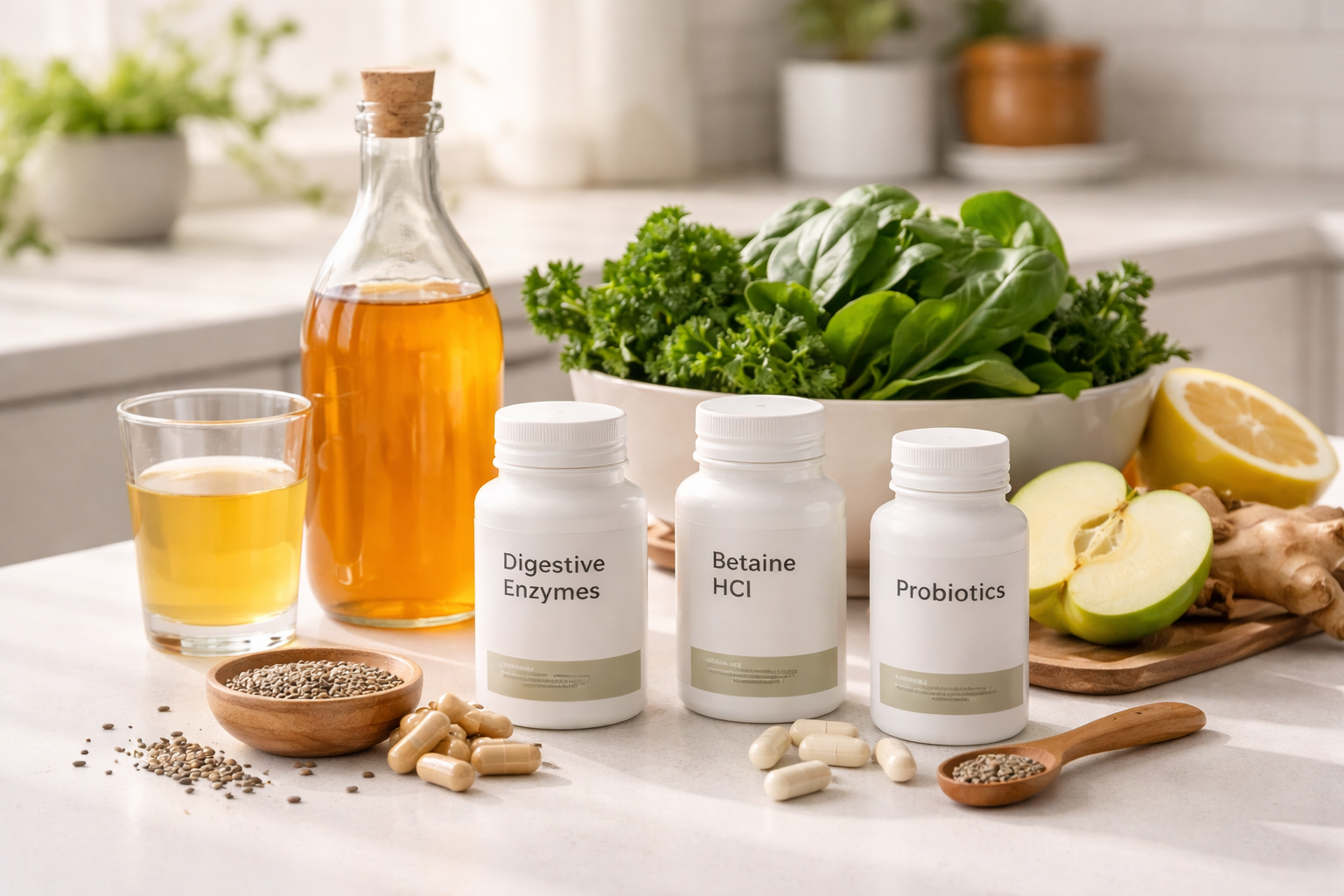
If you and your practitioner decide to explore supplemental support, betaine HCl with pepsin is the most widely used nutritional approach to low stomach acid. Two options I am often asked about in my practice are NOW Foods Betaine HCl 648 mg Vegetarian Formula — a straightforward, well-priced option that is easy to titrate — and Pure Encapsulations Betaine HCl Pepsin, which combines betaine with pepsin for broader digestive enzyme support and tends to be a good choice for those who struggle particularly with protein digestion. Both are widely available on Amazon. I would always recommend starting with the lowest dose and working up gradually — and never using betaine HCl if you are currently taking NSAIDs, corticosteroids, or other medications that affect the stomach lining.
If you are not ready to explore HCl supplementation, or you scored in the moderate range and want a gentler starting point, Urban Moonshine Calm Tummy Digestive Bitters is a certified organic option containing ginger, dandelion root, and chamomile that I have recommended to many clients as a first step in stimulating digestive secretions naturally.
If your symptoms are persistent, complex, or scoring high on multiple quizzes, please do seek a formal assessment. A registered nutritionist or functional medicine practitioner can run more specific tests — including the Heidelberg test or a simple bicarbonate challenge — that go well beyond what any self-assessment quiz can offer. You deserve answers that are tailored to you, not a one-size-fits-all protocol picked off the internet.
I spent years watching my husband struggle with symptoms that no one could quite explain — bloating, fatigue, nutrients that simply would not absorb no matter how well he ate. That experience is what shaped my entire approach to digestive health, and it is why I care so much about helping people ask better questions before they reach for the wrong remedy. If this post has given you even a small amount of clarity, I am glad. Take the quiz, note your score, and take that information to someone who can help you use it. Your gut health is worth the effort — and so are you.
— Lucy Bamboo, Registered Nutritionist