Persistent nighttime acid awakening you or consistent daytime burning that doesn’t resolve with over-the-counter remedies points to something beyond random reflux. Left unaddressed, that pattern can cause real tissue damage to your oesophagus and deserves a structured evaluation rather than endless guesswork.
GERD — Gastroesophageal Reflux Disease — stands apart from the occasional heartburn most people encounter. The condition involves chronic dysfunction of the lower oesophageal sphincter, the muscular gate separating your oesophagus from your stomach, which repeatedly malfunctions and allows stomach acid to flow backward where it causes harm. The oesophageal tissue lacks the stomach’s protective mucous barrier, so even brief acid contact creates inflammation, and years of exposure can trigger permanent structural changes. Throughout my time comparing notes with other people on digestive challenges, I’ve encountered many who managed symptoms with antacids for extended periods without ever receiving a formal assessment. The distinction matters: occasional reflux and GERD differ not just in intensity but in recurrence, predictability, and cumulative risk.
This assessment tool is educational only and cannot diagnose GERD — that requires evaluation by your GP or a gastroenterologist. I’ve spent over a decade supporting people through digestive concerns using evidence-based strategies, but I work alongside your doctor’s care, never as a replacement for it. The checklist below offers a way to organize your symptoms into one coherent picture, creating a document you can bring to your medical appointment. Complete it genuinely, tally your responses, and use the interpretation section to understand what your pattern might suggest about your next steps.

The GERD (Gastroesophageal Reflux Disease) Symptom Checklist
Respond to each item according to what’s actually true for you during roughly the last quarter-year. Avoid overthinking — your gut instinct about whether something applies is usually accurate.
- Do you struggle with heartburn or reflux sensations at least twice weekly?
- Do symptoms continue or return even after you’ve taken over-the-counter acid reducers?
- Do you ever feel stomach contents or acid coming back up into your throat?
- Do episodes interrupt your sleep or leave you unable to rest comfortably?
- Do you have a lasting cough, throat hoarseness, or the sense that something is caught in your throat?
- Does eating specific items — high-fat dishes, sugary treats, citrus fruits, caffeinated beverages, or spirits — reliably trigger your symptoms?
- Do your symptoms intensify when you recline horizontally or bend at the waist?
- Have your symptoms remained consistent for longer than ninety days?
- Do you feel chest tightness or discomfort (which your healthcare provider has ruled out as heart-related)?
- Do you regularly use pain relievers, blood pressure medications, or sedative medications?
Count one point for each “Yes,” then review your total below.
Interpreting Your Score
0–3: Reflux appears sporadic rather than chronic GERD. The evidence suggests your experiences are likely circumstantial — connected to particular meals, emotional stress, or temporary lifestyle factors rather than an underlying mechanical problem with your sphincter. Straightforward approaches usually help: cutting back on recognized trigger foods, eating in smaller portions, and staying upright for two or more hours following meals tend to produce marked improvement. Of course, any symptom that bothers you or feels new should still warrant a conversation with your doctor during your next visit.
4–6: Your symptoms point toward moderate GERD. A score in this range suggests it’s time to have a substantive discussion with your doctor, most importantly if symptoms are disrupting sleep or noticeably degrading everyday quality of life. Comparing notes with other people over the years, I’ve witnessed genuine results when dietary intervention is pursued consistently — yet without professional guidance to rule out other conditions or determine whether medication is necessary, you’re potentially managing only part of the problem. Keep from simply coping with symptoms indefinitely; a medical evaluation will clarify what approach you actually need.
7–10: This score shows a robust GERD symptom pattern. Your results align with what medical professionals typically see when GERD is present and active. Without treatment, prolonged reflux causes the oesophageal lining to change — a condition called Barrett’s oesophagus that has downstream health consequences. From my experience, I always emphasize to other people scoring in this range that addressing GERD requires both medical intervention and sustained lifestyle and dietary change — pursuing just one strategy tends to be insufficient. Schedule an appointment with your primary care doctor and bring this checklist along. A proper evaluation is necessary and worth the effort.

Why These Symptoms Occur: The Mechanics Behind GERD
The checklist items connect to a concrete biological process worth understanding. GERD originates from a lower oesophageal sphincter (LOS) that has become lax or dysfunctional. Normally this muscular ring operates like a one-way valve, opening momentarily to permit swallowing and then sealing shut to block upward acid movement. When the LOS weakens—due to a hiatal hernia, abdominal pressure from weight or posture, or chemical relaxation from food and drug exposure—stomach acid repeatedly flows backward onto the oesophageal surface. The oesophagus evolved without a protective mucous coating because acid shouldn’t reach it; consequently even brief contact produces that unmistakable burning sensation, and sustained exposure gradually erodes and inflames the tissue underneath.
Some checklist items point to what researchers call extraoesophageal or “silent” reflux — a pattern where acid reaches the upper throat and voice box instead of producing classic chest burning. When a person mentions to me that they’ve battled a relentless throat cough for weeks and multiple doctors have found nothing respiratory, GERD comes to mind immediately. The larynx and airway are acutely sensitive to even tiny amounts of acid, so irritation of these tissues triggers coughing, voice changes, and that “something stuck” sensation. Because these symptoms mimic allergies, asthma, or sinus issues, GERD often goes undetected when it announces itself this way — physicians and patients alike can spend months chasing the wrong diagnosis.
Positional and timing factors appear on the checklist because they directly influence reflux mechanics. Under ordinary circumstances, gravity acts as a natural barrier, keeping stomach contents in the correct chamber. Reclining or bending obliterates that advantage, making it infinitely easier for a weakened LOS to leak. The same reasoning explains why meal characteristics matter so dramatically. Larger portions overdistend the stomach and strain the sphincter; fatty or greasy foods chemically relax the valve itself; and compounds in coffee, dark chocolate, and alcoholic drinks trigger sphincter loosening at the molecular level. These factors aren’t incidental — they are the direct physiological cause of reflux episodes in most people who experience them.

Additional GERD Assessment Tools From Medical Institutions
For a more comprehensive evaluation using instruments developed and validated by medical experts, the following quizzes offer structured assessments of reflux symptoms and patterns. Consider reviewing these resources and, depending on your results, downloading or printing them to discuss with your GP.
- Summa Health Heartburn & GERD Quiz — constructed by specialists at an accredited hospital organization, this instrument takes roughly five minutes and addresses the primary symptom domains relevant to reflux across diverse patient presentations.
- MedicineNet GERD Quiz — a learning and assessment tool addressing GERD manifestations, precipitating agents, and therapy choices, created collaboratively by licensed clinicians and serves as a helpful adjunct prior to seeing your own physician.
Elevating Your Head at Night: The Gravity-Based Approach to Reflux Relief
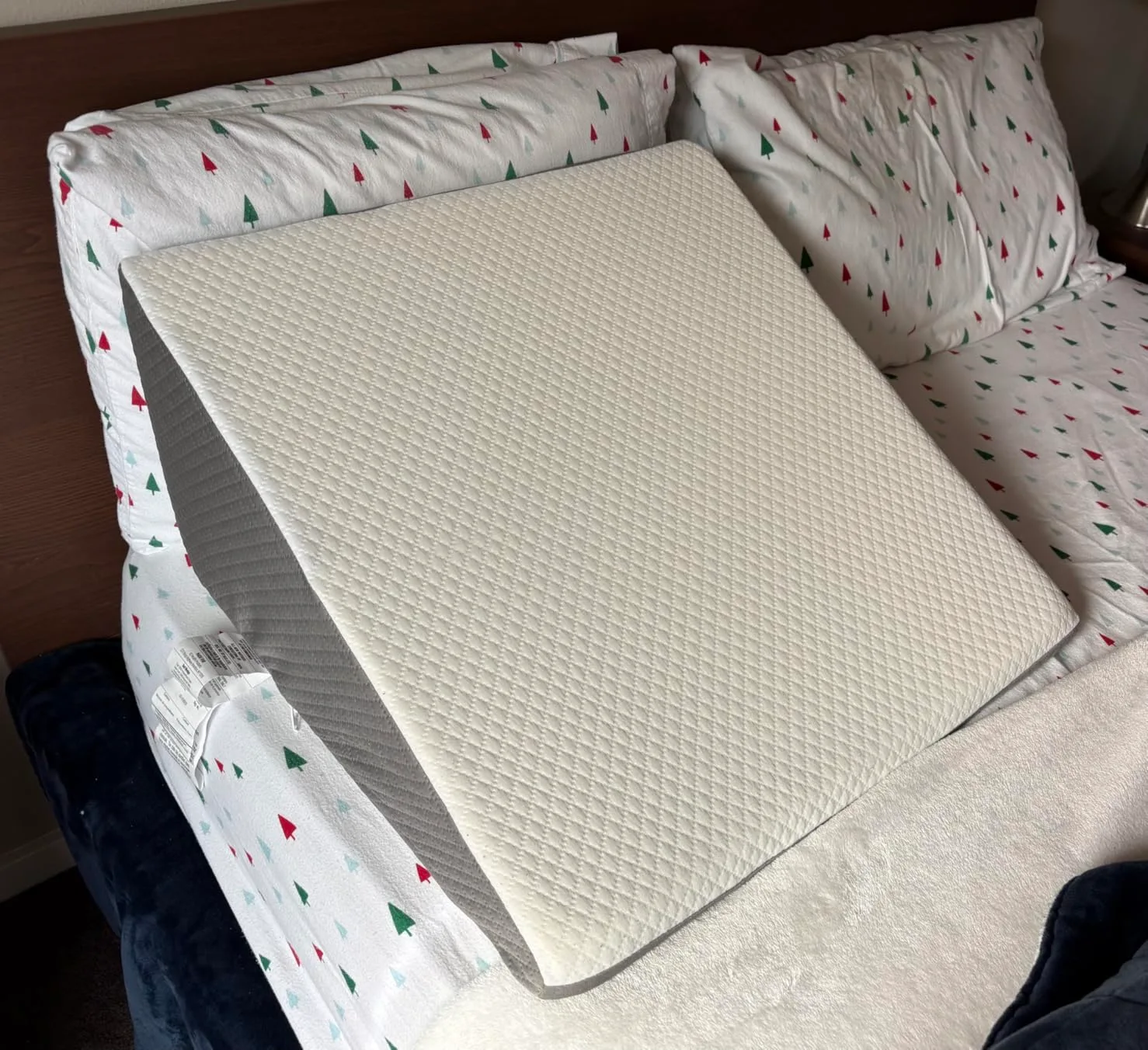
When reflux intrudes on sleep or prevents restful nights, an inclined sleeping surface isn’t merely a temporary fix—it’s a practical application of gravitational physics. Positioning your head and shoulders at an incline of 30–45 degrees from horizontal leverages gravity to maintain gastric contents in the stomach, and the vast majority of people see meaningful symptom reduction within a handful of nights, particularly when their reflux activates primarily when supine.
Solutions that deliver results
- The Kolbs wedge pillow maintains structural integrity and consistent angle throughout the night—budget alternatives compress and flatten over weeks of use, reducing their effectiveness.
- People typically report noticeable gains in symptom control and sleep quality between nights one and three, with the strongest response observed in individuals whose reflux flares during recumbency rather than in reaction to particular edibles.
- The 30-degree elevation angle has empirical support: this incline offers sufficient steepness for acid containment while remaining shallow enough to prevent cervical or shoulder discomfort.
Where an inclined pillow falls short
- A positional adjustment alone cannot address GERD rooted in food sensitivities, pharmaceutical effects, or a genuinely compromised lower esophageal sphincter—it solves the gravity component only.
- Severe or persistent reflux that occurs independent of body position still demands conversation with your doctor regarding the potential necessity of pharmaceutical therapy as a complement to positional modification.
A wedge pillow is one of the few non-pharmaceutical tools that actually works for nighttime reflux, but it’s not a substitute for identifying and addressing the underlying cause of your GERD. If you’re still reaching for antacids during the day or your symptoms haven’t improved after two weeks of consistent use, get checked by your doctor before assuming the problem is positional. That said, if reflux is disrupting your sleep, it’s absolutely worth trying: grab the Kolbs Bed Wedge Pillow for Acid Reflux and give it a fair trial.

About This Article

Written by Alex Mercer. Alex Mercer has lived with IBS since childhood and isn't a nutritionist or a doctor. After years of being told he was anxious or would grow out of it, he spent more than 12 years reading the research properly, and now shares what he has learned with the family, friends and support-group members who come to him with the same questions. He translates peer-reviewed research into practical, honest advice, and is always upfront about what the evidence does and does not show. More about this site.
Scope and limits. Alex is not a doctor, dietitian, or nutritionist, and nothing here is medical advice. Talk to a clinician before changing your diet, starting a supplement, or acting on symptoms — especially persistent or worsening ones.
Verify this against a primary source
Specifics change, and your situation may differ from the one described here. These are the authorities worth checking directly:
- NIDDK — digestive disease research and clinical guidance
- MedlinePlus — plain-language medical reference from the NIH
- Mayo Clinic — symptom and condition reference