If you have IBS, you know the feeling: staring at a menu, a fridge, or a supermarket aisle and having no idea what’s safe. There’s no shortage of advice online — but very little of it is clear, practical, or specific enough to actually use in a meal.
This cheat sheet is designed to change that. It’s based on the best current evidence — primarily the low-FODMAP protocol developed at Monash University, which has the strongest research base of any dietary approach for IBS — combined with what I’ve seen work consistently in clinical practice.
Print it. Screenshot it. Put it on your fridge.
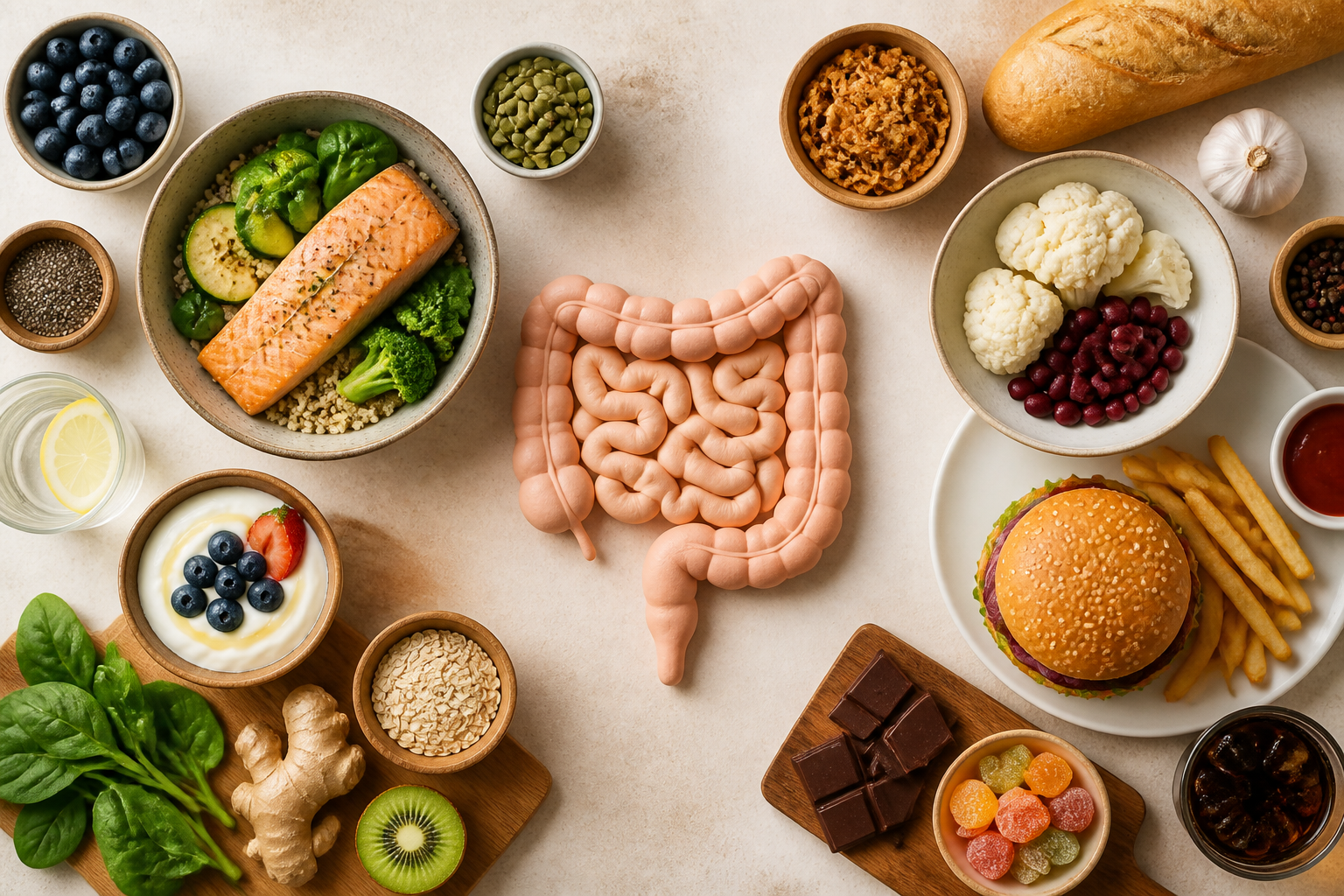
Quick Reference: IBS-Safe vs. Trigger Foods
Based on low-FODMAP research and common clinical patterns. Individual triggers vary — this is a starting framework, not a permanent prescription.
| Food Group | ✅ Generally Safe | ⚠️ Common Triggers |
|---|---|---|
| Vegetables | Carrots, courgette, cucumber, aubergine, green beans, bok choy, spinach (small portions), tomato (small), potato, parsnip, swede | Garlic, onion, leek, shallots, cauliflower, mushrooms, asparagus, artichoke, celery (large amounts), beetroot, broccoli (large portions) |
| Fruit | Banana (ripe), blueberries, strawberries, grapes, kiwi, orange, clementine, lemon/lime, pineapple (small), melon (small) | Apple, pear, mango, watermelon (large), cherries, peach, nectarine, dried fruit, fruit juice |
| Grains & Carbs | White rice, oats (small portion), sourdough spelt bread, rice cakes, corn tortillas, gluten-free pasta/bread | Wheat bread, pasta (large portions), rye, barley, couscous, most commercial cereals |
| Protein | Chicken, turkey, fish, eggs, tofu (firm), tempeh, canned tuna, prawns, beef, pork, lamb | Legumes in large amounts (lentils, chickpeas, black beans), processed meats with additives |
| Dairy | Lactose-free milk, hard cheeses (cheddar, parmesan, brie, camembert), butter, lactose-free yogurt | Regular milk, soft cheeses (ricotta, cottage cheese), ice cream, cream, yogurt (lactose-containing) |
| Dairy-free milks | Almond milk (unsweetened), rice milk, macadamia milk, hemp milk | Oat milk (some people), soy milk (made from whole soybeans — isolate is usually fine) |
| Fats & Oils | Olive oil, coconut oil, avocado oil, butter, ghee (small amounts) | Very high-fat meals overall (slows gastric emptying and can trigger IBS-D) |
| Drinks | Water, peppermint tea, ginger tea, green tea, black coffee (small amounts, if tolerated) | Alcohol (especially wine and beer), carbonated drinks, high-fructose fruit juices, caffeine in excess |
| Sweeteners | Sugar (in moderation), maple syrup, glucose | Honey, high-fructose corn syrup, agave, sorbitol, xylitol, mannitol (sugar alcohols) |
The 4 Categories of IBS Triggers: What’s Actually Behind the Foods
The food table above can feel arbitrary without understanding the why. IBS triggers fall into four main categories, and knowing them helps you predict problems before they happen:
1. FODMAPs (Fermentable Carbohydrates)
FODMAPs are a group of short-chain carbohydrates that are poorly absorbed in the small intestine and rapidly fermented by gut bacteria in the colon. This fermentation produces gas and draws water into the bowel — causing bloating, cramping, and altered bowel habit.
The FODMAP categories are:
- Fermentable Oligo-saccharides — fructans (wheat, garlic, onion, leek) and GOS (legumes)
- Di-saccharides — lactose (milk, soft cheese, ice cream)
- Mono-saccharides — excess fructose (honey, apples, pears, mangoes)
- Polyols — sorbitol and mannitol (stone fruits, cauliflower, mushrooms, sugar-free products)
2. Fat
High-fat meals trigger the gastrocolic reflex — the normal neurological response that causes the colon to contract after eating. In IBS, this reflex can be exaggerated, leading to urgent loose stools or cramping after rich, fatty meals. This is particularly common in IBS-D (diarrhoea-predominant).
3. Caffeine and Alcohol
Caffeine stimulates colonic contractions directly. Alcohol irritates the gut lining, disrupts the gut microbiome, and can alter intestinal permeability. Both are common IBS aggravators in excess — though individual tolerance varies significantly.
4. Stress and Eating Environment
IBS has a significant gut-brain component. Eating under stress, eating too fast, or eating in a distracted state activates the sympathetic nervous system and suppresses the parasympathetic digestive response. Even perfectly safe foods can trigger IBS symptoms when eaten in a stressed state.
IBS Meal Timing Cheat Sheet
Timing principles that matter for IBS:
- Don’t skip meals — irregular meal timing disrupts the migrating motor complex (MMC), the gut’s housekeeping system that clears bacteria between meals. The MMC only activates during fasting; disrupting it contributes to SIBO risk and bloating
- Eat within 1 hour of waking — this stabilises the gastrocolic reflex and reduces the urgency many IBS-D sufferers experience in the morning
- Leave 3–4 hours between meals — this gives the MMC enough fasted time to activate between eating episodes
- Keep portion sizes moderate — large volumes of food, even low-FODMAP food, can trigger symptoms through mechanical distension of the gut
- Eat slowly — fast eating leads to aerophagia (air swallowing) and reduces enzyme activity, both of which worsen IBS symptoms
- Main meal at midday if possible — gut motility and enzyme output are typically highest midday; many IBS sufferers tolerate larger meals better at lunch than dinner
IBS Eating Habits Cheat Sheet
The what-to-eat question is important, but the how matters almost as much:
- Chew thoroughly — aim for 20+ chews per mouthful for dense foods. Inadequate chewing is one of the most overlooked drivers of IBS symptoms
- Sit down to eat — eating upright and still reduces aerophagia and engages the parasympathetic nervous system
- No screens during meals — distracted eating is consistently correlated with faster eating speed and worse post-meal symptoms
- Avoid drinking large volumes with meals — a small glass of water is fine; large amounts of liquid dilute stomach acid and digestive enzymes
- Cook onion and garlic in oil, then remove — FODMAPs in garlic and onion are water-soluble but not oil-soluble; cooking them in oil and removing before serving infuses the flavour without the fermentable carbohydrates
- Rinse canned legumes thoroughly — rinsing removes a significant portion of the GOS (galactooligosaccharides) that make legumes high-FODMAP. This won’t eliminate the issue but does reduce it meaningfully
The Low-FODMAP Diet Is Not Meant to Be Permanent
This is the most important point most online resources miss. The low-FODMAP diet is a temporary diagnostic and management protocol, not a lifelong eating plan. The official Monash University approach has three phases:
- Elimination (2–6 weeks) — remove all high-FODMAP foods to establish a symptom baseline
- Reintroduction — systematically reintroduce individual FODMAP groups, one at a time, to identify your specific triggers
- Personalisation — eat a varied diet, avoiding only your confirmed personal triggers
Most people with IBS don’t react to all FODMAPs — they react to one or two. Phase 2 identifies which ones. Staying in the elimination phase permanently is unnecessarily restrictive and significantly harms microbiome diversity.
The Monash University Low-FODMAP Diet App is the most reliable reference for up-to-date food ratings — Monash tests foods directly and updates the database regularly.
IBS Supplement Basics
These are not replacements for dietary management, but they are well-evidenced adjuncts:
- Peppermint oil (enteric-coated) — reduces smooth muscle spasm in the gut; most evidence for IBS-related cramping and pain. Take 30–60 minutes before meals
- Psyllium husk — soluble fibre that bulks stool and can help both IBS-D and IBS-C. Start with a small amount (5g) and increase gradually with plenty of water
- Lactase enzyme — if lactose is a confirmed trigger, taking lactase with dairy-containing meals is one of the most reliably effective supplement interventions in IBS
- Targeted probiotics — Bifidobacterium longum 35624 (Align) and Lactobacillus rhamnosus GG (Culturelle) have the most consistent evidence specifically for IBS symptom reduction
The One Tool That Makes Low-FODMAP Actually Navigable (Not Guesswork)
Low-FODMAP is evidence-based, but it’s also genuinely complicated—and trying to memorize which foods are safe without a reference tool leads most people to either give up or restrict too much out of fear. This app removes that friction by letting you scan, search, or browse foods in real time, so you can make confident choices at the supermarket, restaurant, or your own kitchen.
What works
- Built directly on Monash University’s research—the gold standard for FODMAP data—so you’re not relying on third-party interpretation or outdated lists.
- Search and portion-size guidance cuts through the anxiety that stops people from trying foods; you can see exactly why an onion is high-FODMAP but garlic-infused oil is low, and what a safe serving looks like.
- Most of my clients who use it stick with low-FODMAP longer because they feel in control rather than constantly second-guessing themselves or avoiding whole food groups unnecessarily.
What doesn’t
- An app is not a replacement for working with a dietitian, especially in the early elimination phase—you still need someone to help you interpret your symptoms and know when to reintroduce foods.
- Low-FODMAP itself doesn’t work for everyone with IBS; roughly 70% see improvement, but if you’re in the 30% whose triggers are stress, gut motility, or other factors, this tool won’t solve that problem.
This app is a reference tool, not a cure—it helps you follow the protocol correctly, but the protocol itself takes 4–6 weeks to show results, and you’ll still need to do the reintroduction work to find your personal tolerance thresholds. Get the Monash University Low-FODMAP Diet App if you’re committed to trying this approach properly.
This post contains affiliate links. As an Amazon Associate, I earn from qualifying purchases at no extra cost to you.