This post contains affiliate links. As an Amazon Associate I earn from qualifying purchases at no extra cost to you.
If there is one area of nutritional science I return to again and again with every single client I work with, it is the relationship between dietary fibre and bowel cancer risk. The evidence supporting a high fibre diet for bowel cancer prevention is among the most robust and consistent in the entire field of nutrition research. It is not a trend, not a fad, and not a hypothesis still waiting to be proven. It is a well-established finding that I believe every person deserves to understand — and act on.

What the Research Actually Tells Us About Fibre and Bowel Cancer
Bowel cancer — also called colorectal cancer — is one of the most common cancers in the Western world, and it is also one of the most preventable through diet and lifestyle. The World Cancer Research Fund has consistently identified high dietary fibre intake as a significant protective factor in its comprehensive cancer prevention reports. A landmark meta-analysis published in the Annals of Oncology found that each 10g daily increase in total dietary fibre intake was associated with a meaningful reduction in colorectal cancer risk. That is roughly the amount you would get from a bowl of porridge, a handful of almonds, and a serving of lentils.
The mechanisms behind this protective effect are well understood. Dietary fibre speeds up the transit time of waste through the colon, reducing the time that potential carcinogens spend in contact with the gut wall. Certain fibres — particularly soluble and fermentable fibres — feed beneficial gut bacteria, which in turn produce short-chain fatty acids like butyrate. Butyrate is remarkable: it actually encourages abnormal colonic cells to undergo programmed cell death rather than proliferate. In my practice, when I explain this process to clients, I often see a genuine shift in how they think about their daily food choices. Fibre stops being something you eat for regularity and becomes something you eat for protection.
The Fibre Gap: Why Most of Us Are Not Getting Enough
Here is something that genuinely concerns me professionally. Most adults in the UK and US are consuming somewhere between 15g and 18g of fibre per day. The recommended intake is 30g per day for adults. That gap is enormous, and it has real consequences. When a client presents with sluggish digestion, bloating, or a family history of colorectal cancer, one of the very first questions I ask is: “Tell me about your fibre intake.” The answer, almost universally, reveals significant under-consumption.
The reasons for this gap are largely structural. Ultra-processed foods, refined grains, and convenience eating have displaced the whole foods that once formed the backbone of our diets. White bread instead of wholegrain, peeled potatoes instead of skin-on, fruit juice instead of whole fruit — these small daily swaps collectively strip enormous amounts of fibre from our diets without us even noticing.
Closing this gap does not require a dramatic dietary overhaul. It requires consistent, strategic additions. That is the approach I take with every client, and it is far more sustainable than any elimination-based protocol.
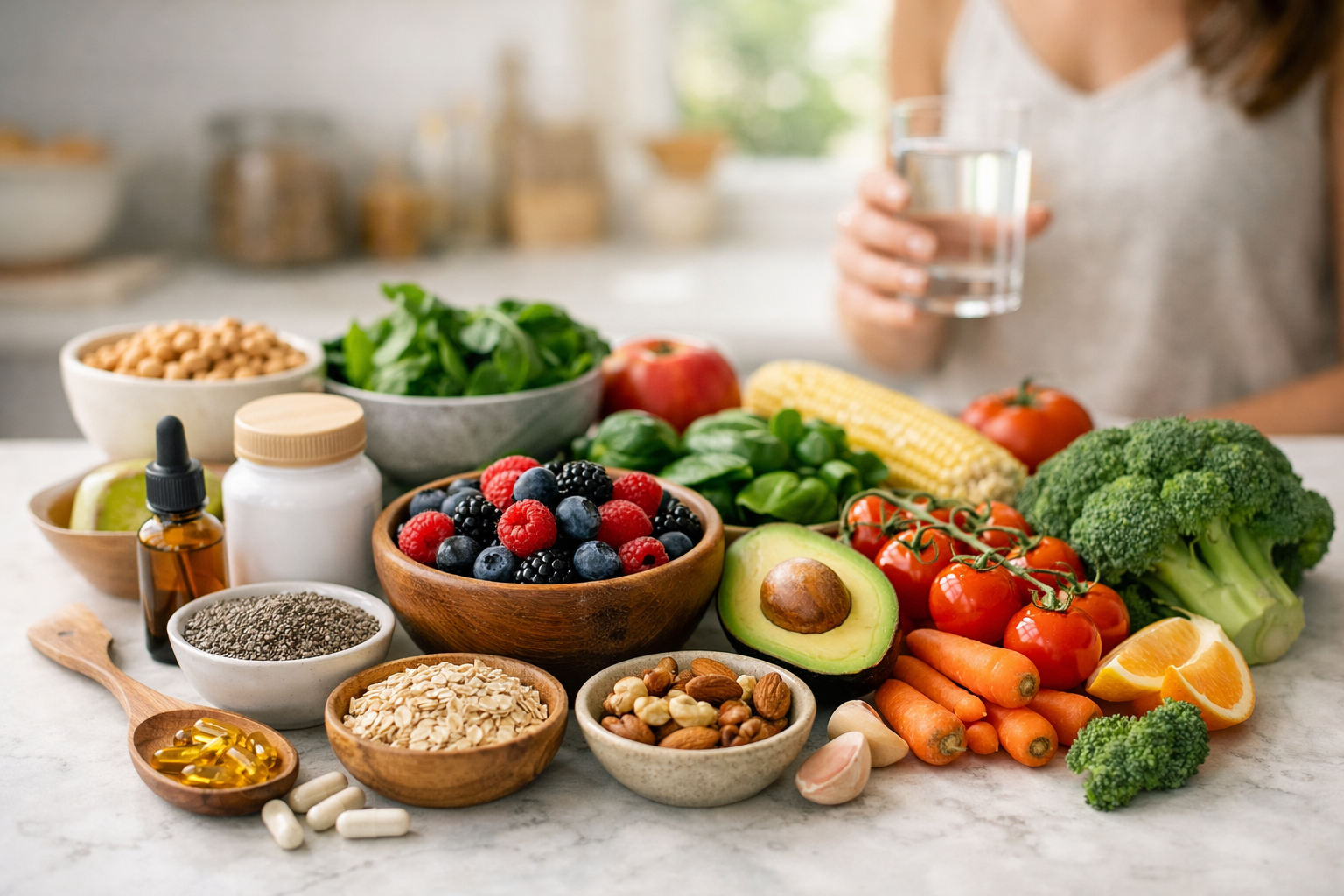
The High-Fibre Foods I Recommend Most Frequently
I always prioritise food-first strategies before recommending any supplementation. Below are the categories I build every client’s fibre plan around, with a focus on diversity as well as quantity — because the variety of fibre sources matters for microbiome diversity, which in turn supports gut health at every level.
Legumes and Pulses
These are my single most recommended fibre source. Lentils, chickpeas, black beans, kidney beans, and split peas are extraordinarily fibre-dense, affordable, and versatile. A 200g serving of cooked lentils provides around 8g of fibre. I encourage clients to aim for legumes at least four times per week — in soups, stews, salads, and even homemade dips.
Wholegrains
Oats, barley, brown rice, quinoa, wholegrain bread, and rye crackers all contribute meaningfully to daily fibre targets. Oats in particular contain beta-glucan, a soluble fibre that not only feeds beneficial bacteria but also has well-documented cholesterol-lowering effects. I often suggest starting the day with overnight oats as one of the simplest sustainable habits a client can adopt.
Vegetables, Fruits, Nuts, and Seeds
Skin-on vegetables, leafy greens, root vegetables, berries, apples, pears, flaxseeds, chia seeds, and almonds all contribute both soluble and insoluble fibre. I always recommend eating the skins where possible and choosing whole fruit over juice. Ground flaxseed in particular is something I recommend almost universally — it is easy to add to porridge, smoothies, or yoghurt and delivers a meaningful fibre and lignan boost in just one tablespoon.

Supplements That Can Bridge the Gap
While whole foods are always my first recommendation, I am entirely pragmatic. Many clients, particularly those with busy lifestyles or transitioning away from low-fibre diets, benefit from well-chosen fibre supplements to reliably reach their daily targets. Here are the products I am comfortable recommending.
For straightforward, evidence-backed fibre supplementation, psyllium husk remains the gold standard. Metamucil 3-in-1 Fiber Capsules are convenient, well-tolerated, and backed by extensive research on psyllium’s effects on bowel regularity and cholesterol. They are the number one doctor-recommended fibre brand for good reason, and I regularly suggest them to clients who struggle to hit their fibre targets through diet alone.
If you prefer a capsule format with a slightly more targeted colon-support focus, GoodMeds Psyllium Husk Fiber 520mg Capsules offer a clean, soluble dietary fibre option designed specifically to restore digestive regularity and balance. These are a practical choice for those who want the benefits of psyllium in a straightforward, no-fuss supplement.
For clients who want a broader digestive support formula alongside their fibre intake, NatureWise Total Colon Care Fiber Cleanse combines herbal laxatives, prebiotics, and enzymes in a single non-GMO capsule formula — useful when someone needs both regularity support and digestive enzyme assistance during a dietary transition.
I also like Health Plus Colon Cleanse Natural Daily Fiber Powder as a simple, gluten-free powder option that can be stirred into water or juice. With 48 servings per tub, it is a cost-effective and heart-healthy option that fits well into a daily routine.
For those who prefer capsules with added gut and GLP-1 support, the Sanar Naturals Colon Cleanser combines psyllium husk powder with probiotics in a non-GMO formula designed to support weight management, detoxification, and digestive gut health — a useful all-in-one for clients working on broader wellness goals alongside fibre targets.
One supplement category I always pair with fibre recommendations is omega-3 fatty acids. Anti-inflammatory dietary patterns are important alongside fibre for colorectal health, and omega-3s play a meaningful supporting role. Microbiome Labs MegaMarine Omega 3 Fish Oil is specifically formulated with gut barrier function in mind — it includes DPA alongside EPA and DHA, which makes it a particularly thoughtful choice for digestive health support. For a premium high-potency option, Nordic Naturals Ultimate Omega is a brand I have trusted for years — clean, third-party tested, and consistently well-tolerated. A more budget-friendly but equally solid choice is Sports Research Triple Strength Omega-3 Fish Oil from sustainably sourced wild Alaska Pollock — non-GMO, soy-free, and excellent value for daily use.

My Nutritionist Recommendation: Start Today, Build Gradually
The evidence for a high fibre diet for bowel cancer prevention is clear, consistent, and actionable. You do not need a diagnosis, a referral, or a complicated protocol to start protecting yourself. You need a practical plan and the willingness to make incremental changes that compound over time.
Here is what I recommend as your starting point:
- Add one serving of legumes to your diet every day this week — lentil soup, hummus, a bean salad.
- Switch from white to wholegrain bread, pasta, or rice in at least two meals per day.
- Eat the skin on your vegetables and fruit wherever safe to do so.
- Add a tablespoon of ground flaxseed or chia seeds to your breakfast.
- If you are not yet reaching 25–30g of fibre daily, consider a quality psyllium supplement such as Metamucil or GoodMeds Psyllium Husk to bridge the gap reliably.
- Support the process with a gut-focused omega-3 supplement — I particularly like Microbiome Labs MegaMarine for this purpose.
One important note: increase your fibre intake gradually — over two to four weeks — and increase your water intake alongside it. Adding fibre too quickly without adequate hydration can cause temporary bloating and discomfort, which is the most common reason people abandon their efforts before the benefits kick in. Slow and steady genuinely wins this race.
Your gut is working hard every single day to protect you. Give it the tools it needs. If you are unsure where to start, or if you have specific digestive concerns, I always encourage working with a registered nutritionist or dietitian who can tailor recommendations to your individual history and needs. But for the majority of us, the most impactful step we can take right now is simply eating more fibre — consistently, diversely, and starting today.
Related Posts

Warning Signs of Bowel Cancer: What My Clients Are Often Too Embarrassed to Mention
This post contains affiliate links. As an Amazon Associate I…

Gut Health Supplements That Support Bowel Cancer Prevention: What the Research Shows
This post contains affiliate links. As an Amazon Associate I…

Bowel Cancer Risk Factors You Can Actually Change: A Nutritionist’s Prevention-First Guide
This post contains affiliate links. As an Amazon Associate I…