The short answer is yes — eating too fast is one of the most reliably bloating-inducing habits you can have. And the reasons why are more numerous than most people realise.
If you find yourself consistently bloated after meals and you tend to eat quickly — at a desk, over a sink, between meetings, scrolling through your phone — this article might explain a lot.
Reason 1: You Swallow More Air
When you eat or drink quickly, you inevitably swallow more air. This is called aerophagia (air swallowing), and it’s the fastest and most direct route from eating speed to bloating.
Swallowed air accumulates in the stomach and upper intestine. Some is belched back up, but a significant portion travels further down the GI tract, causing distension and discomfort in the abdomen. Fizzy drinks, eating on the run, talking while eating, and chewing with your mouth open all compound this effect.
Studies on patients with functional bloating and IBS consistently find excess aerophagia as a contributing factor — and slowing down eating reduces measurable gas volume in the gut.
Reason 2: Food Isn’t Chewed Properly
Digestion begins in the mouth — not the stomach. Saliva contains amylase (which starts breaking down carbohydrates) and lingual lipase (which begins fat digestion). Chewing also mechanically breaks food down into smaller particles, which dramatically increases the surface area available for enzyme action lower in the gut.
When you eat fast, you swallow larger, less-processed food particles. These particles:
- Overwhelm digestive enzymes in the small intestine
- Arrive in the colon partially undigested
- Become fuel for gas-producing bacteria that ferment them — producing hydrogen, carbon dioxide, and sometimes methane
This fermentation is the primary source of the bloating and gas you feel 30–90 minutes after a fast meal. The larger the food particles, the more fermentation. The more fermentation, the more gas.
Reason 3: Digestive Enzymes Can’t Keep Up
The stomach and small intestine produce enzymes and acid in response to the mechanical stimulation of chewing and the anticipation of food (the “cephalic phase” of digestion). When food arrives too quickly in too large a volume, enzyme production hasn’t had time to ramp up adequately.
Incompletely digested proteins in particular can cause bloating as they ferment in the large intestine — producing notably foul-smelling gas. This is why eating quickly can produce both volume bloating (gas distension) and odour.
Reason 4: Your Brain Doesn’t Know You’re Full
Satiety hormones — particularly leptin, GLP-1, and peptide YY — take approximately 15–20 minutes after food enters the stomach before they reach levels that signal fullness to the brain. When you eat fast, you consistently eat past the point of comfortable fullness before the signal arrives.
Overeating is itself a direct cause of bloating: a stomach stretched beyond its comfortable capacity exerts pressure on the surrounding abdominal cavity and slows gastric emptying. This delayed emptying keeps food sitting in the stomach longer, which produces more fermentation opportunity and more gas.
Reason 5: Stress and the Vagal Nerve
Most fast eating happens in a stressed state — rushing between tasks, eating anxiously, eating distracted. Stress activates the sympathetic nervous system (fight-or-flight), which actively suppresses digestive function: it reduces stomach acid production, slows intestinal motility, and diverts blood away from the gut.
The vagus nerve, which governs the “rest and digest” parasympathetic response, needs to be activated for optimal digestion. Mindful, slow eating — even just pausing before the first bite — engages the vagal pathway and primes the gut for better function.
What Actually Helps
The evidence-backed strategies are straightforward, even if they require a habit shift:
- Chew more — aim for 20 chews per mouthful for complex or dense foods. It sounds excessive until you try it and notice the difference
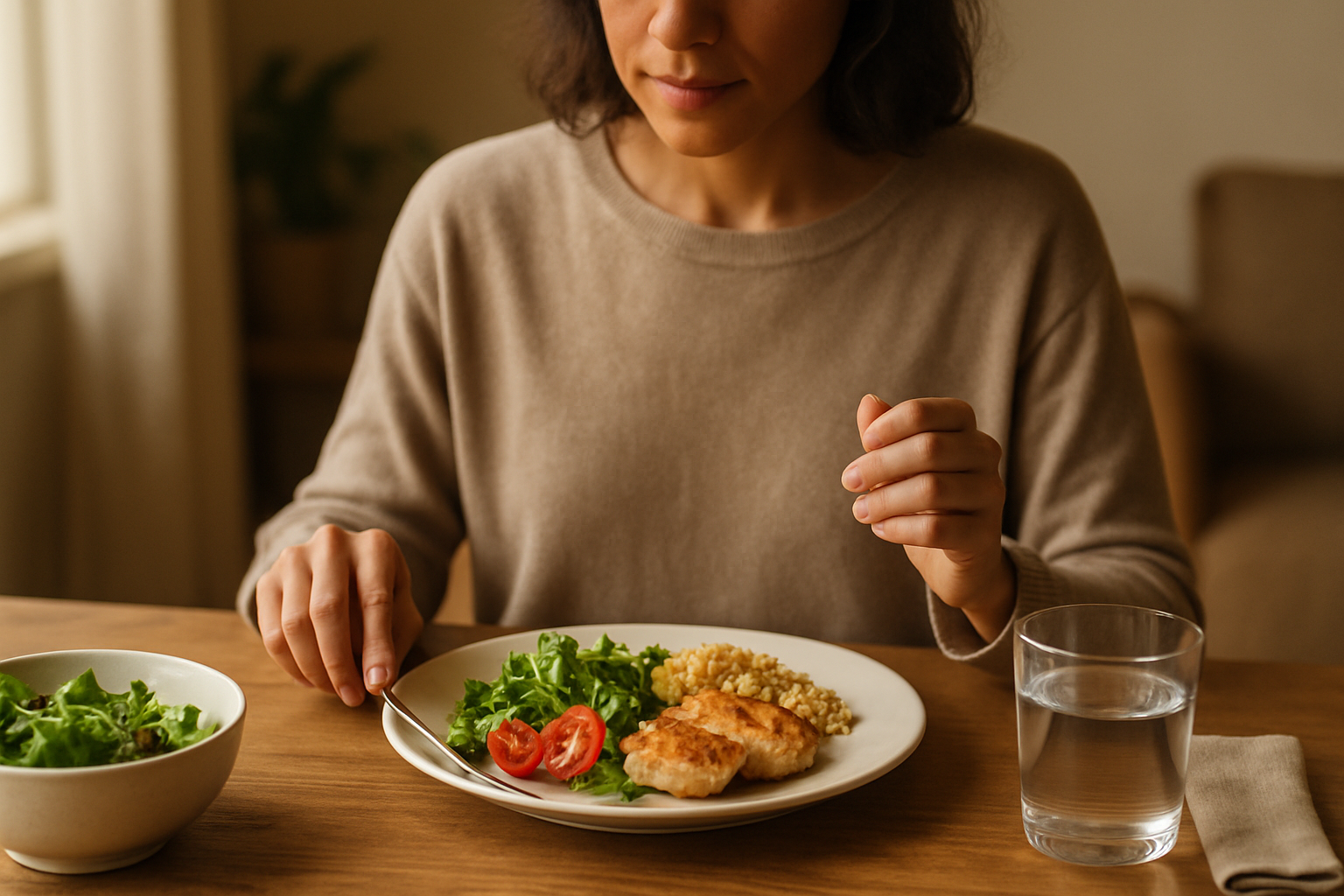
- Put your fork down between bites — this simple physical cue naturally extends meal duration without requiring willpower
- Eat without screens — distracted eating is fast eating. Your meal speed correlates almost directly with your level of screen engagement
- Sit down for meals — eating standing up or while moving increases air swallowing and signals “this is not a meal” to your gut
- Start with a few deep breaths — a 30-second pause before eating activates parasympathetic digestion mode
- Avoid talking too much while chewing — direct aerophagia route
🛒 Digestive Support for Bloating After Meals
Enzymedica Digest Gold — maximum-strength broad-spectrum digestive enzymes; take immediately before a fast meal to compensate for reduced chewing and enzyme activity
View on Amazon →Enzymedica Digest Gold + ATPro (45 Capsules) — adds mitochondrial support to the enzyme formula; useful when digestive fatigue follows fast eating
View on Amazon →As an Amazon Associate I earn from qualifying purchases. Prices and availability subject to change.
Related Posts
Why You’re Always Bloated: The 8 Most Common Causes Nobody Talks About
You wake up feeling totally fine, eat a normal breakfast,…
The Low-FODMAP Diet Explained: Could This Be the Answer to Your Bloating
You know that feeling — you eat what seems like…
How Eating Speed and Meal Habits Are Making Your Bloating Worse
You just finished lunch — a perfectly normal meal —…