When someone once showed me their food diary months into swapping notes, one pattern jumped out immediately: bloating and fatigue clustered around the same meals, all of them wheat-heavy. She’d never connected it to gluten deliberately—she just knew something felt wrong. That moment is when I realized how often at-home coeliac testing gets dismissed or, conversely, trusted too far beyond what it actually reveals. After more than a decade working alongside people navigating suspected gluten reactions, I’ve found the at-home coeliac test kit to be surprisingly valuable in certain contexts, though almost always misunderstood in others. These kits sit in an odd space: they are not diagnostic tools in themselves, yet they can be genuinely informative stepping stones when used correctly. I want to walk you through exactly what these tests measure, where their real limits sit, and the specific scenarios where I genuinely suggest them.

What At-Home Coeliac and Gluten Tests Actually Measure
The challenge with recommending any test to someone in my experience comes down to one thing: clarity about what the test is actually detecting. Gluten-related testing in the home setting encompasses several distinct categories, and they measure fundamentally different markers—which means each one addresses a separate question.
Home Screening as a Precursor to Formal Medical Evaluation
When digestive discomfort shows up repeatedly and gluten feels like the probable trigger, a preliminary at-home coeliac screen can furnish meaningful information to discuss with your GP—and clarify whether pursuing formal clinical testing is the right move. This approach works particularly well when you’re still consuming gluten-containing foods and want baseline results before entering into extensive medical investigations.
Where these tests deliver clarity
- The tissue transglutaminase (tTG-IgA) antibody marker sits at the centre of most home kits—it’s the identical antibody that clinicians screen for initially, so a positive finding warrants serious attention and a conversation with your GP.
- Accessibility eliminates a friction point many people face: individuals who might postpone appointments at their practice frequently complete testing at home, identify positive markers, and then schedule proper medical workups more readily.
- A negative result, when symptoms persist despite that finding, offers concrete reassurance that coeliac disease sits lower on your priority list—directing investigation energy toward alternative explanations (IBS presentations, FODMAP reactions, other food-based intolerances) instead of continuing to chase gluten as the answer.
Where these tests fall short
- Diagnosis of coeliac disease requires serology combined with intestinal biopsy obtained during endoscopy—a process only your GP or gastroenterologist can execute. A positive at-home result needs clinical confirmation, and gluten consumption must continue throughout your doctor’s testing phase.
- Once you’ve shifted to a gluten-free pattern, this testing approach becomes unreliable: antibody concentrations decline rapidly (typically within three to four weeks) after gluten elimination, yielding a false-negative outcome. Reintroduction of gluten for 4–6 weeks under medical supervision becomes necessary before accurate testing is possible.
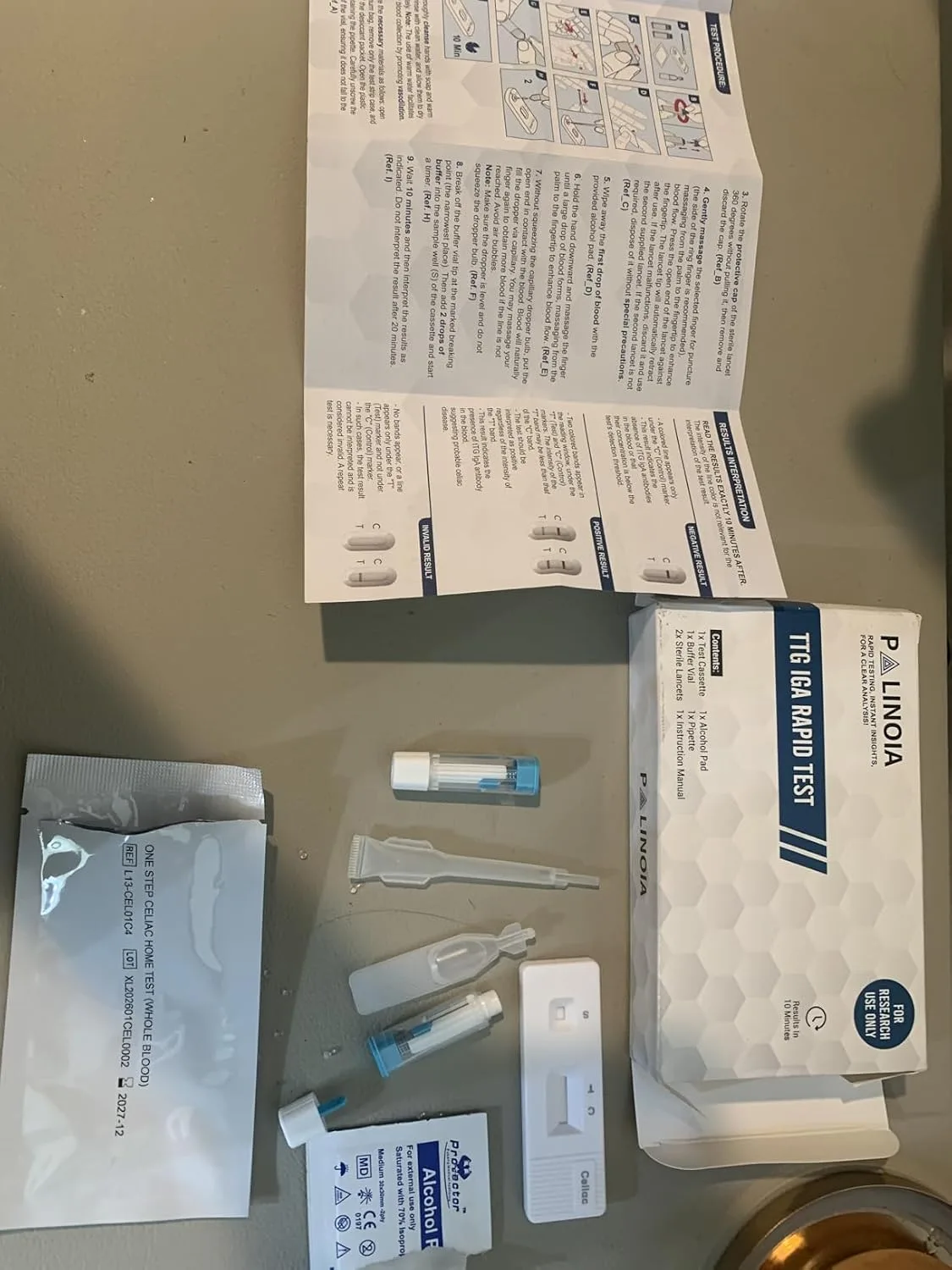
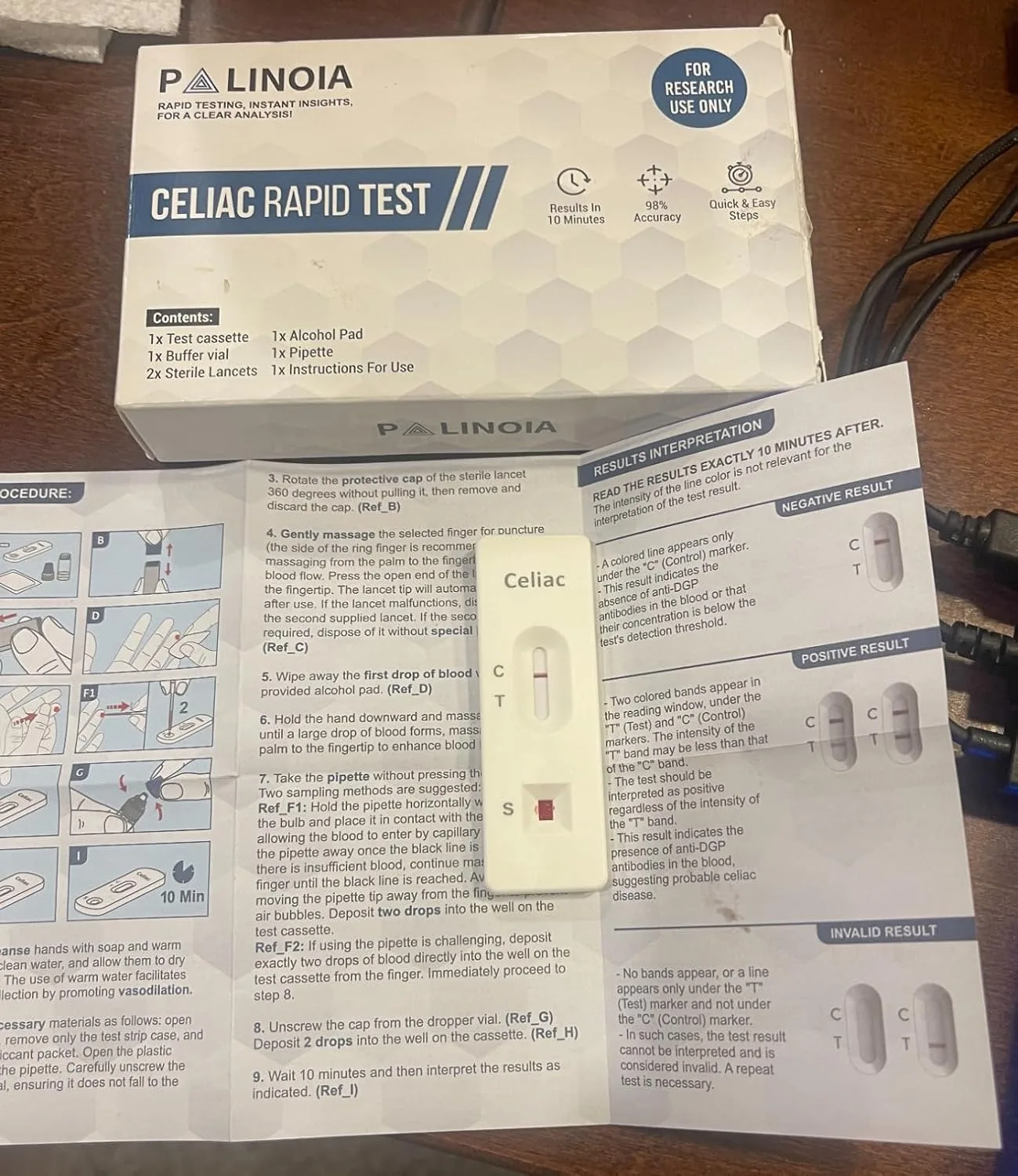
Think of this as a conversation starter with your GP, not a diagnosis. If you have severe symptoms, family history of coeliac disease, or are already gluten-free, skip the home test and go straight to your doctor for proper serology. Rapid & Accurate Gluten Sensitivity Test Kit for Coeliac Disease
About This Article

Written by Alex Mercer. Alex Mercer has lived with IBS since childhood and isn't a nutritionist or a doctor. After years of being told he was anxious or would grow out of it, he spent more than 12 years reading the research properly, and now shares what he has learned with the family, friends and support-group members who come to him with the same questions. He translates peer-reviewed research into practical, honest advice, and is always upfront about what the evidence does and does not show. More about this site.
Scope and limits. Alex is not a doctor, dietitian, or nutritionist, and nothing here is medical advice. Talk to a clinician before changing your diet, starting a supplement, or acting on symptoms — especially persistent or worsening ones.
Verify this against a primary source
Specifics change, and your situation may differ from the one described here. These are the authorities worth checking directly:
- NIDDK — digestive disease research and clinical guidance
- MedlinePlus — plain-language medical reference from the NIH
- Mayo Clinic — symptom and condition reference