
I am a qualified nutritionist, not a gastroenterologist. The experiences shared here are personal and clinical observations. Always consult your doctor before starting any new supplement or sleep aid, especially if you take medication or have a diagnosed condition.
For three years, I dreaded bedtime. That burning sensation would creep up my chest around 11pm like clockwork. Using a wedge pillow acid reflux night solution had been suggested to me by a colleague — a gastroenterologist I respect enormously — but I kept putting it off. I assumed it was a gimmick. I was wrong, and I want to tell you exactly why.
In my fifteen years of clinical practice as a nutritionist specialising in gut health, I’ve worked with hundreds of clients managing gastro-oesophageal reflux disease (GORD). Diet, meal timing, and targeted supplementation are always my first tools. However, I’ve come to understand that positional therapy during sleep is one of the most consistently underrated interventions available — and the research firmly supports this.
When my own symptoms became disruptive enough to affect my sleep quality, I decided to test a wedge pillow properly. Not just for a night or two — but for a full four weeks, tracking my symptoms methodically. Here’s everything I found.
Elevating Your Upper Body to Reverse Acid Flow at Night
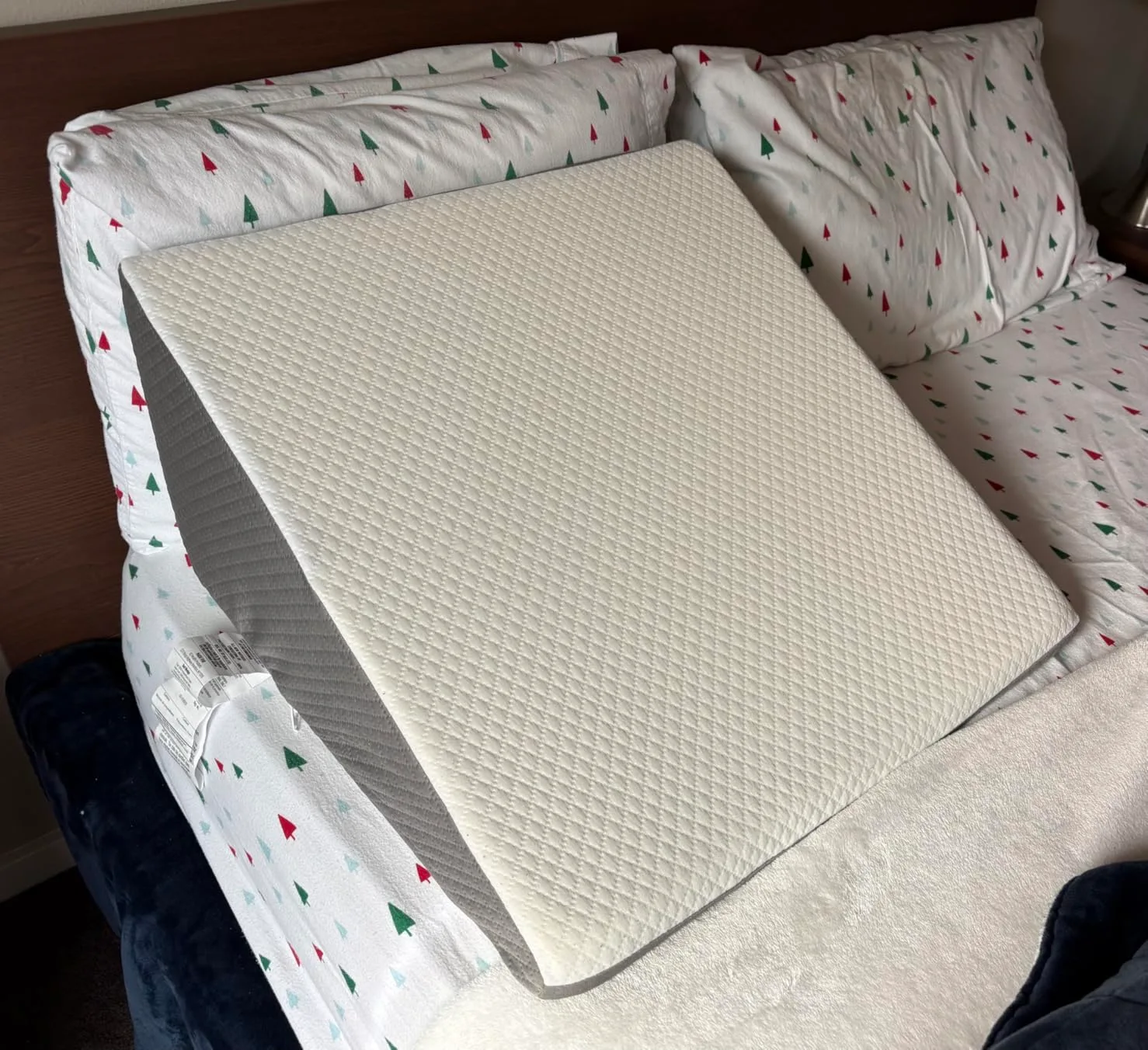
Lying flat is one of the worst positions for reflux—gravity stops working in your favour and stomach acid easily travels back up the oesophagus. A proper wedge pillow tilts your entire torso, not just your head, so gravity actively helps keep acid down where it belongs.
What works
- The 30–40 degree incline is steep enough to be mechanically effective (a regular pillow stack rarely does this job) without being so steep you slide down in the night.
- Most clients report noticing the difference within 2–3 nights—you’re not waiting weeks to see if it “might” help.
- The firm foam base actually maintains its shape, unlike stacked pillows that collapse and flatten your incline by 2am.
What doesn’t
- If your reflux is driven primarily by food triggers or portion size, a wedge pillow is positioning support, not a fix—you still need to address what’s triggering the acid production itself.
- People with certain back conditions or those who find sleeping inclined genuinely uncomfortable should check with their physio or GP before committing; it’s not right for everyone, and forcing it can cause neck strain.
This is a physical tool that helps your anatomy work with gravity, not against it—but it doesn’t replace medication if you’ve been prescribed it, nor does it address the root cause of why you’re producing excess acid in the first place. If reflux is severe or medication-dependent, keep taking your medication and use the wedge alongside it. Kolbs Bed Wedge Pillow for Sleep Apnea, FSA Eligible Acid Reflux, and Back Pain Relief, with Chic Jacquard Cover
This post contains affiliate links. As an Amazon Associate, I earn from qualifying purchases at no extra cost to you.

This post contains affiliate links. As an Amazon Associate, I earn from qualifying purchases at no extra cost to you.