
0 Comments

  • IBS-D (diarrhea-dominant) sufferers — acacia may loosen stools further in some individuals
  • Anyone seeking rapid constipation relief — this is a slow, consistent intervention
  • People with confirmed or suspected SIBO
  • This post contains affiliate links. As an Amazon Associate, I earn from qualifying purchases at no extra cost to you.
    I am a qualified nutritionist, not a gastroenterologist. The experiences shared here are personal and clinical observations. Always consult your doctor before starting any new supplement, especially if you take medication.

    When clients ask me about Heathers Tummy Fiber IBS products, I never answer without personal context. Over fifteen years of gut health practice, I have seen soluble fiber supplements transform constipation-dominant IBS — and I have also seen them backfire spectacularly. Last spring, my own digestion hit a rough patch. Chronic work stress, disrupted sleep, and a heavy travel schedule left me personally dealing with the sluggish, bloated discomfort I normally help clients navigate. It felt like a useful moment to test what I regularly recommend.

    Heather Van Vorous — founder of Heather’s Tummy Care — built her reputation specifically around low-FODMAP, IBS-safe acacia fiber. Her brand has become almost synonymous with soluble fiber for IBS-C. However, her signature product carries a significant premium price point. That raised an honest clinical question for me: does the brand name justify the cost, or can a high-quality acacia senegal powder from a trusted supplier deliver equivalent results?

    I decided to run a structured six-week self-experiment using Anthony’s Organic Acacia Senegal Powder as my primary test product. What follows is my honest, detailed account of that experience — including one week where I genuinely questioned whether it was working at all.

    Why I Chose Anthony’s Organic Acacia Senegal Powder

    Acacia senegal is not just any soluble fiber. It is a specific species of gum arabic with a well-documented fermentation profile in the colon. Research published in the Beneficial Microbes journal found that acacia senegal selectively feeds Lactobacillus and Bifidobacterium strains — the very populations most depleted in IBS patients. That bifidogenic effect matters enormously in clinical practice.

    Critically, acacia fiber ferments slowly. This is the key mechanism that makes it gentler than psyllium for IBS sufferers. Fast-fermenting fibers generate rapid gas production, which worsens bloating and cramping. Acacia senegal’s slow, even fermentation means less gas, more predictable bowel response, and better tolerance overall. Multiple trials, including a 2012 randomized study in Nutrition Journal, confirmed its superior tolerability compared to inulin and other prebiotic fibers.

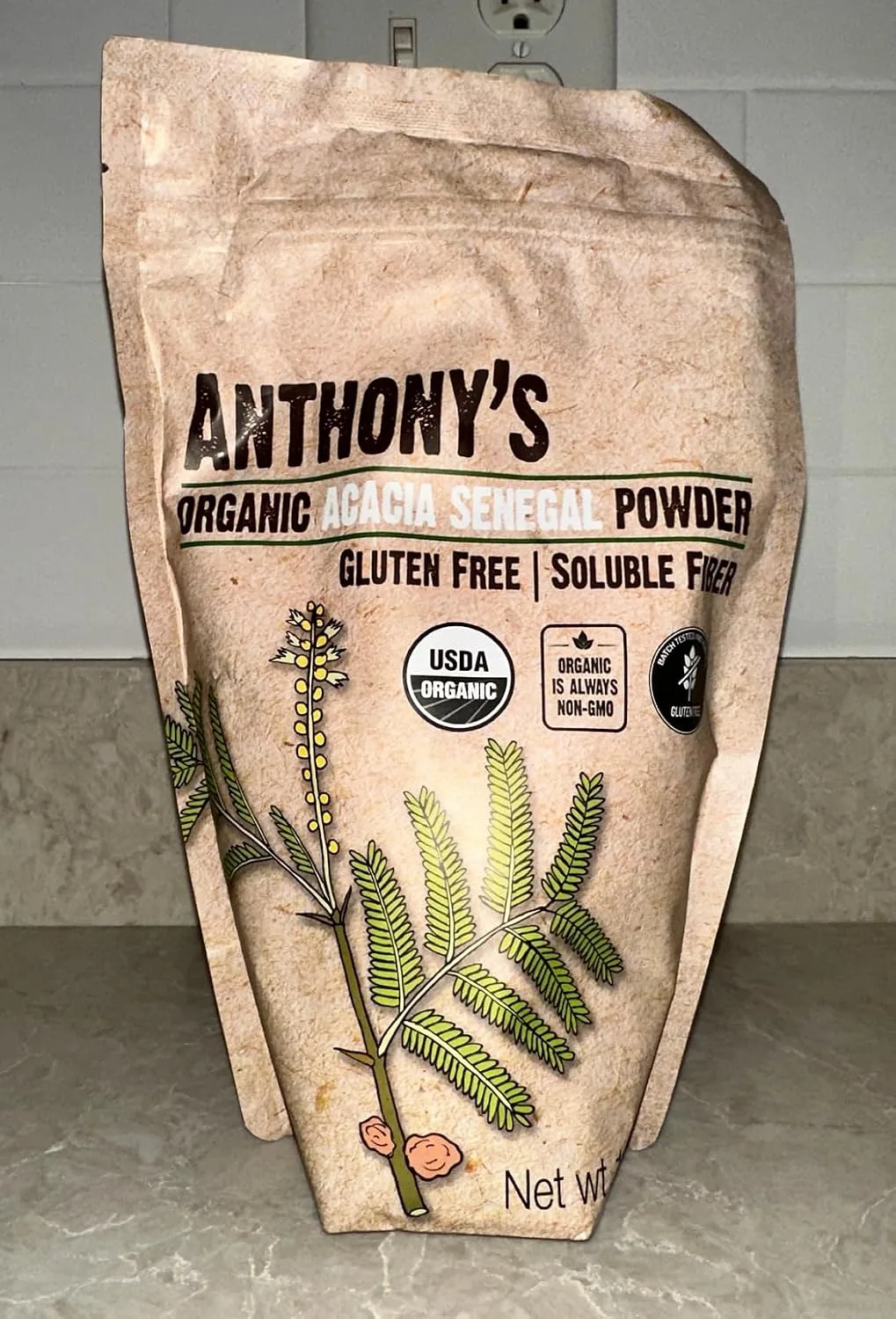
    So why Anthony’s specifically? Three reasons drove my decision. First, the product is certified batch-tested gluten free — essential for IBS patients who also have gluten sensitivity. Second, it is USDA Organic and Non-GMO verified. Third, and perhaps most practically, the one-pound format offers exceptional value compared to branded IBS-specific products. The active ingredient is identical: pure acacia senegal powder with no additives, fillers, or sweeteners.

    What the Label Actually Tells You

    The full product name is Anthony’s Organic Acacia Senegal Powder, 1 lb, Batch Tested Gluten Free, Non GMO, Soluble Fiber, Prebiotic. That label transparency matters to me professionally. “Batch tested” means independent verification — not just a manufacturer claim. For my IBS clients, that distinction is non-negotiable.

    First Impressions: Packaging, Texture, and Taste

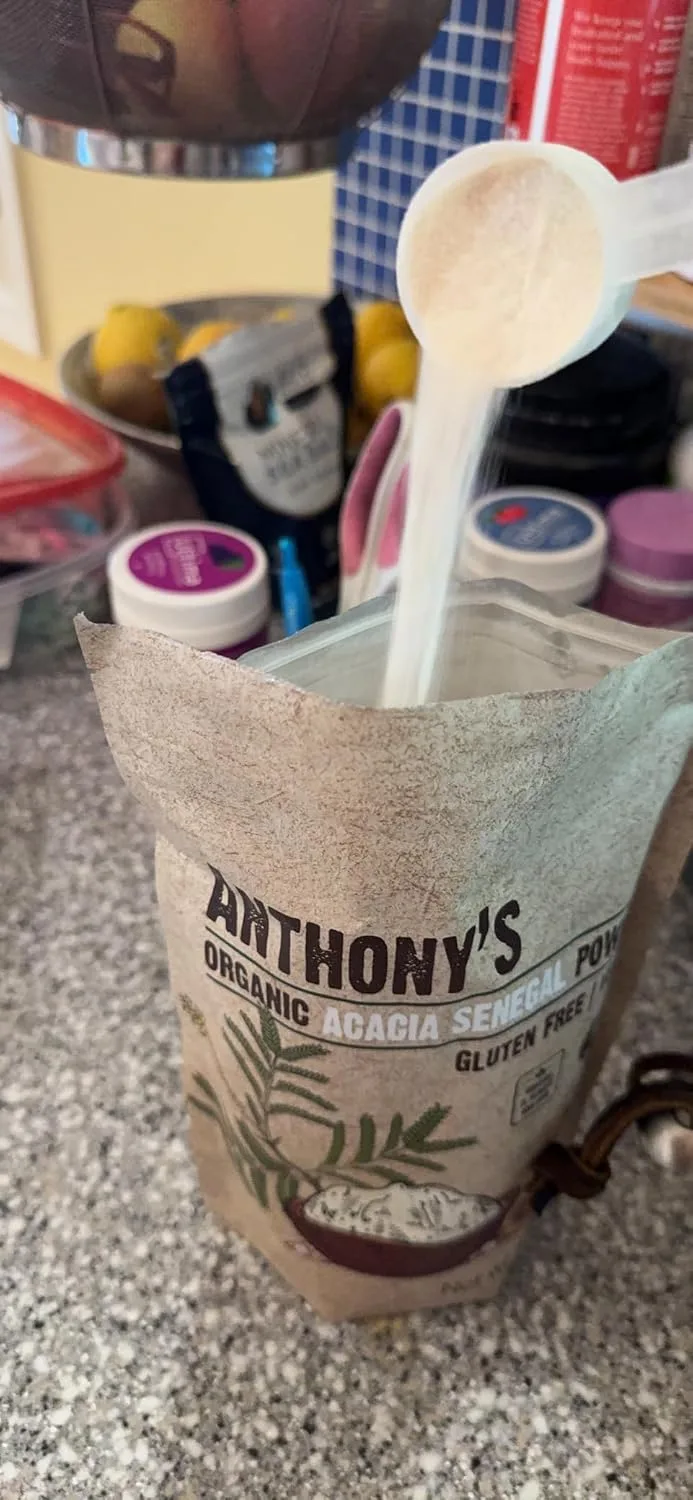
    The product arrived in Anthony’s characteristic kraft-style resealable bag. Straightforward and functional. No excessive plastic, no intimidating supplement bottle. I appreciated the simplicity immediately.

    Opening the bag, I found a fine, off-white powder with a very faint, almost neutral earthy scent. Nothing unpleasant. I stirred one teaspoon into a glass of room-temperature water and watched it dissolve within about forty seconds. No clumping. No gritty residue. The taste was essentially invisible — a very subtle sweetness, nothing more. This is genuinely remarkable for a fiber supplement.

    For comparison, psyllium husk turns water into a gel within minutes and demands immediate consumption. Acacia dissolves cleanly. That difference means it can be stirred into coffee, smoothies, or soups without altering texture. In my experience, this dramatically improves long-term compliance — which is the real challenge with any fiber supplement protocol.

    Dosing Instructions

    The packaging recommends starting with one teaspoon (approximately 3–4g) per day and gradually increasing. This matches clinical guidance precisely. Heather Van Vorous herself recommends the same slow titration approach for IBS. Starting too high causes gas and bloating — a common mistake that leads people to abandon fiber supplementation prematurely.

    My 6-Week Testing Protocol

    I designed my testing protocol around three measurable outcomes: stool consistency using the Bristol Stool Scale, frequency of bowel movements, and subjective bloating score on a 1–10 daily scale. I also tracked energy levels and any GI discomfort after meals. Simple but systematic.

    My dosing schedule looked like this:

    • Weeks 1–2: 1 teaspoon (approx. 3.5g) once daily, stirred into morning water before breakfast
    • Weeks 3–4: 1 teaspoon twice daily — morning and early evening, both with a full glass of water
    • Weeks 5–6: 1.5 teaspoons twice daily (approximately 10–11g total per day)

    I maintained my usual diet throughout — Mediterranean-style eating, moderate coffee, low alcohol. No laxatives, no other new supplements. I wanted to isolate the acacia fiber variable as cleanly as possible.

    Each morning, I logged my Bristol score before coffee. Type 1–2 (hard, lumpy) was my baseline. My target was consistent Type 3–4 (smooth, sausage-shaped) — the clinical definition of healthy stool consistency.

    Heathers Tummy Fiber IBS Results: What Actually Changed

    Weeks 1 and 2: Slower Than Expected

    Honestly? The first two weeks were underwhelming. My Bristol scores stayed mostly at Type 2. Bloating remained around 5–6 out of 10 most mornings. I noticed slightly more frequent urges — perhaps one more bowel movement every two to three days — but nothing dramatic.

    This is the moment of doubt I mentioned earlier. Around day ten, I genuinely considered that perhaps my gut microbiome was too depleted to respond. That is a real clinical possibility. Acacia fiber’s prebiotic effect depends on having sufficient colonic bacteria to ferment it. If bacterial diversity is severely compromised, initial response can be minimal.

    I stayed the course. This is where clinical experience matters more than impatience.

    Weeks 3 and 4: The Shift Begins

    Moving to twice-daily dosing in week three produced a noticeable change within five days. My Bristol scores shifted consistently to Type 3. Bloating dropped to a 3–4 out of 10 by week four. More significantly, the uncomfortable sense of incomplete evacuation — a hallmark of IBS-C — reduced substantially.

    Frequency improved too. I moved from roughly four to five bowel movements per week to a reliable once-daily pattern. For anyone with IBS-C, that regularity feels genuinely life-changing. Energy levels lifted noticeably. I attribute this partly to reduced toxic load from stool sitting in the colon — a well-documented consequence of chronic constipation.

    Weeks 5 and 6: Consolidation

    The final two weeks confirmed the trend. Bristol Type 3–4 became my consistent baseline. Bloating averaged 2–3 out of 10 — a dramatic improvement from my starting point. Post-meal discomfort, which had been a daily occurrence, became occasional rather than expected.

    One additional observation surprised me. My energy felt more stable throughout the day. Research suggests this may relate to short-chain fatty acid (SCFA) production — specifically butyrate — which acacia fermentation generates in the colon. Butyrate is fuel for colonocytes and plays a role in gut barrier integrity. That systemic effect is often underappreciated in fiber discussions.

    The Downsides You Should Know

    No supplement review is complete without honest limitations. Here are the ones I observed and recommend you consider carefully.

    It takes patience. Two full weeks passed before I saw meaningful improvement. Many people abandon fiber supplements within seven to ten days. If you expect rapid laxative-style relief, this is the wrong product entirely.

    Hydration is non-negotiable. Soluble fiber absorbs water as it works. On days when I under-hydrated, my bloating score crept back up to 5–6. You must drink at least two litres of water daily while using any fiber supplement. This is not optional.

    Week three gas increase. When I doubled the dose in week three, I experienced two to three days of increased flatulence. This is a normal prebiotic adaptation response. However, it is worth knowing before you increase your dose mid-week before an important meeting or social event.

    Not suitable for everyone. People with small intestinal bacterial overgrowth (SIBO) should approach any prebiotic fiber with extreme caution. Feeding colonic bacteria is beneficial in IBS — but feeding misplaced small intestinal bacteria can worsen symptoms dramatically. If you have undiagnosed SIBO, acacia fiber may initially make things worse. Always rule out SIBO with a breath test before starting prebiotic supplementation.

    Medication interactions. Fiber can slow the absorption of certain medications, including thyroid hormones and some antidepressants. If you take daily medication, space your fiber dose at least two hours away from your tablets.

    Final Verdict: Is Anthony’s Acacia Worth It for IBS-C?

    After six weeks of structured self-testing alongside fifteen years of clinical observation, my honest verdict is: yes, with caveats. Anthony’s Organic Acacia Senegal Powder delivers meaningful, evidence-backed relief for IBS-C when used correctly, consistently, and with adequate hydration.

    I rate it 4.5 out of 5 for IBS-C management. The missing half-point reflects the slow initial onset — something many users won’t tolerate without guidance. That is a coaching problem as much as a product problem, but it is worth naming.

    Who Should Buy This

    • IBS-C sufferers looking for a low-FODMAP, gentle, daily fiber supplement
    • Anyone who has found psyllium husk too gassy or harsh
    • People seeking prebiotic support for gut microbiome diversity
    • Those researching Heathers Tummy Fiber IBS alternatives at a lower price point
    • Clients already following a low-FODMAP diet who want a compatible fiber source

    Who Should Look Elsewhere

Related Posts