Almost every client who comes to me on a GLP-1 medication asks the same question at some point: is one of these drugs actually easier on the stomach than the others? Ozempic, Wegovy, and Mounjaro all slow gastric emptying, and that shared mechanism is exactly why nausea, bloating, constipation, and reflux show up so consistently across all three. But the dose, the active compound, and the titration schedule do change how GI side effects show up in practice — and that is where I focus with clients. If you’re weighing the differences between Ozempic vs Wegovy vs Mounjaro side effects, understanding the digestive impact of each can help you and your prescriber make the most informed choice.
The truth is, there isn’t one universally “gentler” option. But there are clear patterns in how people tolerate each one, and knowing those patterns can help you prepare, prevent complications, and know when to reach out for support.
What These Three Drugs Actually Do to Your Digestion
Let me start with the shared mechanism, because this is foundational to understanding why all three medications create similar GI challenges.
Ozempic (semaglutide), Wegovy (also semaglutide, but at higher doses), and Mounjaro (tirzepatide) are all GLP-1 receptor agonists — with Mounjaro also acting as a GIP receptor agonist. What matters for your stomach is this: they all signal your digestive system to slow down. Specifically, they reduce the rate at which your stomach empties food into your small intestine. This is partly why they help with appetite control — food stays in your stomach longer, and you feel fuller for longer.
But slowed gastric emptying also means your stomach is working differently than it did before. Food sits longer. Gas production can increase. Your gut motility changes. And that is where nausea, bloating, constipation, reflux, and early satiety all come from.
The real question isn’t whether you’ll experience these side effects — statistically, you probably will, at least initially. The question is how severe they’ll be, how long they’ll last, and whether your digestive system adapts.
Ozempic and Wegovy: Same Drug, Different Doses, Different Timelines
Here’s something that surprises many people: Ozempic and Wegovy contain the exact same active ingredient, semaglutide. The difference is in the dose and the intended use case.
Ozempic is dosed for blood sugar management in type 2 diabetes, starting at 0.25 mg weekly and typically topping out at 1 mg weekly. Wegovy, designed for weight management, goes higher — up to 2.4 mg weekly — and requires a longer titration schedule to get there (around 16 weeks).
From a digestive perspective, this matters a lot. In my practice, I’ve noticed that clients on Ozempic tend to experience milder GI side effects than those on Wegovy, simply because they’re not escalating to the same peak dose. That said, side effects aren’t purely dose-dependent — individual sensitivity varies widely.
The slower titration schedule of Wegovy can actually be a digestive advantage, though. Because you’re stepping up gradually over months rather than weeks, your gut has more time to adapt at each dose level. I’ve had several clients tell me that by the time they reached their maintenance dose on Wegovy, the acute nausea and bloating had largely resolved. The slow climb gave their digestive system time to adjust.
Common GI side effects on semaglutide (both Ozempic and Wegovy) include nausea (around 25–40% of users in trials), vomiting (up to 10%), constipation (20%), and diarrhea (20%). These typically peak in the first 2–4 weeks after each dose increase, then improve.
Mounjaro: A Different Mechanism, Different GI Profile
Mounjaro (tirzepatide) is structurally different from semaglutide. It’s a dual GLP-1/GIP receptor agonist, meaning it hits two pathways instead of one. This dual action is why it tends to be more effective at weight loss in clinical trials — but does it change the digestive side effect profile?
The short answer: not dramatically, but there are some nuances.
In Mounjaro’s clinical trials, nausea was reported in about 25% of participants, and constipation in roughly 22%. That’s comparable to semaglutide. However, I’ve noticed in practice that some clients transition more smoothly to Mounjaro than they did on semaglutide, while others find the opposite. The GIP receptor activation adds another layer of gut signaling, and people seem to respond quite individually.
Mounjaro also uses a slower starting dose (2.5 mg) compared to semaglutide’s 0.25 mg, which means the initial absolute dose is higher. This can create a steeper GI adjustment curve in the first week or two for some clients, though others sail through with minimal symptoms.

Which One Is Easiest on Digestion — and How to Manage Side Effects
If I’m being honest, there’s no clear winner. All three slow gastric emptying. All three will likely cause some digestive discomfort, especially early on. The “easiest on digestion” option is the one your body tolerates best — and that’s individual.
What I tell my clients is this: if you’re on one of these medications and struggling with GI side effects, here are the evidence-informed strategies that actually help:
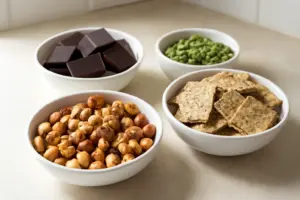
- Eat smaller, more frequent meals. Large meals amplify the discomfort of slowed gastric emptying. Splitting your intake into 4–5 smaller eating occasions reduces the volume sitting in your stomach at once.
- Prioritize protein and fat early. Protein is more satiating and helps preserve muscle during weight loss. Fat slows gastric emptying further, which can paradoxically feel better when you’re eating smaller amounts.
- Manage fiber intake carefully. This is where many people stumble. Too much fiber too quickly, combined with slowed transit, worsens bloating and constipation. Increase gradually and stay hydrated.
- Stay hydrated between meals, not during. Sipping water with food increases gastric volume and can trigger nausea. Hydrate away from eating windows.
- Avoid trigger foods. Fried, high-fat, or very sweet foods often trigger nausea on GLP-1s. Keep a food diary to identify your personal triggers.
If constipation is your main issue — and it’s the most common complaint I hear across all three drugs — movement, hydration, and strategic magnesium supplementation make a real difference. I often recommend magnesium glycinate (200–400 mg daily) because it supports both bowel regularity and doesn’t trigger more gas the way some fiber supplements do.
The timeline also matters. Most acute GI side effects settle within 2–4 weeks of starting or increasing a dose. If you’re six weeks in and nausea is still severe, or if you develop signs of pancreatitis (severe abdominal pain, vomiting), that’s when you contact your prescriber. Don’t assume you just have to white-knuckle through it.

The Bottom Line: Ozempic vs Wegovy vs Mounjaro Side Effects
When it comes to ozempic vs wegovy vs mounjaro side effects, the digestive impact is more similar than different. All three slow your stomach. All three trigger nausea, bloating, and constipation in a significant portion of users. The dose, titration schedule, and your individual physiology determine how severe your experience will be.
My recommendation? Work with your prescriber and a nutritionist who understands GLP-1 medications. If one drug isn’t working for your digestion after a fair trial (6–8 weeks), switching to another option is reasonable. Some of my clients do much better on Mounjaro than they did on semaglutide, and vice versa. But that decision should be made collaboratively with your medical team, not based on hope alone.
And remember: digestive side effects are almost always manageable with the right eating strategy and patience. You don’t have to suffer through this. If you’re on a GLP-1 and struggling with your gut, reach out to your doctor or a registered dietitian. Small changes in meal timing, portion size, and food choices can make a massive difference in how you feel.
Have you experienced GI side effects on a GLP-1 medication? I’d love to hear your experience in the comments below — and if you have questions about managing your digestion on Ozempic, Wegovy, or Mounjaro, that’s exactly what I’m here for.
This post is for informational purposes only and is not medical advice. GLP-1 medications require a prescription — always talk to your prescribing doctor or pharmacist before starting, stopping, or changing how you manage side effects.