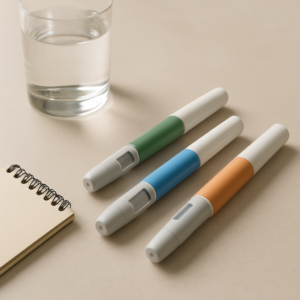
GLP-1 medications like Ozempic work partly by slowing down how quickly food leaves your stomach — which is exactly why nausea, bloating, and constipation are the three complaints I hear about most from clients starting these medications. None of this means the drug is not working or that something is wrong; it means your digestive system needs some deliberate support while it adapts to a fundamentally slower gut.
In my practice as a registered nutritionist, I’ve worked with dozens of people navigating ozempic gut side effects across the spectrum of severity. Some experience mild discomfort for the first week or two; others deal with more persistent nausea and constipation that requires real nutritional strategy to manage. The good news is that understanding why these side effects happen makes it much easier to address them with food, hydration, and meal timing rather than white-knuckling through them.
Let’s talk about what’s actually happening in your digestive tract, and what you can do about it.

How GLP-1s Affect Your Stomach and Gut Movement
GLP-1 receptor agonists—semaglutide (Ozempic, Wegovy), tirzepatide (Zepbound, Mounjaro), and others in this class—work by mimicking glucagon-like peptide-1, a hormone that tells your stomach to slow down. This delayed gastric emptying is therapeutic for blood sugar control and appetite regulation, but it’s also the root cause of most gastrointestinal side effects.
When food sits in your stomach longer, several things happen:
- Stomach acid has more time to irritate the lining, triggering nausea
- Gas and fermentation increase, causing bloating and discomfort
- The entire intestinal tract slows, leading to constipation
- Food moves more slowly through the colon, extracting more water and making stools harder
Clinical studies show that gastrointestinal side effects are reported by 25–50% of people starting GLP-1 therapy, depending on the dose and individual sensitivity. Most people see improvement within 4–8 weeks as the body acclimates to the medication, but that window can feel long without the right support.
Managing Nausea: Small, Frequent, Gentle Meals
Nausea is often the first and most bothersome side effect I hear about. The instinct is usually to stop eating, but that actually makes things worse because an empty stomach produces more acid and triggers stronger nausea signals.
The nutritional solution is counterintuitive: eat more frequently but in much smaller amounts. When a client presents with nausea on GLP-1s, I typically recommend:
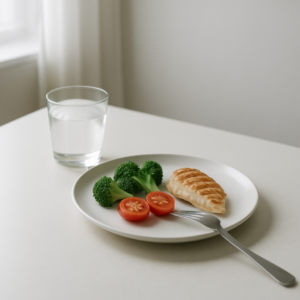
- Smaller portions: Aim for 3–4 ounces of protein and 1/2 cup of vegetables per meal, rather than traditional dinner portions. Your stomach capacity has effectively shrunk, and overeating is a primary trigger.
- More frequent eating: Five to six small meals spread throughout the day keeps your stomach gently occupied without overwhelming it.
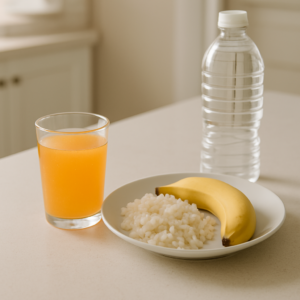
- Gentle foods first: Start with broths, plain grilled chicken, white fish, soft vegetables like zucchini and carrots, and well-cooked grains. Save raw vegetables and high-fat foods for when your tolerance improves.
- Sip, don’t gulp: Drink water slowly and separately from meals—large volumes of liquid in the stomach amplify nausea. Aim for 30 minutes before or after eating.
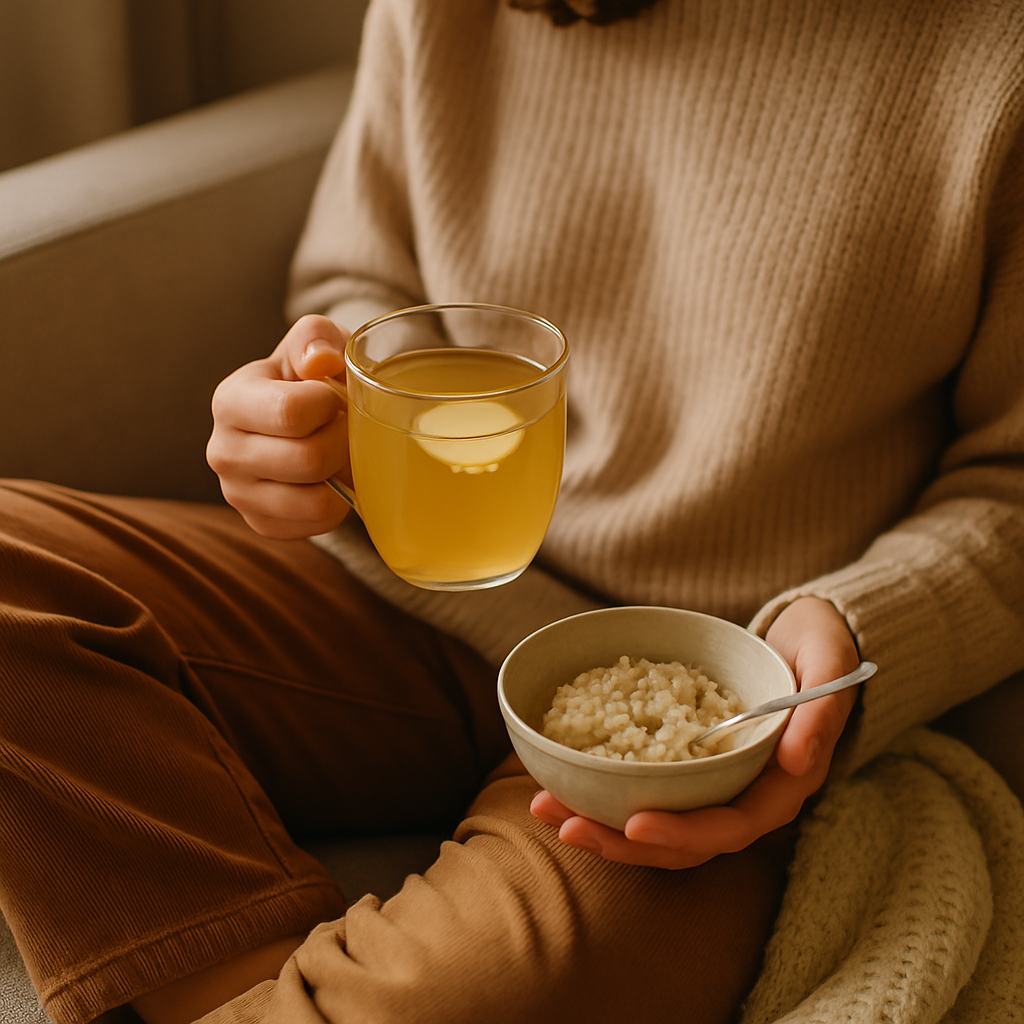
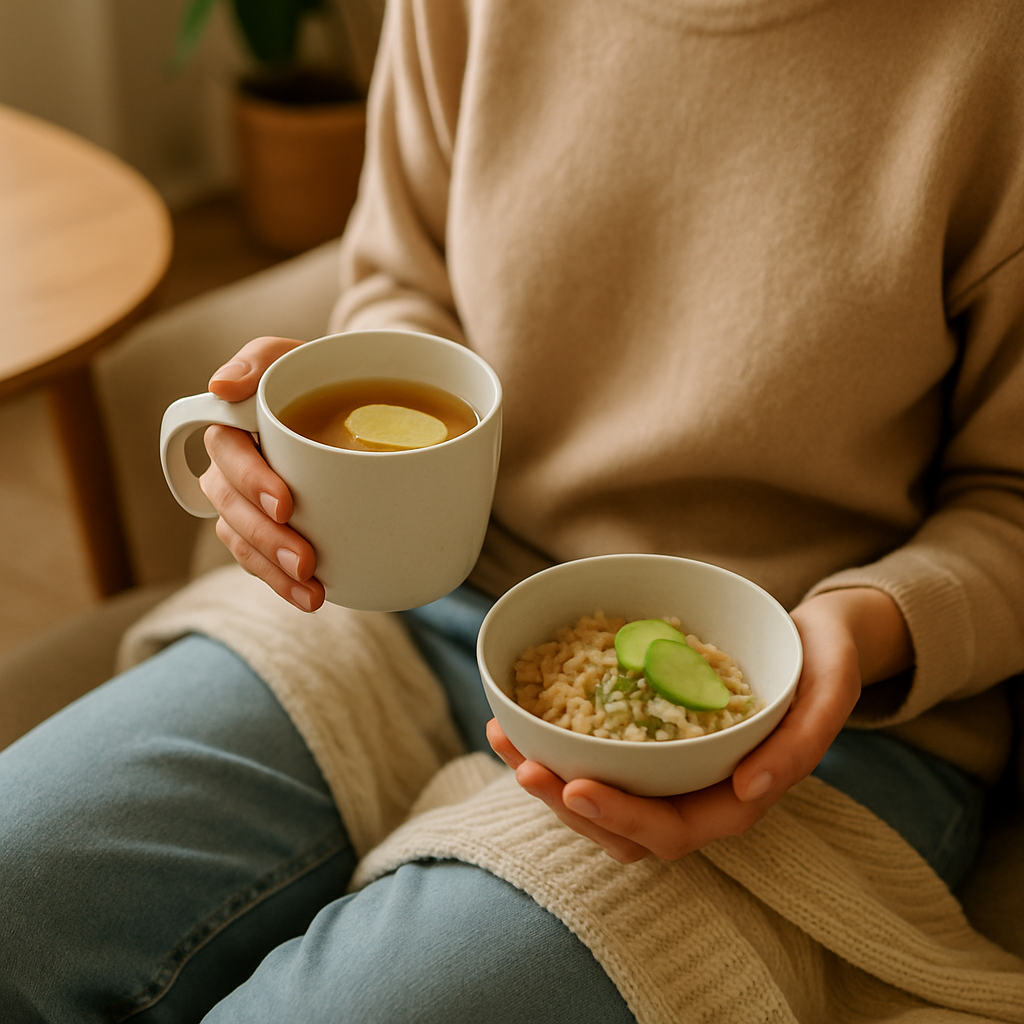
I also recommend ginger tea (fresh ginger steeped in hot water) and peppermint tea between meals, both of which have modest evidence for reducing nausea and supporting digestive comfort. Cold foods—smoothies, yogurt, gazpacho—are often better tolerated than warm meals.
Tackling Bloating and Gas
Bloating happens when slow gut transit meets fermentation. Food lingers, bacteria work on undigested carbohydrates, and gas accumulates. The solution isn’t to eliminate all fiber—fiber is crucial for your long-term digestive health—but to be strategic about which fiber and when you eat it.
In my experience, clients do best when they:
- Cook vegetables thoroughly: Raw cruciferous vegetables (broccoli, cabbage, Brussels sprouts) are especially gassy on a slowed gut. Boil or steam them until soft to reduce fermentation.
- Go easy on FODMAP triggers: Garlic, onions, stone fruits, and wheat are high in fermentable carbohydrates. Not forever—just until your gut adapts.
- Add soluble fiber gradually: Oats, rice, sweet potato, and canned (not dried) beans are better tolerated than high-insoluble-fiber foods when gastric emptying is slow.
- Eat slowly and chew well: Rushed eating sends larger, harder-to-digest food particles into an already sluggish stomach.
Gentle movement—a 10–15 minute walk after meals—also helps propel food through the stomach and reduce that trapped, bloated feeling.
Addressing Constipation: Hydration and Strategic Fiber
Constipation is often the most persistent of the ozempic gut side effects, particularly as dose increases. The slowed gut transit combined with reduced food intake and often inadequate fluid intake creates the perfect storm for hard, infrequent stools.
Here’s what I prioritize for constipation management:
- Hydration is non-negotiable: Aim for 2.5–3 liters of water daily, sipped throughout the day (not gulped). Adequate hydration softens stool and is the single most effective dietary intervention I’ve seen for GLP-1-related constipation.
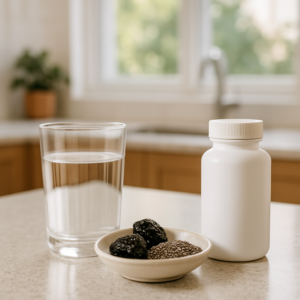
- Magnesium supplementation: A modest dose of magnesium glycinate (200–300 mg daily) or magnesium citrate supports bowel regularity without the cramping that some people experience with other forms. Always check with your prescriber first.
- Psyllium husk gradually: Ground psyllium is soluble fiber that absorbs water and softens stool. Start with 1 teaspoon daily mixed into oatmeal or applesauce, and increase slowly over 1–2 weeks. Too much too fast will worsen bloating.
I’ve also found that prune juice or fresh prunes (a quarter cup daily) are well-tolerated and effective for many clients—the sorbitol in prunes acts gently as a natural osmotic laxative.
Avoid high-dose stimulant laxatives for extended periods; they can create dependency. If constipation persists beyond 3–4 weeks despite these strategies, talk to your doctor or gastroenterologist about short-term osmotic laxatives like MiraLAX.
When to Expect Improvement and What to Monitor
Most people notice meaningful improvement in nausea and bloating within 2–3 weeks as their gut adapts. Constipation can take longer—sometimes 6–8 weeks—but it typically resolves as well, particularly once food intake stabilizes at a new baseline.
That said, if side effects are severe or worsening after 4 weeks despite these strategies, contact your prescriber. Sometimes dose adjustment or a slower titration schedule helps. In rare cases, GLP-1s aren’t the right fit, and that’s okay—your prescriber has alternatives.
Monitor for red flags: persistent severe abdominal pain, bloody stools, inability to keep fluids down, or weight loss that feels unintended and rapid. These warrant medical evaluation.
The Bottom Line on Ozempic Gut Side Effects
Ozempic gut side effects—nausea, bloating, constipation—are real, common, and manageable with the right nutritional approach. They’re also temporary in most cases as your body acclimates to slower gastric emptying.
The strategy isn’t to white-knuckle through discomfort; it’s to work with your medication by eating smaller, more frequent meals, choosing easily digested foods, staying hydrated, and supporting healthy bowel function with soluble fiber and mindful meal timing.
If you’re starting a GLP-1 medication and anticipating digestive challenges, or if you’re already experiencing side effects, I encourage you to speak with your prescribing doctor, pharmacist, or a registered dietitian who has experience with these medications. You don’t have to manage this alone, and you absolutely don’t have to suffer through it.
Have you navigated GLP-1 side effects? I’d love to hear your experience in the comments below—and remember, your prescriber is always your first resource for medical concerns.
This post is for informational purposes only and is not medical advice. GLP-1 medications require a prescription — always talk to your prescribing doctor or pharmacist before starting, stopping, or changing how you manage side effects.