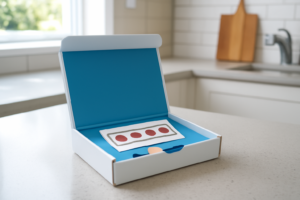
A note on my role in this content: I’ve spent over a decade comparing notes with other people navigating digestive concerns, and everything here reflects that practical experience—not clinical diagnosis or prescription. Food sensitivity testing sits in a gray zone between what your doctor can evaluate and what you might explore on your own. This post is meant to help you ask better questions and make more informed choices, but it absolutely should not replace a conversation with your own healthcare provider, especially if you’re managing a diagnosed condition, taking medications, or dealing with suspected allergies.
Most people believe that a simple at-home test can definitively prove which foods their body cannot tolerate. Here’s what my experience has taught me: that assumption is backwards. Twelve months into digging into digestive wellness, I ordered one of these kits myself. The report arrived flagged for roughly four dozen foods—eggs, raw almonds, cruciferous vegetables, fatty fish, the works. Every single item seemed to belong on a “foods that are good for you” list, not a “foods to banish” one. I spent the next ninety days methodically removing them from my meals. Nothing shifted. My energy stayed flat. The bloating didn’t budge. When I finally mentioned this to the gastroenterologist I was working with at that time, she barely looked up. “IgG tests like that one don’t actually show you what you can’t eat,” she said. “They show you what you’ve eaten.” That $189 experiment became the spark for this guide—a straightforward, unflinching look at what these tests can genuinely tell you and, more importantly, what they cannot.

Why Most At-Home Food Sensitivity Tests Are Misunderstood
To make smart decisions about these products, you first need grounding in what the actual science says. At-home food sensitivity tests predominantly come in two varieties: blood-based IgG panels and energy-measurement or follicle-analysis approaches. The distinction between these methods and legitimate food allergy or intolerance testing is fundamental to understanding what you’re actually paying for.
When an IgG antibody test runs your blood, it’s hunting for immunoglobulin G antibodies that have attached to particular foods. Here’s where the disconnect lives: the American Academy of Allergy, Asthma and Immunology has made clear that IgG testing is not scientifically supported for identifying food sensitivity or intolerance. Showing elevated IgG to a given food simply indicates prior exposure—a completely ordinary immune process, not proof of harm. A landmark analysis from 2012 in Clinical and Experimental Allergy drew an identical conclusion. The broader and more adventurous your eating patterns are, the longer the list of “flagged” items becomes. This explains my own results: after a summer of rotating through farmers market hauls and trying new dishes, my panel lit up like a Christmas tree with nearly fifty reactions.
Analysis of hair samples that markets itself as detecting food sensitivities through measurement of energetic vibration frequencies has zero backing in peer-reviewed scientific literature. Independent testing organizations have sent pairs of identical hair clippings to the same company under different customer names and walked away with wholly contradictory reports. That is not measurement. That is guesswork wrapped in a formal-looking PDF.
Genuine food intolerance—the kind you find with lactose or certain wheat proteins outside of celiac disease—stems from how your gut breaks down foods and processes nutrients, not from immune activation. Authentic food allergy hinges on a different antibody called IgE and requires proper medical evaluation. The direct-to-consumer tests pushed hardest in sponsored ads and social feeds typically measure neither of these accurately.
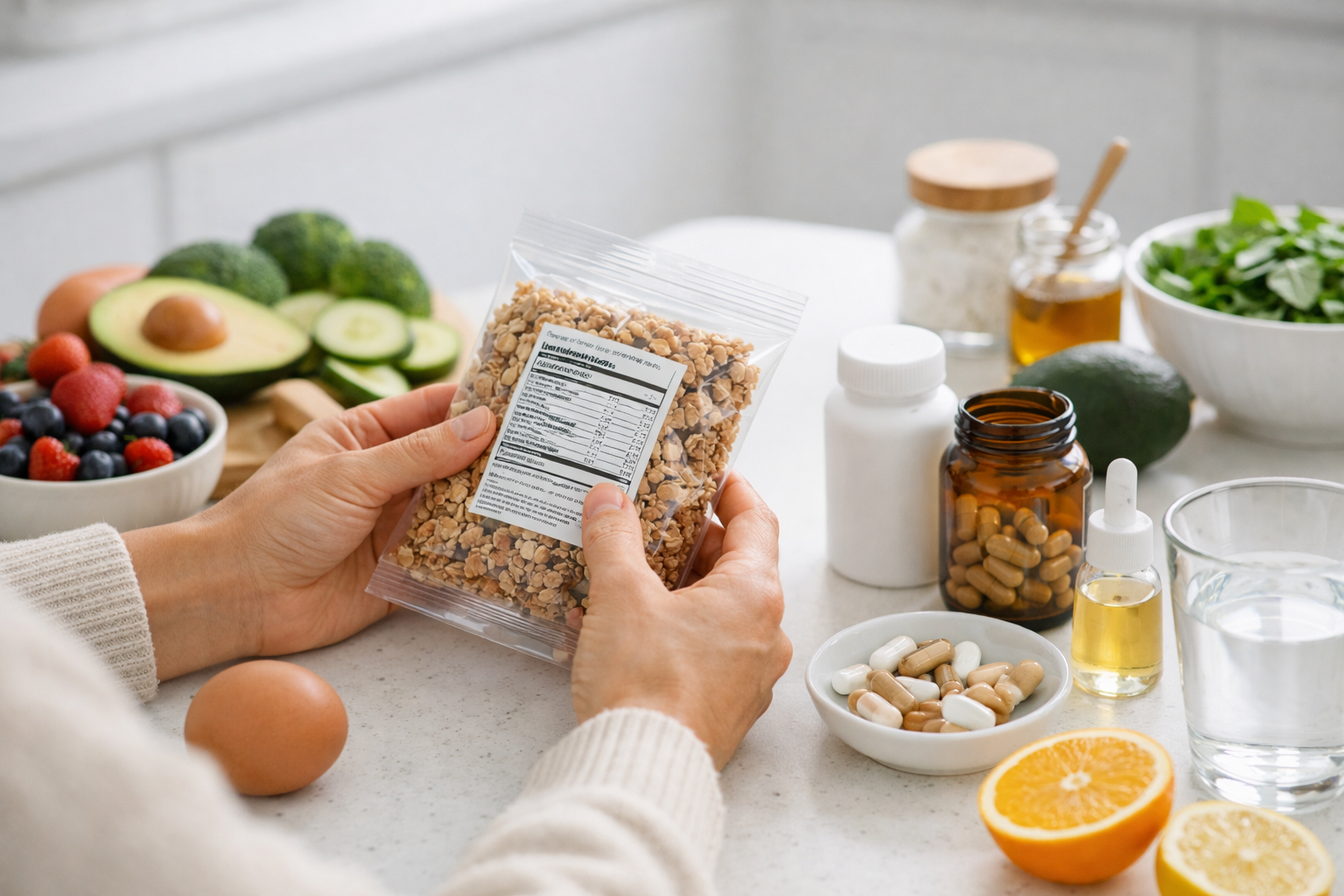
Popular At-Home Panels and What the Evidence Actually Shows
When an IgG Panel Might Point You Toward Real Answers (And When It Won’t)
Suppose you’re stuck in that uncomfortable middle ground: your body is clearly reacting to something, but you’re also uncertain whether you’re genuinely intolerant or just spiraling through food worry. An IgG test can serve as a starting point—it maps antibody patterns to particular foods and gives you a ranked list to explore, rather than leaving you frozen guessing. It’s not proof you must avoid those foods, and it’s not a substitute for allergy testing, but it can narrow your focus.
Where it delivers value
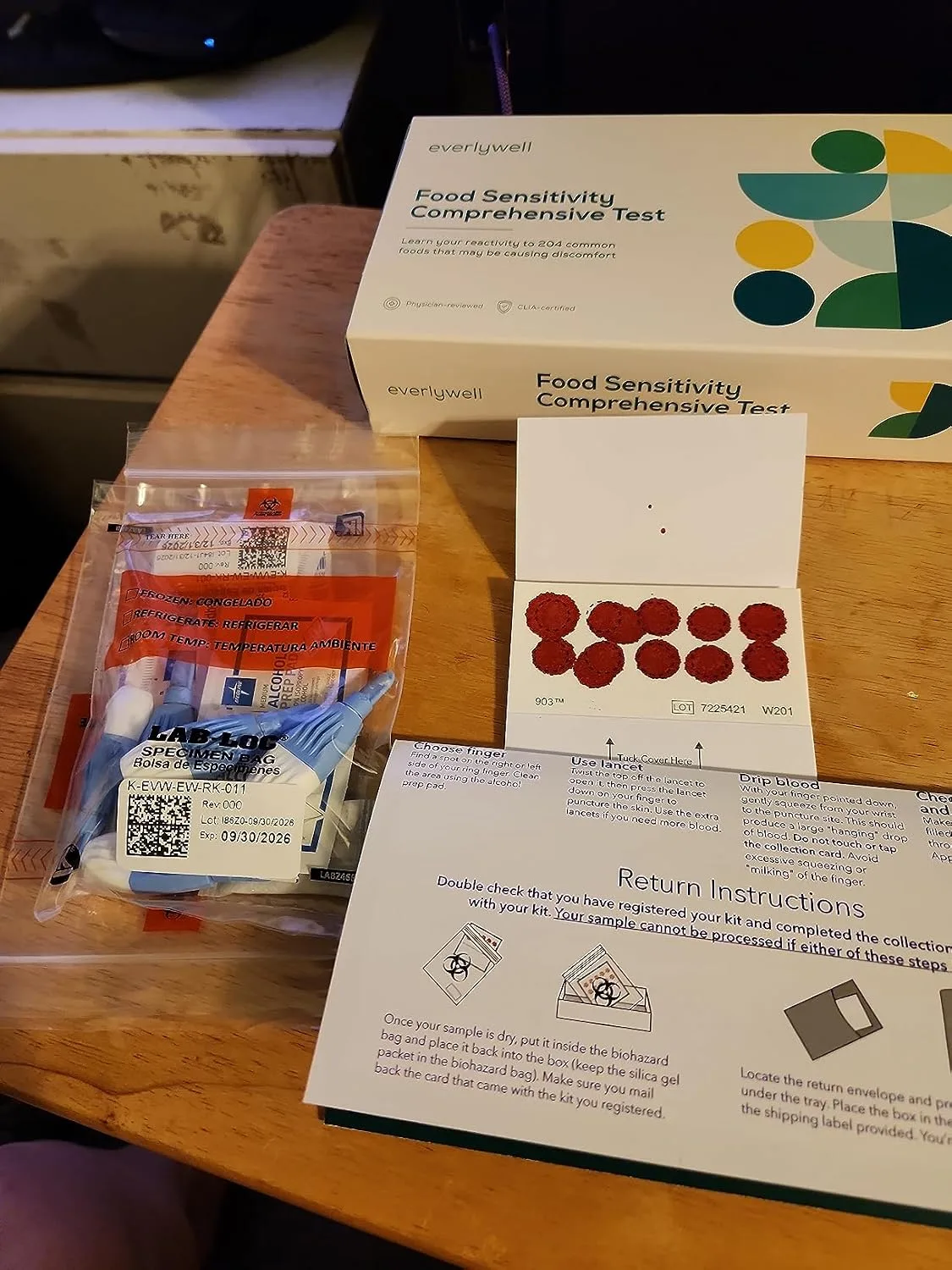
- Home-based sample collection removes friction—a quick finger stick, an envelope to the lab, and your findings arrive in 7–14 days without clinic scheduling.
- Reports break down your results into ranked categories; people consistently tell me that seeing their suspicions confirmed in print (even if provisional) feels more empowering than abstract worry, and it gives them a concrete protocol—like a structured elimination diet—to attempt.
- If you’re already noticing a pattern—tiredness two hours after eating something, or bloating that tracks to specific meals—the test can validate whether you’re perceiving a genuine signal or chasing noise.
Where it falls short
- A positive result is not synonymous with lifelong avoidance; many individuals with elevated IgG to specific foods eat them without incident when the foods become part of their regular rotation (the immune system habituates, a phenomenon called oral tolerance).
- It cannot function as a substitute for clinical allergy serology (which hunts for IgE antibodies) or celiac antibody testing when you suspect true allergy, anaphylaxis risk, or an autoimmune disorder; those evaluations must happen through your doctor or an allergy specialist first.
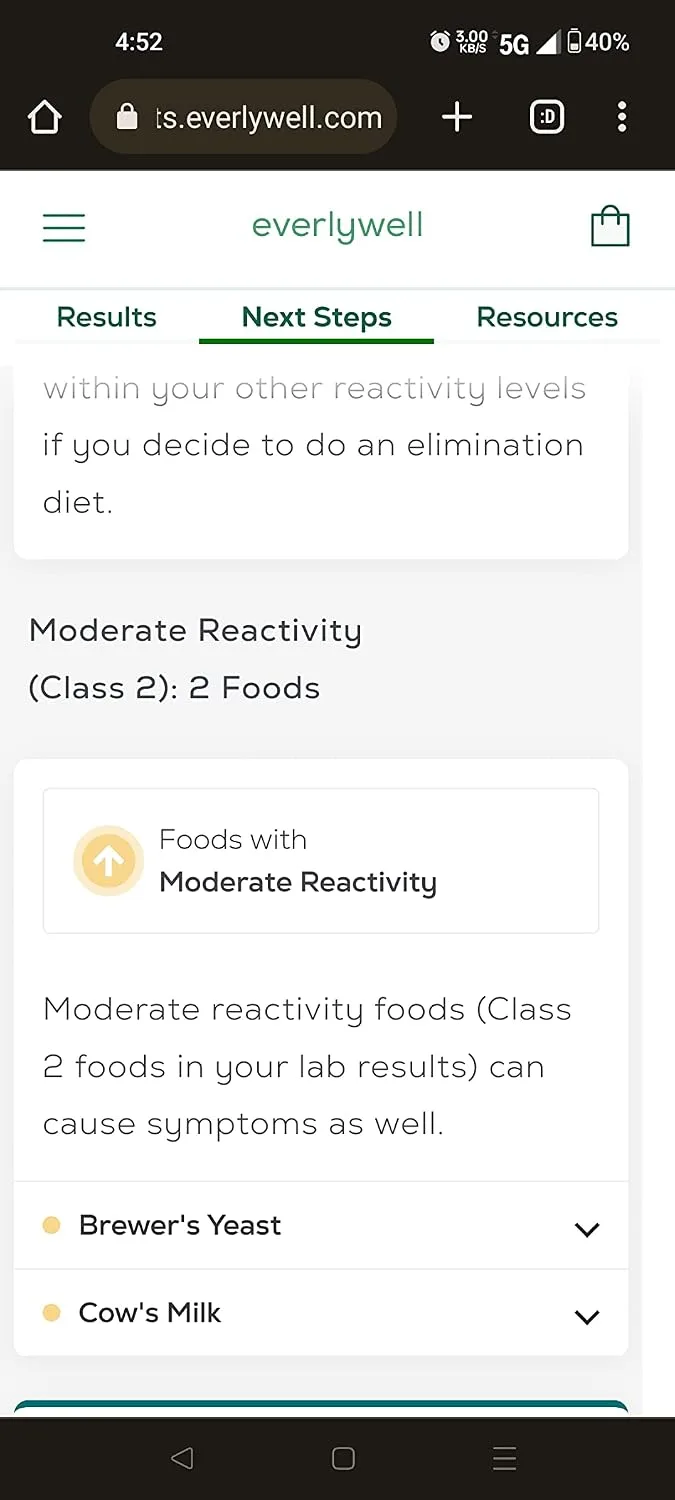
Use this test as a starting point for a conversation with a nutritionist or dietitian, not as a final answer — the real work is figuring out which flagged foods actually trigger your symptoms when you systematically reintroduce them. Everlywell Food Sensitivity Test is straightforward to use and delivers results in a format that’s easy to discuss with a practitioner.

About This Article

Written by Alex Mercer. Alex Mercer has lived with IBS since childhood and isn't a nutritionist or a doctor. After years of being told he was anxious or would grow out of it, he spent more than 12 years reading the research properly, and now shares what he has learned with the family, friends and support-group members who come to him with the same questions. He translates peer-reviewed research into practical, honest advice, and is always upfront about what the evidence does and does not show. More about this site.
Scope and limits. Alex is not a doctor, dietitian, or nutritionist, and nothing here is medical advice. Talk to a clinician before changing your diet, starting a supplement, or acting on symptoms — especially persistent or worsening ones.
Verify this against a primary source
Specifics change, and your situation may differ from the one described here. These are the authorities worth checking directly:
- NIDDK — digestive disease research and clinical guidance
- MedlinePlus — plain-language medical reference from the NIH
- Mayo Clinic — symptom and condition reference