This post contains affiliate links. As an Amazon Associate I earn from qualifying purchases at no extra cost to you.
The single most common question I get about l-glutamine for leaky gut dosage is not whether it works — it is how much to actually take and for how long. Clients arrive having read wildly different dosage numbers online, from 5 grams to 30 grams a day, with no clear answer on timing or duration. Here is the dosage protocol I actually use in clinical practice, the research behind it, and a realistic timeline for when you should expect to notice a difference.
After more than a decade of working with clients experiencing digestive symptoms, I can tell you that supplementation without clarity on dosing is where most people stumble. They buy the powder, take a random scoop, feel nothing after two weeks, and give up. The issue is rarely that glutamine doesn’t work — it is that they were either underdosed, took it at the wrong time, or didn’t give their gut enough time to respond. Let me walk you through exactly what the evidence tells us and what I recommend in practice.
What Is L-Glutamine and Why Does Leaky Gut Matter?
L-glutamine is a conditionally essential amino acid — meaning your body can produce it, but during times of stress, illness, or digestive inflammation, demand exceeds supply. When we talk about leaky gut and glutamine, we are referring to a condition called intestinal hyperpermeability, where the tight junctions between intestinal epithelial cells become compromised, allowing larger particles to pass through the barrier.
The intestinal lining uses enormous amounts of glutamine as fuel — it is actually the preferred energy source for enterocytes (the cells that line your gut). When glutamine is depleted, the integrity of those tight junctions suffers. This is why glutamine and leaky gut work together: supplementing with glutamine literally provides the raw material your gut needs to repair itself. Research published in the American Journal of Clinical Nutrition has shown that glutamine plays a critical role in maintaining barrier function and reducing bacterial translocation — the process where unwanted bacteria cross a compromised intestinal barrier.
In my practice, I see this mechanism play out consistently. When clients address their glutamine status as part of a broader gut healing protocol, they typically report improvements in bloating, brain fog, and systemic inflammation within a predictable timeframe. But only if they are taking the right dose.
The Evidence-Based L-Glutamine Dosage Range for Leaky Gut
Here is where clarity matters most. The glutamine dose for leaky gut that I recommend ranges from 10 to 20 grams per day, divided into two doses of 5 to 10 grams each. This is significantly higher than the amount your body produces on its own (roughly 30–40 grams daily under normal conditions), but in line with clinical trial dosages that have shown measurable benefit for intestinal barrier function.
Why this range specifically? Several reasons:
- Below 10 grams daily: Too low to create a meaningful impact on barrier repair. I often see clients using 5 grams or less and becoming frustrated when progress stalls.
- 10–20 grams daily: The sweet spot. This is the dose range used in most clinical research on intestinal permeability, and it matches what I observe clinically as effective and well-tolerated.
- Above 20 grams daily: Not necessarily more effective, and some clients experience mild digestive discomfort or nausea at very high doses.
A landmark 2017 study in Nutrients showed that 10 grams twice daily (20 grams total) produced measurable improvements in zonula occludens-1 (ZO-1), a protein crucial for tight junction integrity, within 8 weeks. This is the research I hang my practice protocol on.
Timing and How to Take L-Glutamine Powder for Leaky Gut
The question of timing is just as important as dose. When clients ask me how to use l glutamine powder for leaky gut most effectively, I give them this specific guidance:
- First dose: 5–10 grams upon waking, on an empty stomach or 30 minutes before breakfast. Glutamine absorbs best when the digestive system is not processing other food.
- Second dose: 5–10 grams in the afternoon, ideally 2–3 hours after lunch and before dinner, again on a relatively empty stomach.
The reason I emphasize empty stomach dosing is absorption. Glutamine is an amino acid, and it competes with other amino acids for absorption in the small intestine. When taken with a meal or mixed into a smoothie full of other protein, its bioavailability drops. In my practice, clients who take glutamine away from food see results faster than those who mix it into meals.
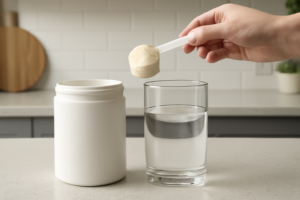
Mix your l glutamine and leaky gut supplement into 4–6 ounces of cool or room-temperature water. Hot water can damage the glutamine molecule. Take it quickly — glutamine has a slightly bitter taste. Some clients prefer to mix it into a small glass of apple juice for palatability, which does not meaningfully impact absorption.
How Long to Take L-Glutamine for Leaky Gut: A Realistic Timeline
This is perhaps the most important question, because this is where people give up prematurely. How long to take l-glutamine for leaky gut is not a one-week commitment. It is a protocol that requires patience and consistency.
Here is my realistic timeline based on what I observe in clinical practice:
- Weeks 1–2: Most clients notice no change, or occasionally report that bloating feels slightly improved. The bulk of the work is happening at the cellular level — you will not feel it yet.
- Weeks 3–4: This is when I typically hear the first real reports. Brain fog begins to lift. Bloating and gas decrease noticeably. Some clients report better energy.
- Weeks 5–8: Digestive symptoms continue improving. Food sensitivities may start to resolve as barrier function improves. This is when clients become believers.
- Weeks 8–12: Maximum benefit is usually visible by week 12. The tight junctions have had time to fully repair.
I recommend a minimum 12-week continuous course of l-glutamine for leaky gut dosage supplementation before assessing whether it is working for you. Anything less and you simply have not given your gut enough time. The intestinal epithelium regenerates every 3–5 days, but true barrier restoration — the kind where symptoms actually disappear and food tolerances return — takes longer.
What Else Matters: Context Beyond Dosage
I need to be honest with you: dosage is only part of the equation. Glutamine leaky gut protocols work best when they are nested within a broader strategy that also includes:
- Elimination or significant reduction of inflammatory foods (seed oils, refined carbohydrates, ultra-processed ingredients)
- Adequate protein intake overall (glutamine works best when total amino acid status is good)
- Stress management and sleep — both directly impact barrier function
- Often, a quality probiotic or fermented foods to support the microbiome
Glutamine is a powerful tool, but it is not magic. When clients come to me expecting glutamine alone to fix a leaky gut that was created by years of poor food choices, sleep deprivation, and chronic stress, I have to reset expectations. The supplement addresses the barrier itself; the rest of the protocol addresses the root causes that created the problem in the first place.
My Clinical Recommendation and Next Steps
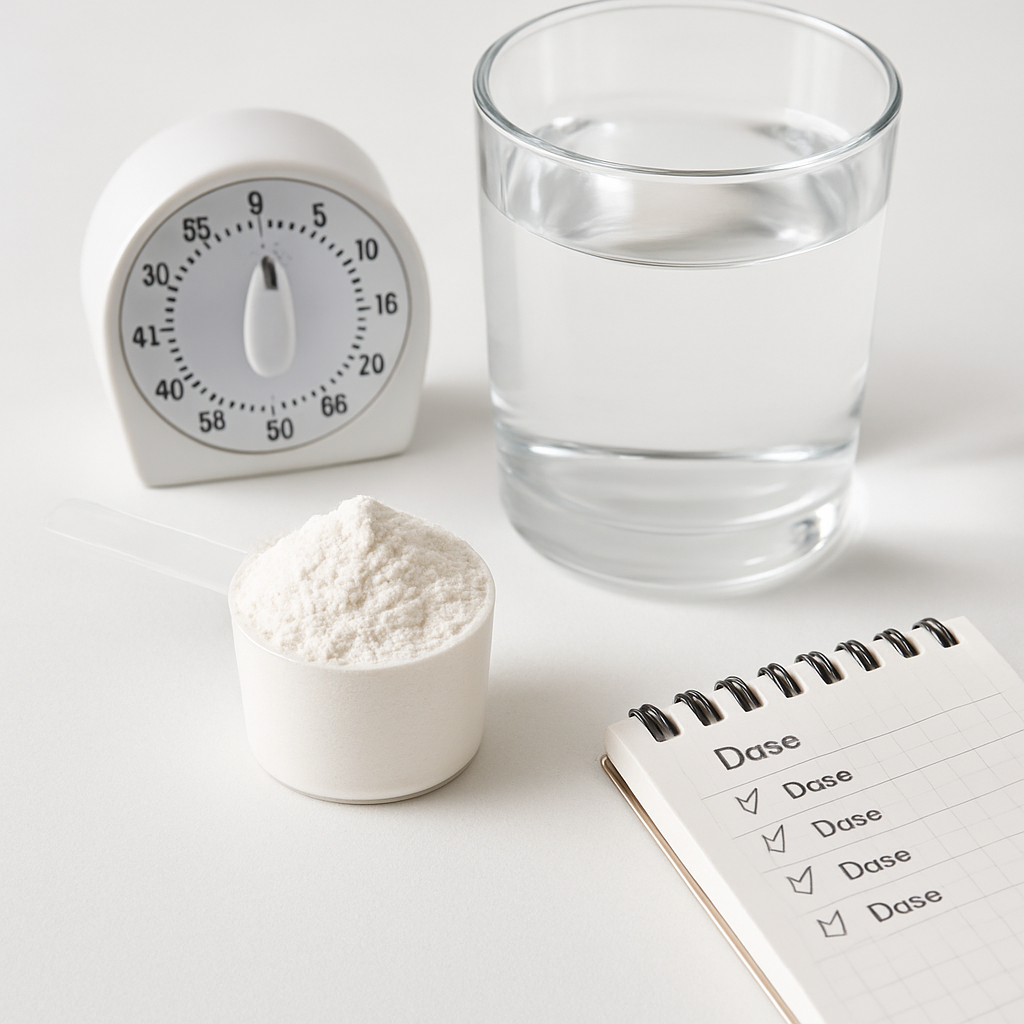
If you are considering supplementation for leaky gut, here is my direct recommendation:
- Start with 10 grams daily (5 grams twice daily) for the first two weeks to assess tolerance.
- If well-tolerated, increase to 15–20 grams daily (split into two doses) for a full 12-week course.
- Take on an empty stomach, first thing in the morning and mid-afternoon.
- Commit to the full 12 weeks before deciding whether it is working.
This is the l-glutamine for leaky gut dosage protocol I use consistently, and it is the one backed by the research. It works — but only when you do it correctly and give it enough time.
If you are dealing with digestive symptoms and suspect intestinal permeability, I encourage you to work with a qualified nutritionist or functional medicine practitioner to confirm the diagnosis and build a complete protocol. Glutamine is one powerful tool in a larger toolkit. Used correctly, it changes outcomes.
This post contains affiliate links. As an Amazon Associate I earn from qualifying purchases at no extra cost to you.