I am a qualified nutritionist, not a gastroenterologist. The experiences shared here are personal and clinical observations. Always consult your doctor before starting any new supplement or health monitoring protocol, especially if you take medication or have a diagnosed condition.
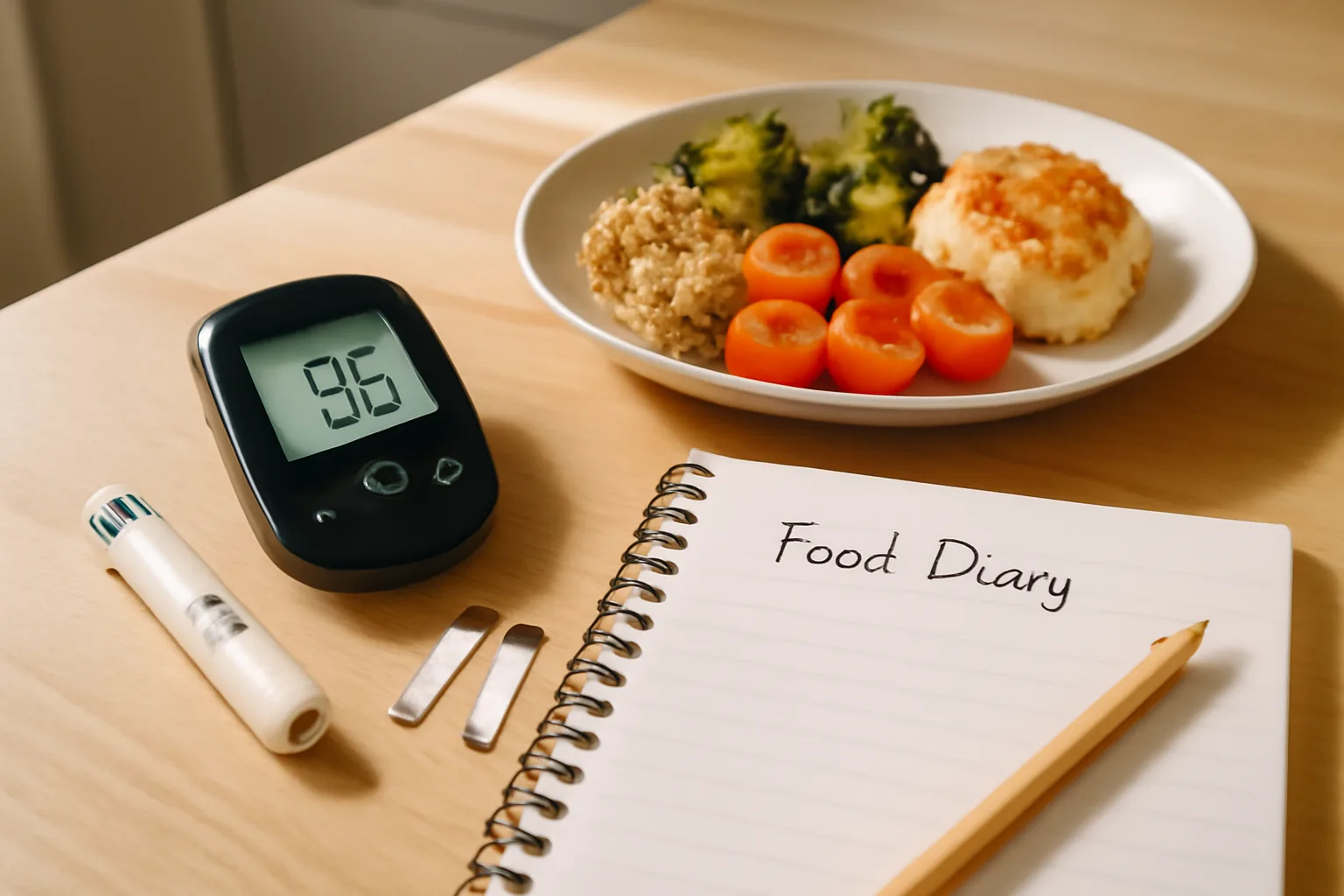
For years, I watched clients walk into my clinic completely baffled by their own bodies. They’d eliminated gluten, cut out dairy, tried low-FODMAP religiously — and still felt bloated, foggy, and exhausted after meals. The missing piece, in many cases, wasn’t which foods they were eating. It was how those foods were spiking their blood glucose. Using a reliable blood glucose meter for food triggers changed everything for me personally, and for dozens of clients I’ve worked with over my 15-year career in clinical nutrition.
I first started tracking my own postprandial glucose responses about eighteen months ago. At the time, I was struggling with persistent afternoon energy crashes and mild bloating after what I considered “healthy” meals. Brown rice, oat porridge, even certain fruits were leaving me sluggish. Research published in Cell by Zeevi et al. (2015) confirmed what I suspected — glycaemic responses are highly individual. Two people can eat identical meals and experience completely different blood sugar curves. That study changed how I approach food sensitivity work entirely.
So I went looking for a glucose meter I could trust — both for my own daily testing and to recommend confidently to clients. After comparing several devices, I landed on the Ascensia CONTOUR NEXT GEN Blood Glucose Monitor All-In-One Kit with 20 Test Strips. Here’s what happened.
Why I Chose the Ascensia CONTOUR NEXT GEN Over Other Meters
Choosing a glucose meter for nutritional investigation — rather than clinical diabetes management — requires slightly different priorities. Accuracy is obviously non-negotiable. However, I also needed something portable, simple enough to use repeatedly throughout the day, and precise enough to detect the subtle postprandial spikes that reveal hidden food triggers.
The Ascensia CONTOUR NEXT GEN stood out for one specific reason: its second-chance sampling technology. This feature allows you to apply more blood to the strip within 60 seconds if the initial sample is insufficient — without wasting a strip. For daily self-testing, that detail matters enormously.
Clinically, accuracy is everything. The CONTOUR NEXT test strips consistently meet ISO 15197:2013 standards, which require 95% of results to fall within ±15 mg/dL of a lab reference value. Independent studies have found CONTOUR NEXT strips to be among the most accurate consumer-grade strips available. That level of precision is critical when you’re using glucose data to make decisions about specific foods.
I also appreciated that the Ascensia CONTOUR NEXT GEN Blood Glucose Monitor All-In-One Kit with 20 Test Strips connects to the free CONTOUR DIABETES app via Bluetooth. Logging postprandial readings manually is tedious. Automatic syncing meant I could build a detailed food-response database over weeks without losing data or forgetting to record entries.
First Impressions: Packaging, Setup, and Ease of Use
The kit arrived well packaged and clearly labelled. Everything was included from the start — the meter, 20 test strips, a lancing device, ten lancets, a carrying case, and a quick-start guide. No hunting around for batteries. No cryptic setup steps.
Setting up the Bluetooth connection took under three minutes. The meter itself is compact and lightweight — genuinely pocket-sized. The display is bright and easy to read, even in low light. I tested it first thing in the morning, in dim kitchen lighting, and the readout was crystal clear.
The lancing device is adjustable across multiple depth settings. I found setting 2 sufficient for fingertip testing, which minimised discomfort considerably. After a few days, the routine became almost automatic — lancing, applying blood, watching the result appear within five seconds.
One small observation: the carrying case, while functional, feels slightly flimsy. It does the job. That said, for daily use thrown into a bag or gym kit, something more robust would be reassuring. Minor point — but worth mentioning honestly.
My Eight-Week Blood Glucose Food Trigger Testing Protocol
I ran a structured eight-week personal testing protocol. My goal was to identify which specific foods caused significant postprandial glucose spikes — defined as rising more than 30 mg/dL above my fasting baseline within 60 to 90 minutes of eating.
Testing Schedule and Tracking Method
Every morning, I recorded a fasting glucose reading before eating or drinking anything except water. I then tested again at 30 minutes, 60 minutes, and 90 minutes post-meal. This gave me a meaningful postprandial curve for each food or meal tested.
Alongside glucose readings, I tracked the following daily:
- Bloating severity (0–10 scale)
- Energy levels at 30 and 90 minutes post-meal (0–10 scale)
- Bristol Stool Scale score (recorded each morning)
- Mood and mental clarity (self-rated 0–10)
- Sleep quality the prior night
I tested each food or meal combination at least three times on separate days before drawing conclusions. Single data points can be misleading — stress, sleep deprivation, and even the time of day affect glucose response. Consistency across multiple trials is what makes the data meaningful.
In weeks one and two, I tested familiar staples: porridge with berries, sourdough toast, white rice, sweet potato, and Greek yoghurt. Weeks three and four moved into combinations — rice with protein, oats with added fat, bread with avocado. The final four weeks explored more specific triggers I’d identified in earlier readings.
What Actually Changed: Honest Results After Eight Weeks
The results genuinely surprised me. Porridge — which I’d eaten confidently as a blood-sugar-stabilising breakfast for years — produced my highest single spike of the entire protocol. Plain oats with almond milk pushed my glucose up by 42 mg/dL within 45 minutes. Adding a tablespoon of almond butter reduced that spike to just 18 mg/dL. That single finding reshaped my morning routine immediately.
Sourdough toast with two eggs produced a surprisingly flat curve. White rice alone spiked significantly. White rice eaten with grilled chicken and leafy greens barely registered. This aligns with research on meal composition — specifically, the role of protein and fibre in slowing gastric emptying and blunting postprandial glucose rises (Trico et al., 2016, Nutrients).
Digestive Symptom Correlations
Here’s where it got clinically fascinating. My bloating scores correlated strongly with high glucose spikes. On days where my 60-minute postprandial reading was more than 35 mg/dL above fasting, my bloating score was almost always above 6. On flat-curve days, it hovered between 1 and 3.
This makes physiological sense. Rapid glucose influx can alter intestinal motility and gut permeability. Research from the AGA (American Gastroenterological Association) has linked hyperglycaemic episodes to delayed gastric emptying — a direct route to bloating and discomfort. My personal data reflected exactly that pattern.
My afternoon energy crashes also largely disappeared by week five. Once I stopped eating the high-spike meals before 2pm, my energy curve smoothed considerably. Bristol Stool Scale scores normalised from inconsistent type 6s to a consistent type 4 by week six — which, in my clinical experience, often signals improved gut transit and lower gut inflammation.
The CONTOUR DIABETES app made reviewing trends straightforward. I could visually identify my worst-performing meals at a glance. That ease of data review genuinely kept me consistent throughout the full eight weeks.
The Downsides You Should Know Before Buying
Let me be honest about the limitations. The Ascensia CONTOUR NEXT GEN Blood Glucose Monitor All-In-One Kit with 20 Test Strips is an excellent device — but it is not a continuous glucose monitor (CGM). Testing at fixed intervals means you can miss the peak of your glucose curve if it occurs between readings.
For truly detailed mapping, a CGM like the Libre 3 would give richer data. However, CGMs are considerably more expensive, typically require a prescription in the UK, and aren’t necessary for most people doing basic food trigger investigation. The CONTOUR NEXT GEN is an accessible, affordable starting point.
The 20 test strips included in the kit will go quickly if you follow an intensive protocol like mine. Ongoing strip costs are something to budget for. Testing four times per meal across multiple meals per day adds up. That said, strips for this meter are reasonably priced and widely available.
Fingertip testing also requires daily commitment. Some clients I work with find the routine fades after the first week. Without consistency, the data loses meaning. I’d encourage anyone starting this type of protocol to set phone reminders for every reading — at least initially.
Finally — and I want to be clear here — blood glucose monitoring is a tool for insight, not a diagnostic replacement. High postprandial spikes do not automatically indicate diabetes or prediabetes. Always share your results with your GP or a registered dietitian who can interpret them within your full health context.
Who Should Buy This (and Who Should Skip It)
This Device Is Well-Suited For:
- People with unexplained bloating, fatigue, or digestive discomfort who have already ruled out obvious dietary intolerances
- Those with a family history of type 2 diabetes wanting to understand their personal glucose responses
- Clients already working with a nutritionist or dietitian on a structured elimination or low-FODMAP protocol
- Anyone experiencing consistent energy crashes after meals — particularly the classic 2–3pm slump
- Nutrition-curious individuals who prefer data over guesswork
You Should Skip It (or Consult Your GP First) If:
- You have a diagnosed eating disorder — monitoring glucose can reinforce harmful food restriction patterns
- You are already prescribed glucose-lowering medication — changes to diet based on self-monitoring should always be supervised clinically
- You are pregnant — glucose management during pregnancy requires specialist oversight
- You find health data anxiety-provoking rather than empowering — in that case, working with a practitioner first is a better starting point
Final Verdict: Is the CONTOUR NEXT GEN Worth It for Mapping Blood Glucose Meter Food Triggers?
Unequivocally, yes — for the right person. Using the Ascensia CONTOUR NEXT GEN Blood Glucose Monitor All-In-One Kit with 20 Test Strips over eight weeks gave me more actionable insight into my digestive health than years of elimination diets had managed to produce. Specifically, it helped me identify that meal composition — not individual ingredients — was driving my symptoms. That’s a nuanced finding I simply couldn’t have reached through conventional food diary methods alone.
In my clinical experience, many clients who feel they’ve “tried everything” for bloating and fatigue haven’t yet explored their personal glucose responses. This device makes that exploration accessible, accurate, and genuinely manageable in daily life. The app integration, second-chance sampling, and ISO-certified strip accuracy make it one of the most practical consumer glucose meters I’ve tested.
Is it perfect? No. The carrying case is flimsy. Strip costs accumulate with intensive testing. And it will never replace a CGM for continuous insight. However, as an affordable, evidence-backed entry point into understanding how your individual body responds to food — it’s hard to beat.