If you’ve ever Googled “why does my stomach hurt after eating” at midnight, you’re not alone — and you’ve probably landed on advice that’s either too vague, too technical, or trying to sell you something. That’s exactly why I wrote this complete guide to better digestion. After more than a decade researching gut health and working alongside gastroenterologists, I’ve seen the same questions come up again and again. People want real answers, not marketing fluff. This guide is my attempt to give you exactly that.
I’ll be honest: I didn’t always understand digestion well. Early in my career, I dismissed bloating and sluggish digestion as minor annoyances. Then I spent three months on a high-travel schedule — irregular meals, airport food, disrupted sleep — and my gut absolutely fell apart. That experience pushed me to study digestive health seriously. What I learned changed how I eat, how I advise others, and how I think about the entire digestive system.
This guide covers everything. How digestion actually works. What commonly goes wrong. Which dietary changes make a measurable difference. How probiotics, fiber, hydration, and stress all play a role. And critically — when it’s time to stop self-diagnosing and see a doctor. Bookmark this page. It’s designed to be the only starting point you need.
How Digestion Actually Works (And Why It Matters)
Most people think of digestion as stomach-centric. Food goes in, stomach churns, done. In reality, digestion is a coordinated process involving at least six major organs, dozens of enzymes, and trillions of bacteria. Understanding this helps you pinpoint where things go wrong — and fix them more precisely.
It starts in your mouth. Chewing breaks food into smaller pieces, and salivary amylase begins breaking down carbohydrates immediately. Swallowing triggers a muscular wave called peristalsis, which moves food down your esophagus in roughly 8–10 seconds. From there, food enters the stomach, where hydrochloric acid and pepsin begin protein breakdown. The stomach typically empties within 4–5 hours, depending on meal composition.
Next comes the small intestine — about 20 feet long — where the majority of nutrient absorption happens. The pancreas releases digestive enzymes here. The liver contributes bile, which emulsifies fat. Nutrients pass through the intestinal lining into the bloodstream. What remains moves into the large intestine, where water is reabsorbed and your gut bacteria ferment undigested fiber. The entire journey from mouth to elimination typically takes 24–72 hours.
Why does this matter practically? Because different symptoms point to different stages. Bloating shortly after eating often involves the stomach or upper small intestine. Gas several hours later usually involves bacterial fermentation in the large intestine. Knowing this helps you ask better questions — and gives your doctor more useful information when you describe your symptoms.
The Most Common Digestive Problems — and What’s Behind Them
In my experience, most people suffer from one of five common digestive complaints: bloating, constipation, diarrhea, acid reflux, or irritable bowel syndrome (IBS). Each has distinct causes. However, they often overlap, which is why a one-size-fits-all approach rarely works.
Bloating and Gas
Bloating affects an estimated 16–30% of the population. It happens when gas accumulates in the digestive tract faster than it can be expelled. Common triggers include swallowing air while eating quickly, high-FODMAP foods (certain fermentable carbohydrates), carbonated drinks, and small intestinal bacterial overgrowth (SIBO). For most people, slowing down at meals and identifying food triggers resolves 60–70% of symptoms within two to four weeks.
Constipation
Clinically, constipation means fewer than three bowel movements per week, or difficulty passing stools. It affects roughly 16% of adults globally — and that number doubles in adults over 60. Causes include insufficient fiber, inadequate hydration, physical inactivity, certain medications (particularly opioids and some antidepressants), and hypothyroidism. Most cases respond well to dietary and lifestyle changes within one to two weeks.
Acid Reflux and GERD
Acid reflux occurs when stomach acid flows back into the esophagus. When it happens more than twice per week, it’s classified as GERD (Gastroesophageal Reflux Disease). Triggers include large meals, lying down after eating, coffee, alcohol, fatty foods, and excess body weight. Specifically, even a 5–10% reduction in body weight can significantly reduce reflux symptoms in people with excess weight. That’s a meaningful, achievable target.
Irritable Bowel Syndrome
IBS affects approximately 10–15% of adults worldwide. It’s a functional disorder — meaning the bowel appears structurally normal, but doesn’t function normally. Symptoms include cramping, bloating, diarrhea, and constipation, often cycling between them. IBS has strong links to the gut-brain axis, stress, and gut microbiome composition. It requires a more individualized management approach. [INTERNAL LINK: managing IBS with diet]
Diet Changes That Actually Improve Digestion
This is where most people want to start. Diet is genuinely the most powerful lever you have. However, the specifics matter enormously. Vague advice like “eat healthy” does almost nothing. Here’s what the research — and my own clinical observations — actually support.
Prioritize Whole Foods Over Processed Ones
Ultra-processed foods — defined as foods with five or more industrial ingredients — disrupt gut bacteria composition and slow motility. A 2019 study published in Cell found that just two weeks on a high-processed diet measurably altered microbiome diversity. Replacing even 20% of your processed food intake with whole food alternatives can produce noticeable improvements in energy, regularity, and bloating within 30 days.
Eat Fermented Foods Regularly
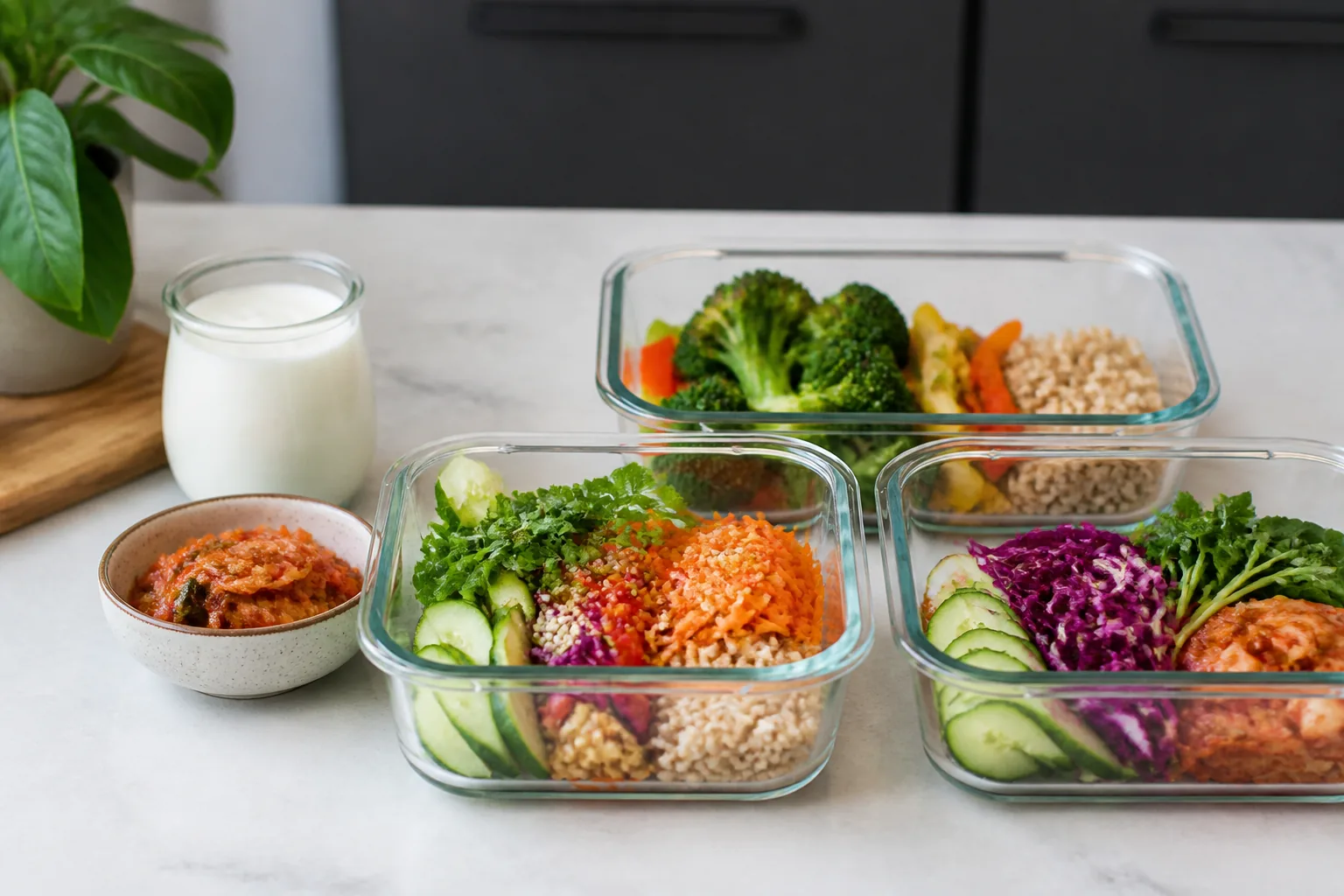
Fermented foods — yogurt, kefir, kimchi, sauerkraut, miso, and tempeh — contain live bacteria that support gut microbiome diversity. A landmark 2021 Stanford study found that a high-fermented-food diet increased microbiome diversity and decreased inflammatory markers over a 10-week period. Aim for one to two servings daily. This doesn’t have to be expensive. A 32-ounce jar of quality sauerkraut typically costs $6–$9 and lasts two to three weeks.
Don’t Neglect Prebiotic Foods
Prebiotics feed your beneficial gut bacteria. They’re found in garlic, onions, leeks, asparagus, bananas, oats, and Jerusalem artichokes. Without adequate prebiotics, even the best probiotic supplement has limited impact. Think of prebiotics as fertilizer and probiotics as seeds. Both matter. In my experience, most people consume plenty of probiotics through supplements but almost no prebiotic fiber — which is why results are often disappointing.
Time Your Meals Thoughtfully
Meal timing affects digestion more than most people realize. Eating large meals within two to three hours of bedtime increases reflux risk and disrupts overnight gut motility. Spacing meals four to five hours apart gives the migrating motor complex (MMC) time to sweep debris through the small intestine. Skipping this process by constant grazing is a surprisingly common cause of SIBO and persistent bloating. I learned this the hard way during those high-travel months I mentioned earlier.
Fiber, Hydration, and the Foundation of Gut Health
Fiber and water are the two most underrated pillars of digestive health. They’re unglamorous. Nobody’s selling a fiber supplement with celebrity endorsements. Yet the evidence for both is overwhelming and consistent across decades of research.
How Much Fiber You Actually Need
Current guidelines recommend 25 grams per day for women and 38 grams per day for men. The average American consumes just 15 grams daily. That gap is significant. Fiber does three critical things: it feeds beneficial gut bacteria, it adds bulk to stool (reducing constipation), and soluble fiber specifically slows digestion to improve blood sugar stability. For most people, gradually increasing fiber by 5 grams per week — rather than all at once — prevents the gas and bloating that causes many to give up prematurely. [INTERNAL LINK: high-fiber foods for gut health]
Soluble vs. Insoluble Fiber — Why Both Matter
Soluble fiber dissolves in water to form a gel-like substance. It slows digestion, feeds bacteria, and lowers LDL cholesterol. Good sources include oats, legumes, apples, and flaxseed. Insoluble fiber doesn’t dissolve — it adds bulk and speeds intestinal transit. Good sources include whole wheat, nuts, and most vegetables. You need both. A diet heavy in only one type can paradoxically worsen symptoms. For example, too much insoluble fiber without adequate water causes hard, difficult-to-pass stools despite high fiber intake.
Hydration — More Specific Than “Drink More Water”
The general recommendation is about 2.7 liters (91 oz) per day for women and 3.7 liters (125 oz) for men — from all sources combined, including food. However, timing matters too. Drinking 16 oz of water first thing in the morning supports morning bowel motility. Drinking water with meals in small sips is fine. Chugging large volumes with meals can dilute digestive enzymes slightly. Staying consistently hydrated throughout the day is more effective than drinking large amounts infrequently.
Probiotics — What the Evidence Actually Says
Probiotics are one of the most misunderstood areas in gut health. The marketing is far ahead of the science — but that doesn’t mean probiotics are useless. It means you need to be specific about which strains, for which conditions, at what doses.
The strongest evidence for probiotics exists in a few specific contexts. Lactobacillus rhamnosus GG and Saccharomyces boulardii have solid evidence for reducing antibiotic-associated diarrhea — reducing risk by approximately 50% in multiple randomized controlled trials. Certain Bifidobacterium strains show consistent benefit for IBS-C (constipation-predominant IBS). Multi-strain formulas show benefit for general bloating reduction in functional dyspepsia.
However, the evidence for probiotics in healthy people with no specific complaints is much weaker. Taking a probiotic “just in case” may do little. As a result, I recommend identifying your specific complaint first, then researching strain-specific evidence. The International Scientific Association for Probiotics and Prebiotics (ISAPP) maintains publicly accessible resources for exactly this purpose.
One more thing: probiotic supplements are not tightly regulated in the United States. Studies have found that some products contain significantly fewer viable organisms than labeled — sometimes under 10% of the stated count. Look for products with third-party verification seals such as NSF International or USP. [INTERNAL LINK: how to choose a probiotic supplement]
The Gut-Brain Connection — How Stress Wrecks Your Digestion
The gut contains over 100 million neurons — more than the spinal cord. It communicates bidirectionally with the brain via the vagus nerve, a pathway researchers call the gut-brain axis. This is not metaphorical. Stress genuinely alters gut motility, intestinal permeability, acid secretion, and microbiome composition in measurable, clinically significant ways.
What Chronic Stress Does to Your Gut
During acute stress, the body diverts blood flow away from the digestive tract. Digestion slows or stops. That’s adaptive in a genuine emergency. However, chronic low-grade stress — the kind most people live with daily — keeps this system partially activated. As a result, stomach acid production becomes erratic. Intestinal motility becomes dysregulated. Tight junction proteins in the gut lining loosen, increasing what researchers call intestinal permeability. Over time, this creates a physiological environment where digestive symptoms become chronic.
Practical Stress Management for Gut Health
I want to be practical here, not preachy. Three interventions have the strongest evidence for improving gut symptoms through stress modulation. First, diaphragmatic breathing activates the parasympathetic nervous system — 5–10 deep breaths before meals measurably increases vagal tone and primes digestive function. Second, consistent sleep (7–9 hours) regulates cortisol rhythms that directly affect gut motility. Third, gut-directed hypnotherapy has Level 1 evidence for IBS — comparable to medication in several randomized trials. These aren’t soft suggestions. They’re evidence-based tools.
When to See a Doctor — Red Flags You Should Never Ignore
I want to be direct here. This guide gives you powerful tools for improving everyday digestion. However, some symptoms are beyond the scope of self-management. Ignoring them can have serious consequences.
See a doctor promptly if you experience any of the following:
- Blood in your stool or black, tarry stools
- Unintentional weight loss of 5% or more of body weight over 6–12 months
- Difficulty swallowing (dysphagia) or painful swallowing
- Persistent vomiting lasting more than 48 hours
- Severe abdominal pain, particularly if sudden in onset
- Jaundice (yellowing of the skin or eyes)
- New digestive symptoms in anyone over 50, especially with a family history of colorectal cancer
These are not meant to alarm you. Most digestive symptoms are benign and manageable. However, the conditions that produce these red flags — including colorectal cancer, celiac disease, inflammatory bowel disease, and peptic ulcers — are far more treatable when caught early. Your gut is trying to tell you something. Trust it.
Common Mistakes and Frequently Asked Questions
Mistake #1: Adding Too Much Fiber Too Fast
This is the most common mistake I see. Someone reads that fiber is important, immediately adds psyllium husk, bran muffins, and a fiber supplement all at once — and spends the next week in agony. Your gut bacteria need time to adapt. Add fiber slowly: 5 grams per week, spread across food sources. Give it four to six weeks before assessing results. Patience here pays off significantly.
Mistake #2: Assuming All Probiotics Are the Same
Strain specificity matters enormously. Lactobacillus acidophilus NCFM and Lactobacillus rhamnosus GG are both Lactobacillus species — but their clinical applications differ significantly. A probiotic that helps one person’s IBS may do nothing for another’s. Don’t judge probiotics as a category based on one product that didn’t work for you. Research the specific strains relevant to your specific complaint.
Mistake #3: Treating Symptoms Without Addressing Root Causes
Antacids, laxatives, and anti-diarrheal medications have their place. However, relying on them chronically without addressing the underlying cause keeps you on a treadmill. For example, long-term use of proton pump inhibitors (PPIs) for reflux — beyond 8 weeks without medical supervision — can impair B12 absorption, reduce magnesium levels, and alter gut bacteria composition. These are real trade-offs worth understanding before committing to long-term use.
FAQ: How Long Does It Take to Improve Digestion?
It depends on what you’re changing and where you’re starting. Hydration improvements often show results within 3–5 days. Dietary changes typically take 2–4 weeks for meaningful impact. Microbiome-level changes from sustained dietary improvement take 3–6 months. Stress-related gut symptoms often improve more slowly, tied to lifestyle change timelines. In short: expect some quick wins and commit to the longer game. Both matter.
FAQ: Is Breakfast Really Important for Digestion?
Not universally. The research on breakfast is nuanced. Some people genuinely thrive with an early first meal — particularly those with morning-dominant gut motility. Others do better eating later. What matters more than breakfast timing is meal consistency. Your gut functions best on a predictable schedule. Eating at roughly the same times daily synchronizes your digestive circadian rhythm, which regulates enzyme release, bile flow, and motility patterns.
Final Thoughts — Your Complete Guide to Better Digestion Starts Here
If there’s one thing I want you to take from this complete guide to better digestion, it’s this: your gut is remarkably responsive. It can improve. The foundation isn’t complicated — whole foods, adequate fiber, consistent hydration, managed stress, and appropriate probiotic use when indicated. Most people who implement even three or four of these changes systematically see real, lasting improvement within four to eight weeks.
That said, don’t let perfect be the enemy of good. You don’t need to overhaul everything at once. Pick one area — maybe it’s fiber, maybe it’s meal timing, maybe it’s finally addressing the chronic stress you’ve been ignoring. Start there. Build from that foundation. Your gut will respond.
And please: use the red flags section. I’ve seen too many people spend months optimizing their diet and probiotic routine while sitting on a symptom that needed a doctor’s attention months earlier. This guide is a starting point, not a substitute for medical care. Know the difference — and act on it.
Digestion is not a glamorous topic. However, it touches everything — your energy, your mood, your immune function, and your long-term health. Getting it right is genuinely one of the highest-leverage things you can do for your overall wellbeing. I’ve seen it transform people’s quality of life in ways they didn’t anticipate. That’s why I wrote this. That’s why this site exists. Come back often — this is just the beginning.