
You know that feeling — you finally crawl into bed after a long day, drift off to sleep, and then somewhere around 2 a.m. you wake up with that familiar burning sensation creeping up your chest and into your throat. You sit up, reach for a glass of water, and wonder what you did wrong this time. If that sounds like your nights lately, I want you to know you’re not alone — and the answer might have less to do with what you ate and more to do with how you’re sleeping. The right sleeping position for acid reflux can make a genuinely surprising difference in how often those nighttime episodes happen.
Why Nighttime Acid Reflux Hits So Hard
During the day, gravity is quietly working in your favor. When you’re upright — sitting, standing, walking — stomach acid has a harder time traveling back up through the lower esophageal sphincter (LES) into your esophagus. But the moment you lie flat, that gravitational advantage disappears almost entirely. Your stomach and your esophagus are suddenly on the same horizontal plane, and acid can migrate upward with very little effort.
On top of that, research suggests that saliva production slows significantly during sleep. Saliva actually plays a role in neutralizing acid and helping clear the esophagus, so when there’s less of it around, any acid that does creep up tends to linger longer and cause more irritation. That’s part of why nighttime reflux can feel more intense than daytime episodes — your body simply has fewer natural defenses working at that hour.
The Best Sleeping Position for Acid Reflux (And the Positions to Avoid)
Sleep on Your Left Side
If there’s one change I’d encourage you to try tonight, it’s this: sleep on your left side. This isn’t just folk wisdom — there’s actually research to back it up. Because of the way your stomach is anatomically positioned slightly to the left of center, lying on your left side may help keep the stomach contents below the LES more effectively than lying on your right side. Several studies have found that left-side sleeping is associated with fewer acid reflux episodes during the night compared to right-side sleeping. Many people find this single adjustment makes a noticeable difference within just a few nights.
Avoid Sleeping on Your Right Side or Stomach
Sleeping on your right side, on the other hand, may actually make things worse for some people. In that position, the LES can sit lower than the stomach contents, making it easier for acid to slip through. Sleeping flat on your stomach puts pressure on your abdomen, which can also push stomach contents upward. If you’re a stomach sleeper by habit, it’s a tough one to break — but it may be worth the effort if nighttime reflux is disrupting your sleep regularly.
Elevate Your Head and Upper Body
Beyond side-sleeping, elevating your upper body so your head and chest are higher than your stomach is one of the most well-supported strategies for reducing nighttime acid reflux. Research suggests that even a modest incline — around 6 to 8 inches — may help gravity do its job while you sleep. The key word here is “upper body.” Simply stacking regular pillows under your head often doesn’t do the trick because it can cause your neck to bend at an awkward angle without truly elevating your torso. What you really want is an incline that starts from the waist up.
Products Worth Trying to Make Elevation Easy
Once I understood the importance of elevation, I started looking into practical ways to actually achieve it without destroying my sleep quality in the process. Here are the options I think are genuinely worth considering:
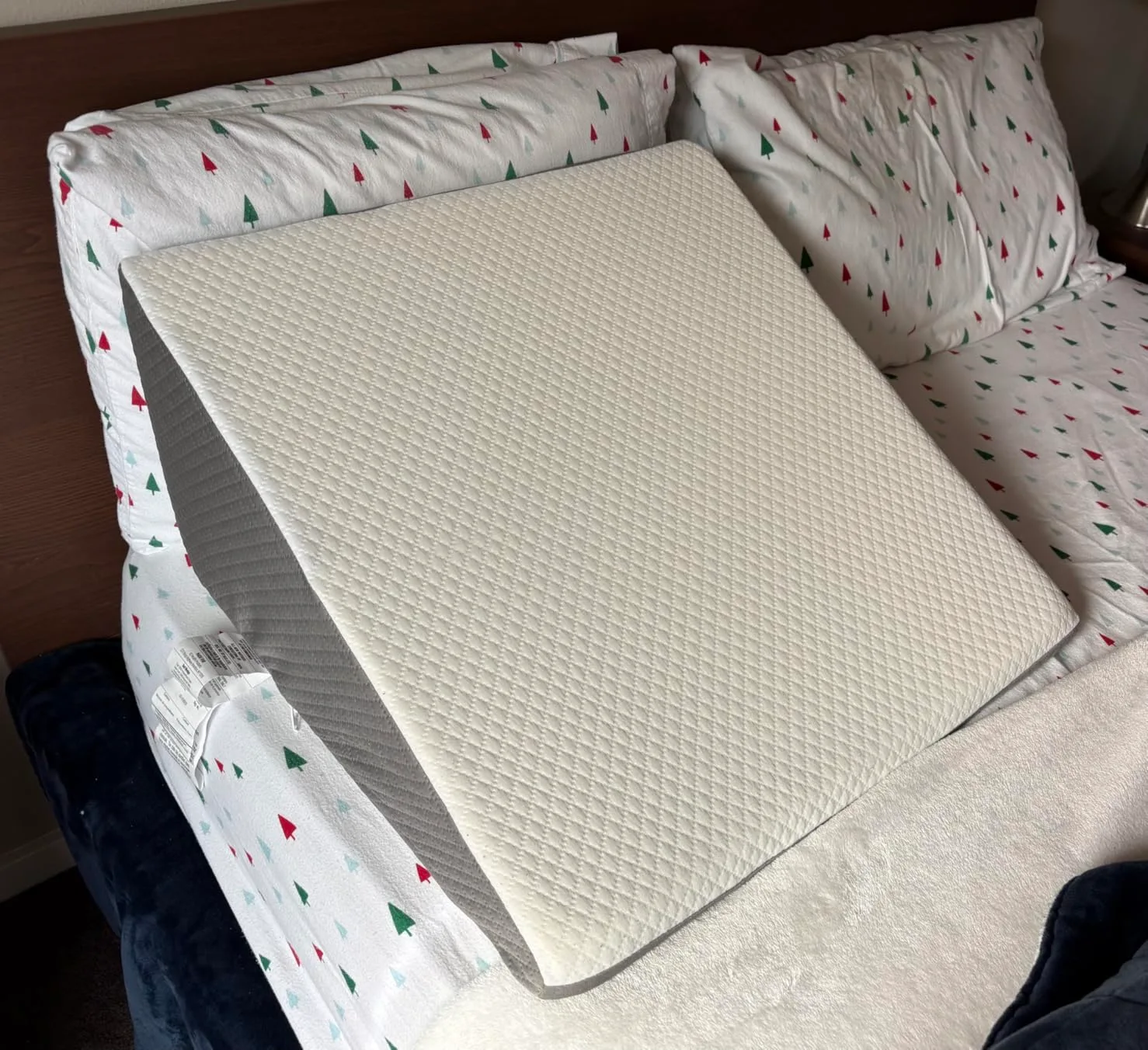
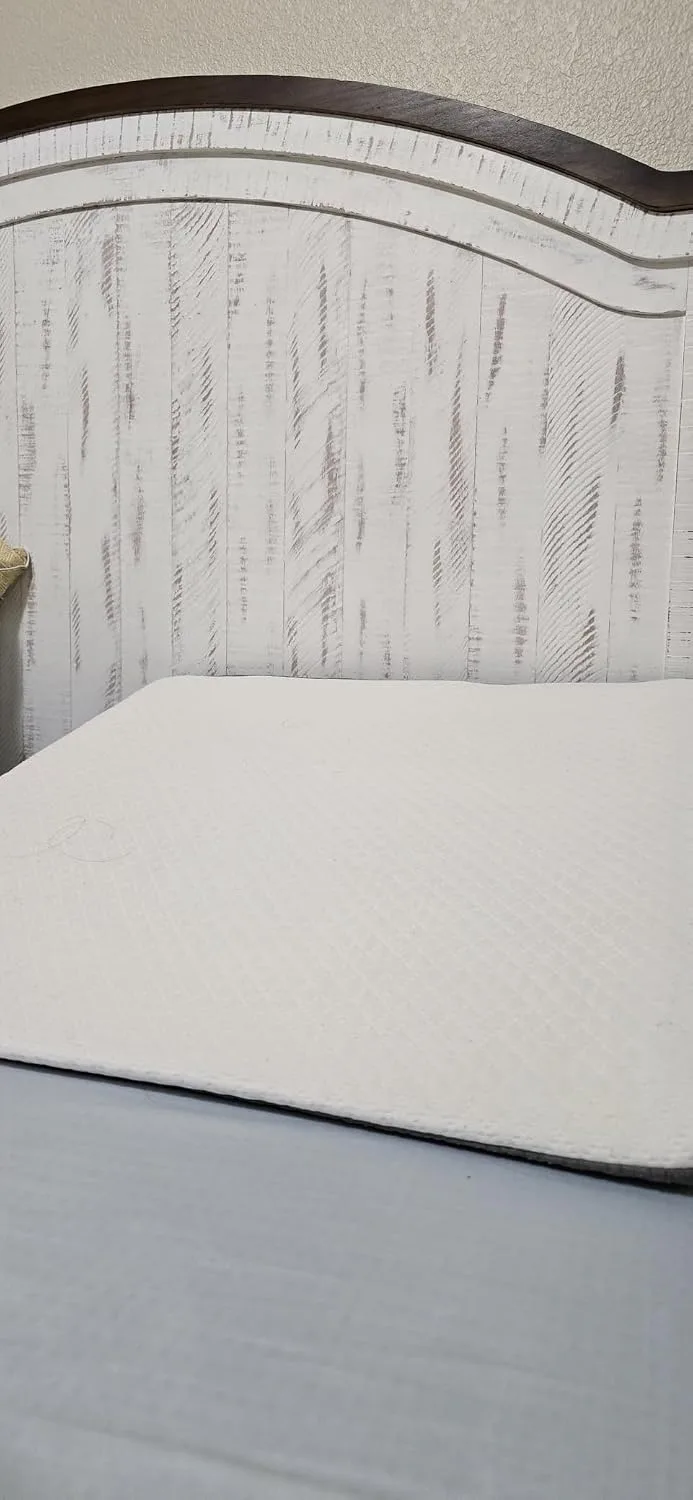
The 7.5″ Wedge Pillow: The Gentlest Way to Elevate Without Overcommitting
A wedge pillow creates the mechanical advantage your stomach needs — gravity helps keep acid down while you sleep — without the expense or permanence of bed risers. If you’re not ready to modify your bed frame, or you want to test whether elevation actually helps before investing further, this is where most of my clients start.
What works
- The 7.5″ height is steep enough to keep your esophagus above your stomach (the actual mechanism that prevents reflux), but shallow enough that most people don’t slide off or feel like they’re sleeping on a steep mountain.
- It’s portable — if you travel, sleep at a partner’s place, or just want to test the theory before committing, you can move it or remove it easily. Many of my clients who’ve been skeptical about “yet another thing” have been surprised by how much better they sleep within 3–5 nights.
- The memory foam holds up better than cheaper polyfoam wedges, and the removable, washable cover means it won’t accumulate dust and allergens — important if reflux is tied to overnight congestion or post-nasal drip triggering your symptoms.
What doesn’t
- It won’t work if your reflux is driven entirely by food triggers or timing — elevation helps gravity do its job, but it can’t neutralize stomach acid or speed up emptying. You’ll still need to address your eating patterns and meal timing.
- Some people find wedge pillows uncomfortable for side sleeping or feel like they’re “sliding” throughout the night. If you’re a restless sleeper or prefer being flat, bed risers under the headboard might work better (though they’re a bigger commitment).
A wedge pillow is a tool, not a cure — if you’re waking up with reflux multiple nights a week despite elevation and dietary adjustments, that’s worth mentioning to your GP to rule out other causes like hiatal hernia or medication side effects. Kolbs Bed Wedge Pillow (7.5″ Height, Standard Width)
This post contains affiliate links. As an Amazon Associate, I earn from qualifying purchases at no extra cost to you.
This post contains affiliate links. As an Amazon Associate, I earn from qualifying purchases. This means if you click a link and make a purchase, I may earn a small commission at no extra cost to you. I only recommend products I believe could genuinely help.