You know that feeling when you devour a big bowl of creamy pasta or indulge in a scoop of ice cream — and then spend the next hour paying for it? Or maybe you’ve noticed that some meals sit heavy in your stomach while others seem to disappear effortlessly. I used to chalk all of this up to just “having a sensitive stomach,” but the real story is so much more fascinating. It comes down to enzymes — tiny but mighty proteins that do the heavy lifting of breaking down everything you eat. If you’ve ever wanted to have the types of digestive enzymes explained in a way that actually makes sense for your daily life, you’re in exactly the right place.
What Are Digestive Enzymes and Why Should You Care?
Think of digestive enzymes as the behind-the-scenes crew at a concert — nobody really notices them, but without them, the whole show falls apart. These proteins are produced naturally throughout your digestive tract — in your saliva, stomach, pancreas, and small intestine — and their entire job is to break large food molecules into smaller ones your body can actually absorb and use.
Research suggests that when enzyme production is lower than optimal — due to age, stress, certain health conditions, or just genetics — the result can show up as bloating, gas, indigestion, or that frustrating feeling of fullness that just won’t quit. The good news is that understanding which enzymes do what gives you real, actionable tools to feel better after meals.
Types of Digestive Enzymes Explained: Lactase, Lipase, Amylase, and More
Let’s walk through the major players. I promise this won’t feel like a biology lecture — think of it more like meeting the team that handles your meals every single day.
Lactase: The Dairy Dilemma Solver
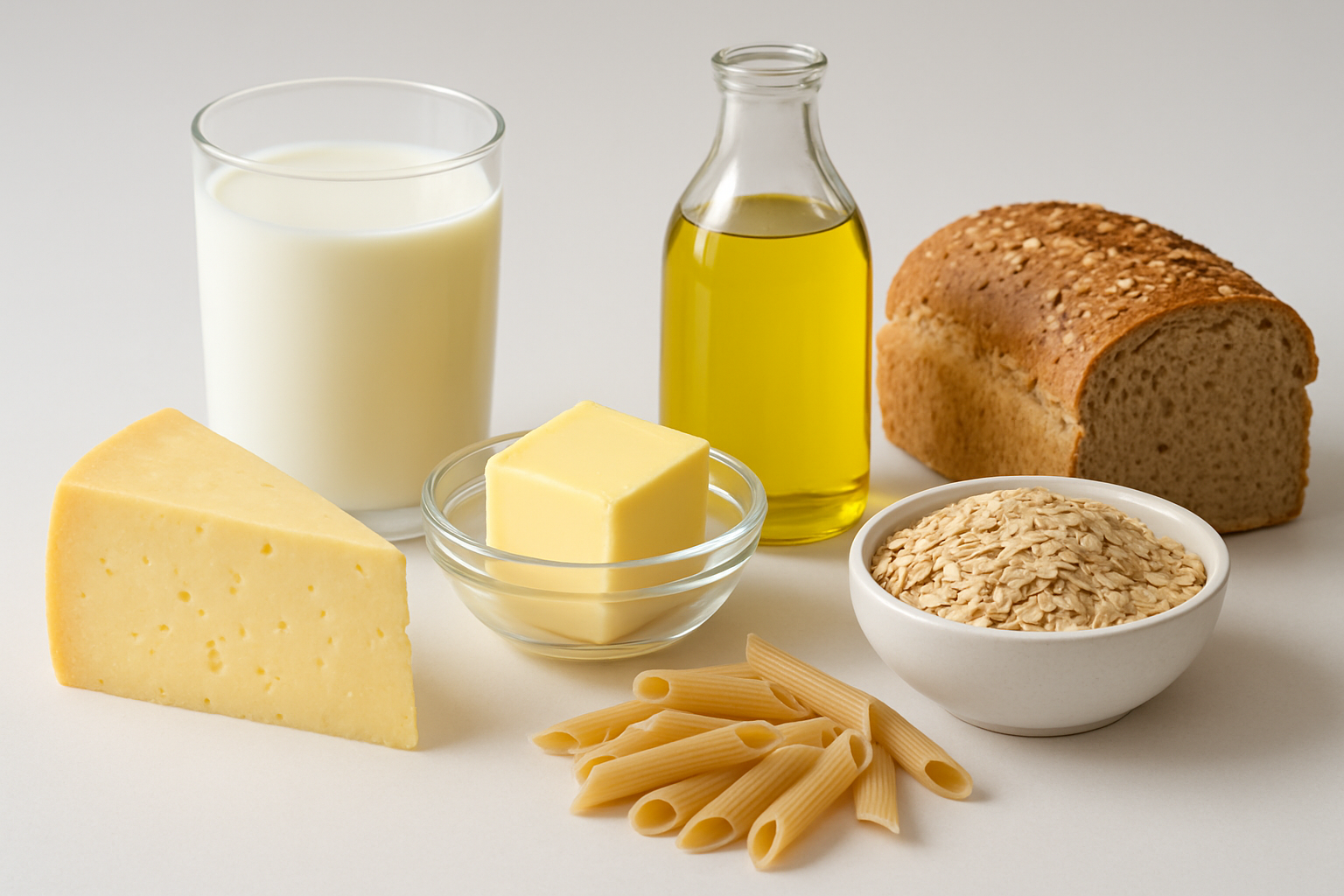
Lactase is the enzyme responsible for breaking down lactose — the natural sugar found in milk, cheese, yogurt, and most dairy products. Many people produce less lactase as they age, which is why dairy discomfort often seems to sneak up on us in adulthood even when we had no issues as kids. Research suggests that lactase insufficiency is extremely common, affecting a significant portion of the global population.
If you notice bloating, cramping, or gas after dairy, your lactase levels may be worth paying attention to. Many people find that taking a lactase supplement before a dairy-containing meal makes a meaningful difference in how they feel afterward.
Amylase: Your Carbohydrate Companion
Amylase actually begins its work before food even hits your stomach — it’s present in your saliva and gets a head start on breaking down starches and complex carbohydrates the moment you take a bite. Your pancreas then releases additional amylase into the small intestine to finish the job. Bread, rice, pasta, potatoes — amylase is handling all of it. When amylase activity is lower than it could be, those heavy, sluggish feelings after a carb-rich meal may become more familiar than you’d like.
Lipase: The Fat Processor
Lipase is your body’s go-to enzyme for breaking down dietary fats. It works primarily in the small intestine and is largely produced by the pancreas. Without adequate lipase activity, fats can pass through your system incompletely digested — which may contribute to loose stools, feelings of nausea after fatty meals, or nutrient absorption issues over time. Research suggests that supporting lipase function may be especially helpful for people who eat higher-fat diets or who have noticed digestive changes as they’ve gotten older.
Protease: The Protein Partner
Protease enzymes (including pepsin and trypsin) break down proteins into amino acids — the building blocks your body uses for everything from muscle repair to immune function. If you’ve ever felt uncomfortably full and heavy after a protein-rich meal, protease activity is part of the equation worth considering.
Invertase and Glucoamylase: The Overlooked Duo
These two don’t get nearly as much attention as lactase or amylase, but they matter more than most people realize. Invertase breaks down sucrose (table sugar) into glucose and fructose, while glucoamylase helps break down complex starches further into simple sugars. If you find that sugary foods or starchy meals are particularly problematic for your gut, these may be the enzymes worth exploring.
The Starch and Sugar Enzyme I Recommend When Bread and Pasta Trigger Bloating
If your digestive trouble centres on starchy or sugary foods rather than dairy, a targeted enzyme blend makes more sense than a broad-spectrum formula. Intoleran Starchway combines invertase and glucoamylase to break down the specific carbohydrates that often sit heavy or cause gas — and it’s Low FODMAP certified, which matters if you’re already managing IBS or sensitivity.
What works
- Glucoamylase targets resistant starch and complex carbs that your small intestine may struggle to break down fully — clients often report noticeably less bloating after bread or pasta within the first few meals of consistent use.
- The Low FODMAP certification means it’s safe for people already managing IBS or fructose/sugar sensitivities, without hidden ingredients that can trigger symptoms.
- The vegan formulation is well-tolerated and doesn’t contain common fillers or allergens that complicate an already sensitive gut.
What doesn’t
- This is not a fix for coeliac disease or non-coeliac gluten sensitivity — if gluten is the problem, enzymes won’t help, and you need to avoid it entirely.
- If your bloating is actually from insufficient stomach acid or dysbiosis rather than starch malabsorption, enzyme support alone won’t resolve the root cause; you’ll need a broader diagnostic approach.
Digestive enzymes are a helpful tool for carbohydrate processing, but they’re not a substitute for identifying why your gut is struggling in the first place — if symptoms persist despite enzyme use, check in with your GP or a registered dietitian to rule out underlying conditions. You can try Intoleran Starchway Digestive Enzymes (50 Capsules) to see if starch-specific support makes a difference for you.
This post contains affiliate links. As an Amazon Associate, I earn from qualifying purchases at no extra cost to you.