
You’ve probably stood in the supplement aisle — or scrolled through an endless Amazon search — staring at probiotic labels that all seem to scream the same things: “50 billion CFU!” “Multi-strain!” “Advanced formula!” And yet, after buying a few different bottles over the years, you’re still not entirely sure if any of them actually did anything. I’ve been there. Figuring out how to choose a probiotic supplement that genuinely works for your gut feels like trying to decode a foreign language, and honestly, most labels aren’t exactly written to help you.
Let’s slow down and actually talk about what those labels mean — and, more importantly, what they’re leaving out. Because once you understand a few key concepts, shopping for probiotics gets a whole lot less overwhelming.
CFU Count: Bigger Isn’t Always Better
CFU stands for Colony Forming Units, and it’s essentially a measure of how many live microorganisms are in a dose. You’ll see everything from 1 billion to 500 billion CFU on shelves these days, and it’s tempting to assume that more equals better. Research suggests that’s not quite the full picture.
What matters more than sheer CFU count is whether those organisms survive long enough to reach your gut. Your stomach is a pretty hostile environment — highly acidic and designed to break things down. Many probiotic bacteria don’t survive that journey, which means that jaw-dropping number on the label may be significantly reduced by the time anything reaches your intestines.
Look for products that are tested for CFU count at the time of expiration (not just at manufacture), use delayed-release or enteric-coated capsules, or are genuinely shelf-stable through protective encapsulation technology. These details often don’t make it onto the front label — you’ll usually find them in the fine print or on the brand’s website.
Why Strains Matter More Than Anything Else on the Label
Here’s the thing the flashy front label almost never tells you: different probiotic strains do very different things. The genus, species, and strain all matter. Lactobacillus acidophilus is not interchangeable with Lactobacillus rhamnosus GG, even though they’re both Lactobacillus. Research suggests specific strains have been studied for specific outcomes — gut motility, immune modulation, digestive comfort, and more.
Many people find that broad multi-strain formulas feel more supportive for general gut health, while others do better with a targeted single-strain approach for a specific concern. Neither is universally “right.” What you want to avoid is a label that just says “probiotic blend” without naming the actual strains — that’s a red flag that the manufacturer may not be prioritizing transparency.
Some strains worth knowing about:
- Lactobacillus acidophilus — one of the most studied strains, commonly found in yogurt and may support digestive comfort
- Bifidobacterium longum — research suggests it may support bowel regularity and reduce occasional bloating
- Lactobacillus rhamnosus — frequently studied in connection with antibiotic-associated digestive disruption
- Saccharomyces boulardii — a beneficial yeast, not a bacterium, that research suggests may support gut recovery
How to Choose a Probiotic Supplement: The Checklist I Actually Use
After years of reading labels, I’ve narrowed it down to a few non-negotiables I look for before buying any probiotic. Think of this as your gut-check before you add to cart:
- Named strains listed clearly — genus, species, and ideally the specific strain designation
- CFU guaranteed at expiration — not just at manufacture date
- Survival mechanism — enteric coating, shelf-stable encapsulation, or refrigeration
- Prebiotics included — these feed the probiotics and may improve their effectiveness in your gut
- Third-party testing or transparent manufacturing info — a brand willing to be accountable is a better sign than one that isn’t
- No unnecessary fillers — artificial colors, binders, and allergens you’re sensitive to are worth avoiding
Also worth noting: if you’re taking antibiotics, many healthcare providers suggest taking your probiotic a few hours apart from the antibiotic dose, since antibiotics can kill off the beneficial bacteria before they have a chance to colonize.
Products Worth Trying
Based on the checklist above, here are a few options across different needs and budgets that I think are worth a closer look. I’ve tried to offer variety — from high-potency multi-strain formulas to simple, no-frills options for everyday support.
A High-CFU Probiotic That Actually Survives Stomach Acid
Most probiotics die before they reach your colon — that’s the uncomfortable truth the labels won’t tell you. If you’re going to invest in a multi-billion CFU formula, you need one formulated with delivery in mind, not just raw strain count.
What works
- The “raw” formulation (no flow agents or unnecessary binders) means you’re getting live cultures without extra processing that can damage fragile bacteria during manufacturing.
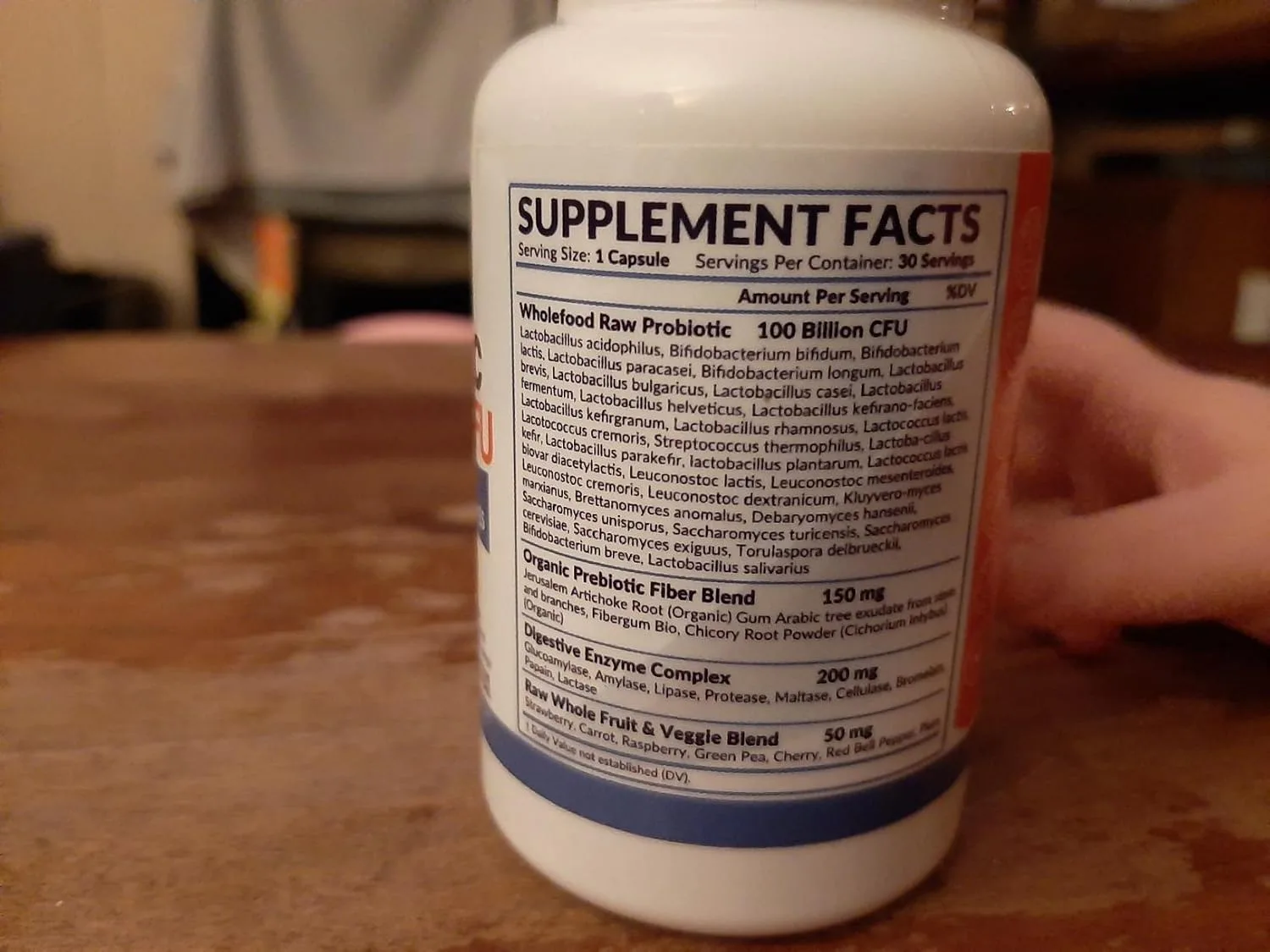
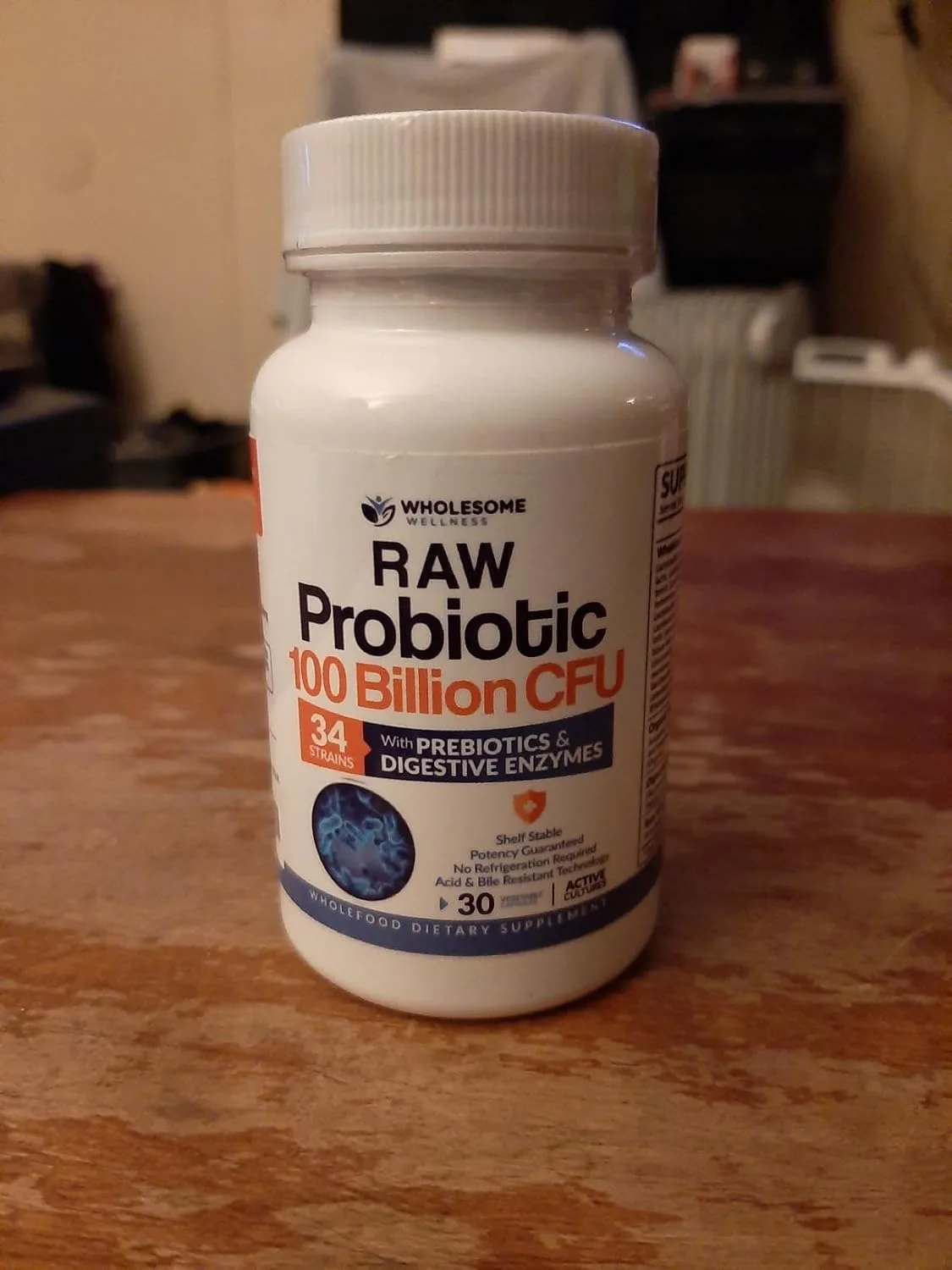
- 100 billion CFU gives you a realistic starting dose — high enough to make a measurable difference if the strains are right for your microbiome, but not so high you’re paying for overkill CFU inflation.
- Clients with IBS-D and post-antibiotic dysbiosis report noticeable shifts in regularity within 2–3 weeks when paired with dietary consistency — which suggests the formulation is surviving transit.
What doesn’t
- This isn’t a quick fix for acute diarrhoea or food poisoning — probiotics work best as a maintenance tool over weeks, not an emergency intervention.
- If you have FODMAP sensitivities or histamine intolerance, some probiotic strains can trigger symptoms; chat with your GP or dietitian before starting if you have IBS-C with bloating or suspected mast cell activation.
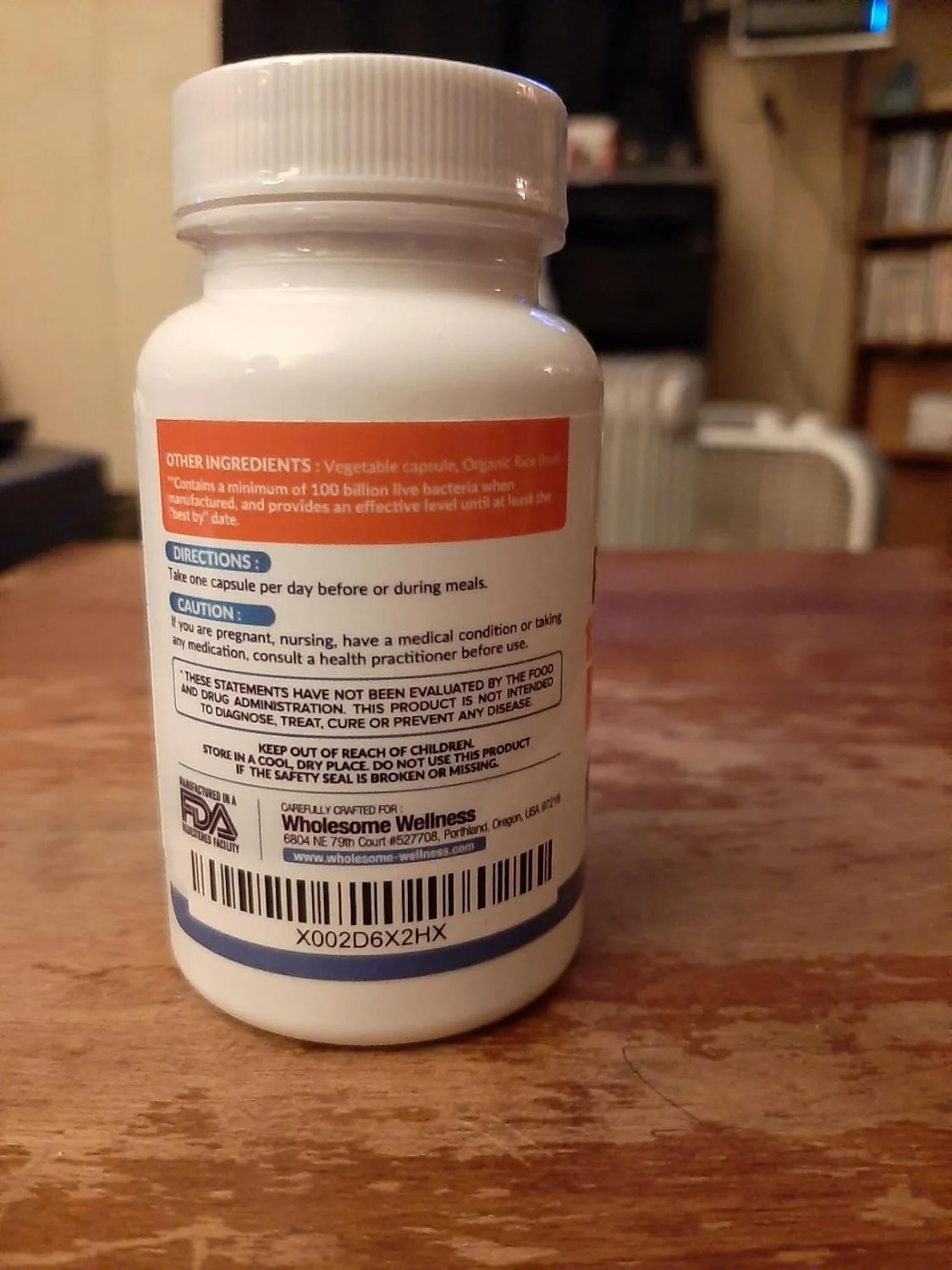
A probiotic is only one piece of the puzzle — if your diet is chaotic or your stress is chronic, even the best formula won’t do the heavy lifting for you. If you want to try a genuinely formulated option with solid survival credentials, Wholesome Wellness Organic Raw Probiotics 100 Billion CFU is worth the investment.
This post contains affiliate links. As an Amazon Associate, I earn from qualifying purchases at no extra cost to you.
This post contains affiliate links. As an Amazon Associate, I earn from qualifying purchases. This means if you click a link and make a purchase, I may earn a small commission at no extra cost to you. I only recommend products I believe offer real value, and nothing here should be taken as medical advice. Always consult your healthcare provider before starting a new supplement.